
Most gasoline-powered Nissan Rogues sold in the United States have used Nissan’s Xtronic continuously variable transmission, or CVT. Over the years, some owners have reported shuddering, hesitation, loss of acceleration, overheating-related reduced performance, whining, and—in serious cases—the need for major CVT repair or replacement.
Those reports need context. “Rogue CVT problems” spans several generations, transmission revisions, and failure modes. A technical service bulletin does not mean every covered vehicle will fail, and owner complaints alone cannot establish a failure rate. What is well documented is that Nissan issued multiple CVT-related service bulletins and campaigns for certain Rogue years, and a U.S. class-action settlement later produced an extended CVT warranty for many 2014–2018 Rogues.
For a used-car shopper, the key question is not whether every Rogue CVT is defective. It is whether the specific vehicle has symptoms, a relevant service history, applicable campaigns or warranty coverage, and evidence of proper maintenance.

Contents
CVT and Conventional Automatic Transmission
A conventional automatic normally changes among fixed gear ratios using planetary gearsets and friction clutches. A CVT works differently. In the type used in many Rogues, two variable-diameter pulleys are linked by a high-strength steel belt. Changing the effective diameter of those pulleys continuously changes the transmission ratio.
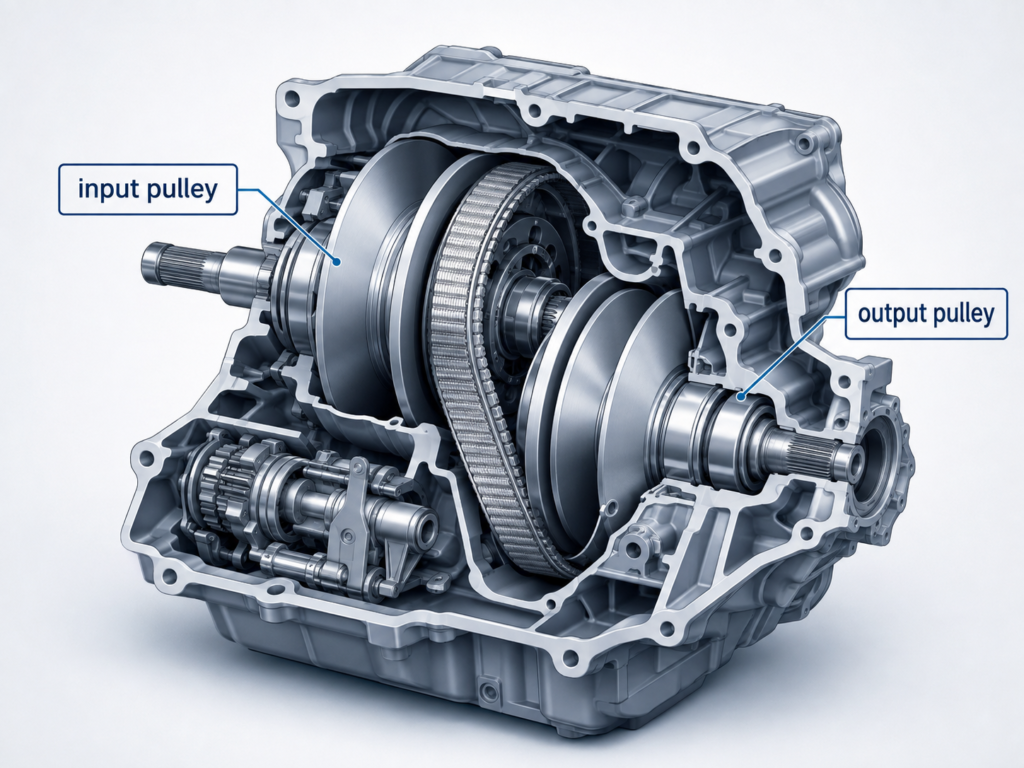
This lets the engine operate closer to the speed best suited to acceleration or fuel economy. It also means a healthy CVT can feel unusual to drivers accustomed to stepped automatics: engine speed may rise and remain steady while vehicle speed continues increasing. That behavior alone is not “slipping.”
The system depends on hydraulic pressure, electronic control, correct CVT fluid, the valve body, and the condition of the belt and pulleys. Nissan notes that CVT fluid supports hydraulic operation and protects internal components while allowing the friction needed between belt and pulleys. Many Nissan CVTs have been supplied by Jatco, a transmission manufacturer closely associated with Nissan.
Rogue model years affected by transmission problems
The strongest documentation centers on two groups.
The first is the original Rogue design. The first generation ran through 2013, while the older design continued as the 2014–2015 Rogue Select. Nissan issued a bulletin covering 2011–2013 Rogue and 2014–2015 Rogue Select vehicles that could enter CVT temperature-protection mode after sustained high-speed/high-RPM driving, high ambient temperatures, or extended hill climbing. The bulletin described reduced vehicle speed and sometimes whining or rattling, with an external CVT cooler among the prescribed remedies when applicable.
The second—and more important for many used-car buyers—is the second-generation Rogue introduced for 2014. Nissan described the 2014 model as the second generation. Multiple service bulletins addressed CVT judder, pressure-control faults, hesitation, and diagnostic trouble codes on 2014–2016 models. Later Nissan service information also covered specified CVT codes on 2018–2020 Rogues.
The 2014–2018 years stand out because they were included in a U.S. CVT class-action settlement and warranty extension. That does not prove every such Rogue has a defective transmission, but it makes this range the clearest focus for buyers researching historical CVT risk.
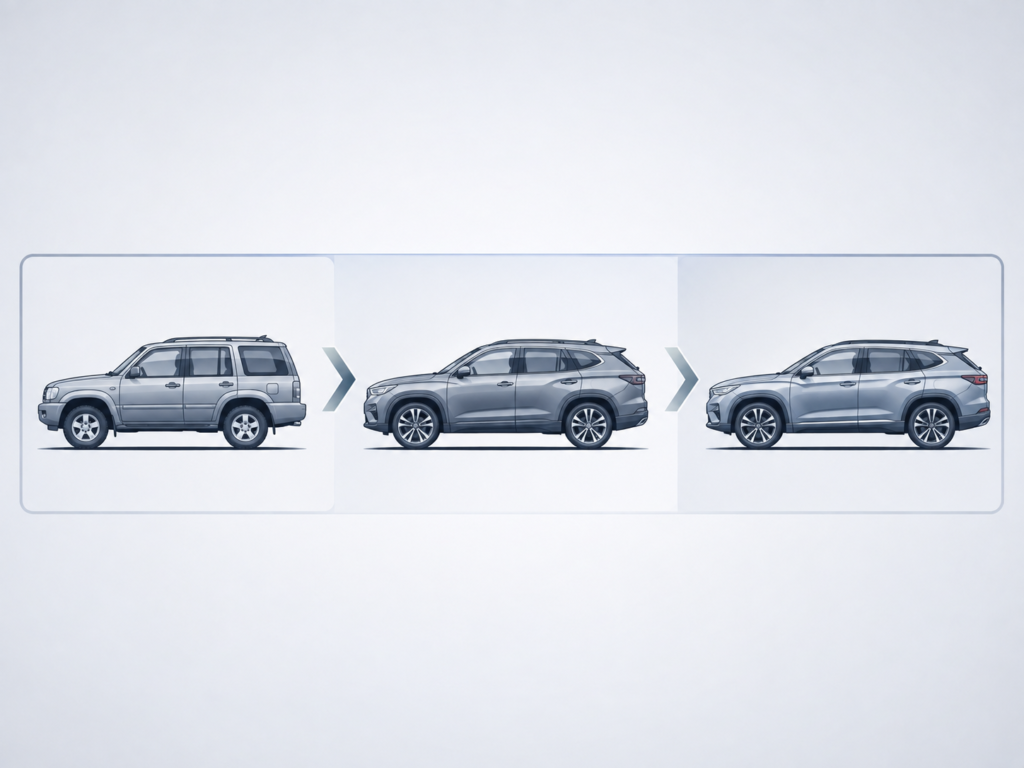
The all-new 2021 Rogue began the third generation and is not part of that settlement. Nissan did conduct a limited 2021 campaign affecting a VIN-specific population that included transmission-control reprogramming and could involve a “CVT malfunction” warning or delayed Reverse-to-Drive engagement. That is not evidence of the same broad mechanical problem history seen in earlier vehicles.
Most reported symptoms
The most recognizable symptom is judder or shudder: a vibration, shake, bumping sensation, or repeated tremor during acceleration. Nissan’s 2014–2016 bulletin defined the complaint this way and paired it with CVT codes P17F0 or P17F1. Depending on the code and inspection result, the repair path could lead to valve-body service, belt inspection, or CVT replacement.

Hesitation or lack of power is also documented. Nissan issued service information for 2014–2016 Rogues in which a pressure-control-solenoid-related code could accompany hesitation or reduced power. This symptom should not automatically be blamed on the transmission because engine and electronic-control faults can feel similar.
Overheating-related reduced performance is particularly relevant to some earlier Rogues. Nissan’s 2011–2015 bulletin described a protective mode that could reduce vehicle speed under sustained heat load. That is different from conventional mechanical slipping: the control system is deliberately limiting performance to protect the CVT.

Whining or rattling can accompany that heat-protection event. Delayed engagement—a noticeable pause after selecting Drive or Reverse—also warrants diagnosis; Nissan’s limited 2021 campaign specifically mentioned delayed Reverse-to-Drive engagement. Warning lights may or may not appear, so diagnosis should include scanning the transmission control module, not just a generic engine-code check.
Manufacturer and regulatory response
Nissan’s response has included technical bulletins, software campaigns, component-level repairs, and warranty extensions.
For certain 2014–2016 Rogues, Nissan conducted voluntary service campaign PC490 to reprogram the transmission control module at no charge. Nissan also issued detailed judder bulletins. One repair procedure required dealers to distinguish between conditions calling for complete CVT replacement and those calling for valve-body removal and belt inspection. Later information for 2018–2020 Rogues included internal repair procedures for specified CVT codes.

The major consumer remedy came through U.S. class-action litigation. A court approved a settlement concerning CVTs in 2014–2018 Rogue, 2015–2018 Pathfinder, and certain Infiniti QX60 vehicles. Nissan’s settlement-related bulletin specifically excluded Rogue Hybrid vehicles. For covered Rogues, the transmission warranty was extended from 60 months/60,000 miles to 84 months/84,000 miles, whichever came first. Nissan’s 2022 warranty-extension bulletin also listed the 2015 Rogue Select. Covered items included the CVT assembly and internal components, gaskets and seals, control valve body, torque converter, applicable cooler kit, and TCM reprogramming.
The settlement also offered qualifying owners reimbursement or other benefits, subject to eligibility rules and deadlines. A current used-car buyer should not assume those past benefits remain available.
Nissan’s settlement communication specifically stated that the warranty extension was not a safety recall or service campaign. A TSB is also not a recall; it is repair guidance for technicians. Buyers should check the VIN separately for open safety recalls, including recalls unrelated to the CVT.
Repair options and general cost considerations
The correct repair depends on diagnosis. At the lower end, a Rogue may need a software update, fluid-level correction, or scheduled CVT-fluid service. These should not be presented as cures for a worn belt, damaged pulleys, or a failing valve body.
A second tier involves the control valve body, which contains hydraulic valves and electronically controlled solenoids that regulate pressure and ratio changes. Nissan’s bulletins show that some fault patterns call for valve-body replacement and belt inspection rather than automatic replacement of the entire transmission. Later procedures also allowed certain belt-and-pulley subassembly repairs by properly trained technicians.

For some 2011–2015 vehicles with heat-protection behavior, Nissan’s repair path could include an external CVT fluid cooler, sometimes combined with control-valve work.
If significant internal damage is present, complete CVT replacement may be the practical repair. That matters because transmission replacement commonly costs several thousand dollars. Current U.S. industry estimates for transmission replacement broadly—not every Rogue configuration specifically—are around the mid-$6,000 range, while Rogue fluid service is generally a few hundred dollars. Actual quotes vary with model year, labor rate, parts source, and shop.
Preventive maintenance and buyer guidance
Maintenance cannot guarantee that a CVT will never fail, but ignoring the fluid is unwise. Nissan’s maintenance information for a 2018 Rogue calls for regular CVT-fluid inspection and specifies replacement under severe service; Nissan’s 2016 service guide also instructed that certain CVT-equipped Rogues have fluid replaced every 60,000 miles or have deterioration data checked with Nissan’s CONSULT system. Use the exact fluid specification required for the vehicle.
For a used Rogue, ask for invoices, not just a seller’s statement that it was “serviced.” Look for CVT-fluid maintenance, prior transmission or valve-body work, TCM reprogramming, and dealer visits for judder or reduced-power complaints.
A pre-purchase inspection should include a road test from cold and again fully warmed. Check for shudder under light and moderate acceleration, loss of acceleration, delayed Drive or Reverse engagement, persistent whining, and warning messages. Have a technician scan the TCM for present and stored codes and inspect for leaks. On 2014–2020 vehicles, familiarity with Nissan’s Rogue-specific CVT bulletins is valuable.
Finally, check the VIN with Nissan and NHTSA for campaigns or recalls and ask Nissan to verify remaining warranty coverage. Because the 84-month/84,000-mile extension is limited by both time and mileage, most affected vehicles are now outside at least one limit; a late in-service date can matter, so VIN-specific confirmation is preferable.
Conclusion
The Rogue’s CVT history is neither a reason to reject every used Rogue nor something to dismiss. Nissan documented heat-protection issues on some 2011–2015 Rogue/Rogue Select vehicles, issued multiple judder and pressure-control bulletins for 2014–2016 Rogues, published later CVT repair guidance for 2018–2020 models, and extended CVT warranty coverage for 2014–2018 Rogues following class-action litigation.
What the public record does not establish is that all Rogues in those years will experience transmission failure or that a particular mileage guarantees failure. TSBs and settlements identify known service concerns and remedies; they are not population-wide reliability statistics.
For buyers, condition and documentation matter more than internet reputation alone. A Rogue with smooth operation, clean diagnostic results, consistent CVT-fluid service, and complete repair records is a materially different purchase from one that shudders, hesitates, has unknown maintenance history, or carries unresolved transmission codes. A model-year-aware pre-purchase inspection remains the best way to reduce risk.
