
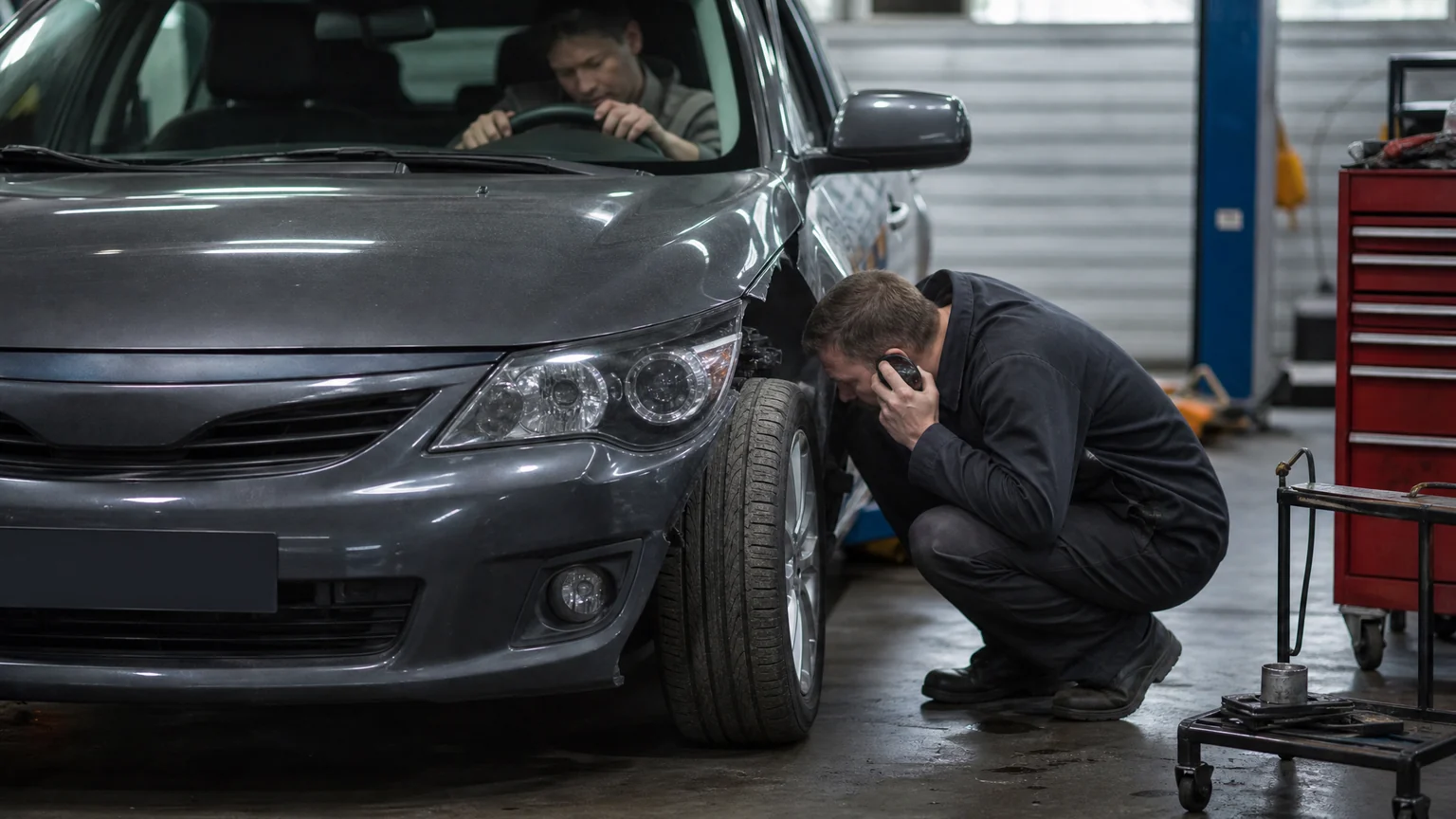
Noises and knocks when turning the steering wheel usually come from the steering system, suspension, front axle, or tires. The sound can be a click, clunk, knock, squeak, groan, creak, or whining noise. Each type of noise gives a clue about the part that may be worn or low on lubrication.
Do not ignore steering noises. Some causes are minor, such as low power steering fluid or dry bushings. Others are safety-critical, such as worn tie rods, ball joints, steering rack problems, or CV joint failure.
Contents
Common noises when turning the steering wheel
| Noise | Most likely area | Common causes |
|---|---|---|
| Clicking while turning | Front axle/wheel area | Outer CV joint, axle shaft, loose hub components |
| Clunk or knock | Suspension/steering linkage | Tie rod end, ball joint, control arm bushing, sway bar link, strut mount |
| Groaning or whining | Power steering system | Low fluid, air in system, failing pump, restricted hose |
| Creaking | Suspension joints or bushings | Dry ball joint, control arm bushing, strut mount bearing |
| Squealing | Belt or pump area | Loose belt, failing power steering pump, low fluid |
| Rubbing or scraping | Wheel/tire/brake area | Tire rubbing liner, loose shield, brake dust shield |
1. Low or aerated power steering fluid
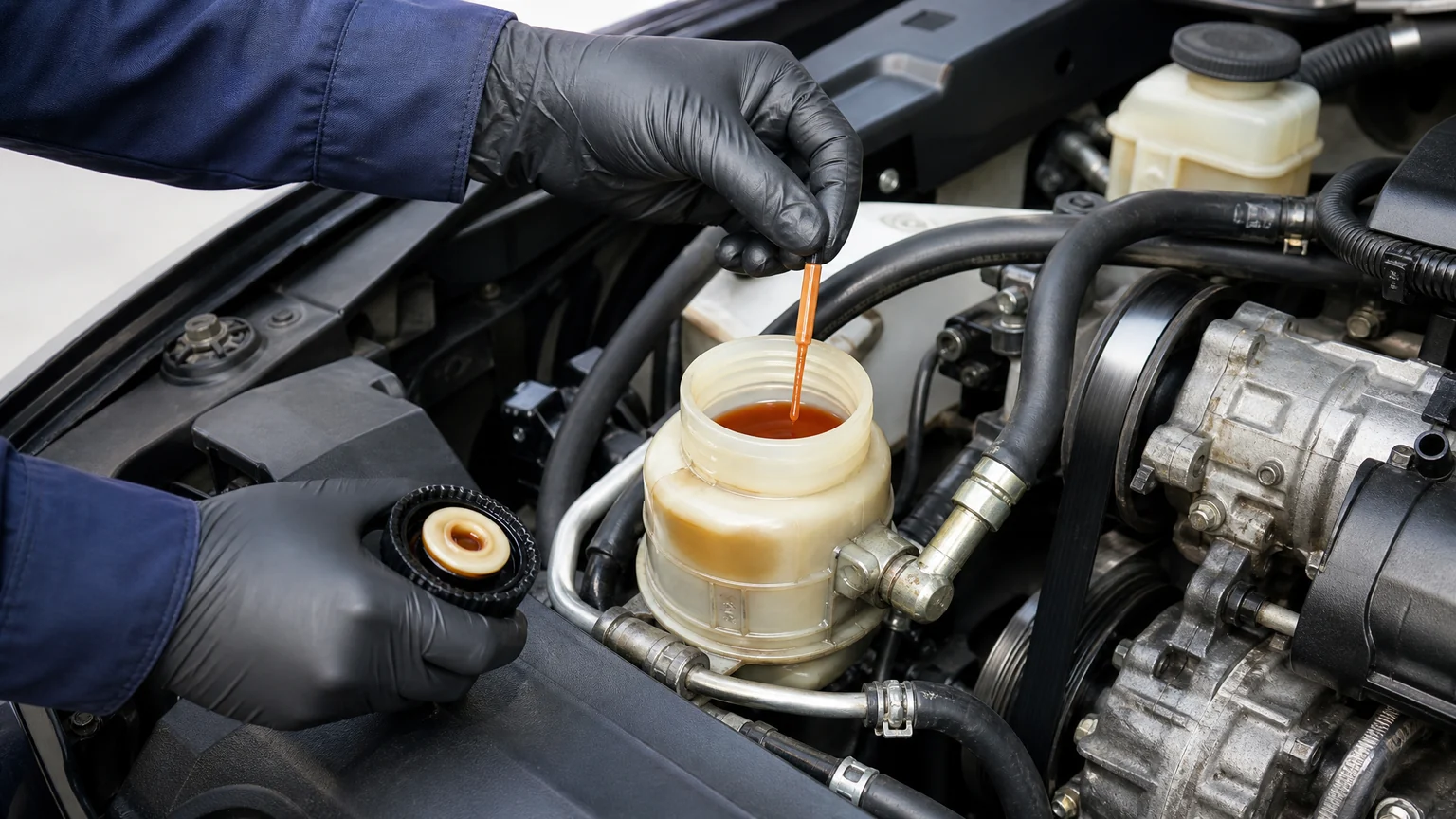
On hydraulic power steering systems, low fluid is one of the easiest causes to check. Low fluid can make the pump whine or groan when the wheel is turned. Air in the fluid can also create noise and a foamy appearance. If the fluid is foaming, this guide is directly related: causes why power steering fluid is foaming.
2. Worn tie rod ends
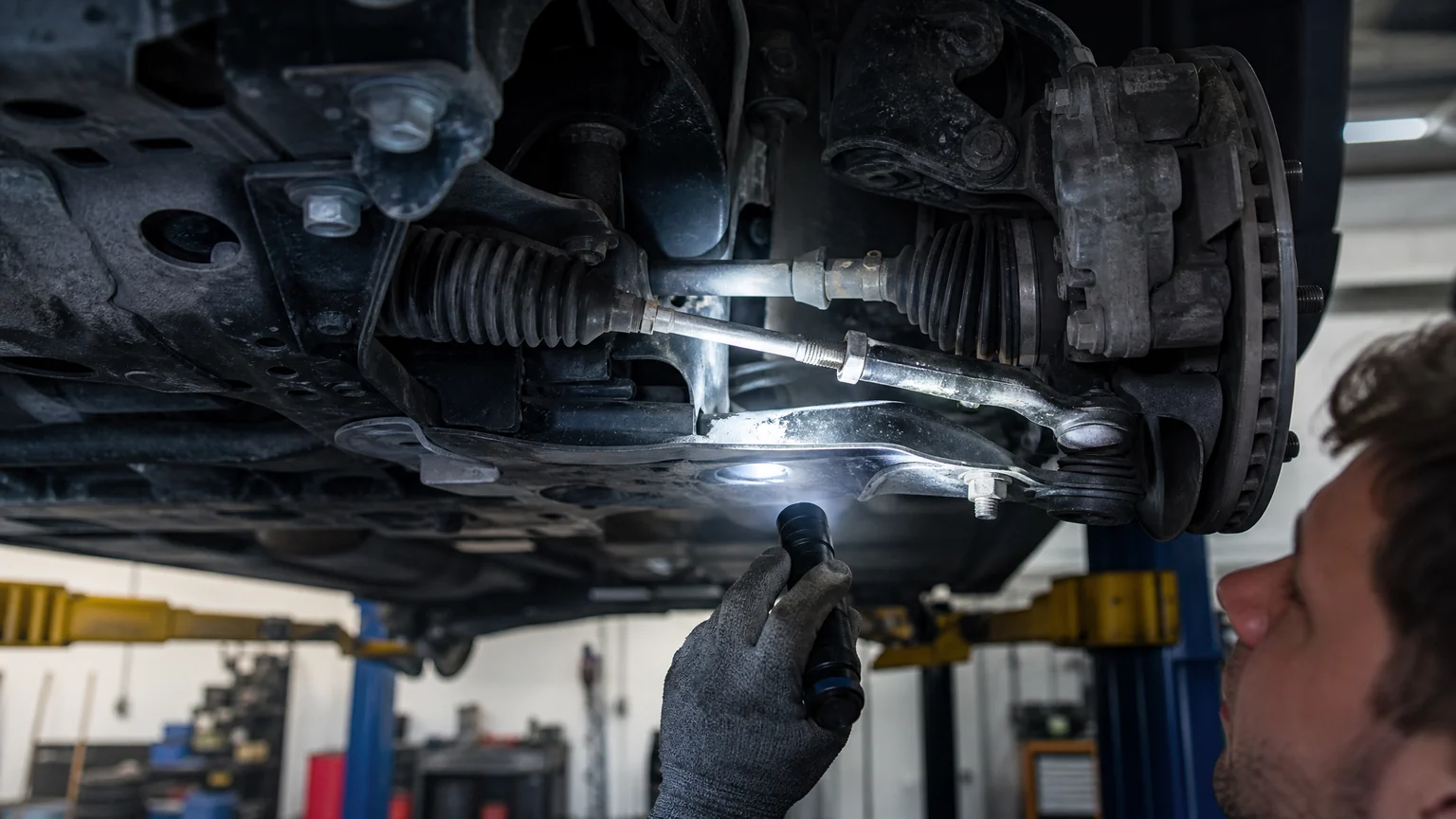
Tie rods connect the steering rack to the wheels. A worn outer or inner tie rod can knock when turning, driving over bumps, or changing direction. It may also cause loose steering, uneven tire wear, or poor alignment. Because tie rods affect steering control, they should be inspected immediately if play is suspected.
3. Bad ball joints or control arm bushings
Ball joints and bushings allow the suspension to move while keeping the wheel properly positioned. When they wear, you may hear clunks, knocks, or creaks during turning, braking, or driving over bumps. A dry or failing ball joint can also squeak or groan.
4. Strut mount or strut bearing noise
On many front suspension designs, the strut mount turns when the steering wheel turns. A worn strut bearing can make a creak, pop, knock, or spring-like twang. This sound is often heard when turning the wheel while parked or moving slowly.
5. CV joint clicking when turning
A rapid clicking noise during tight turns often points to an outer CV joint. The sound is usually louder when accelerating while turning. A torn CV boot lets grease escape and dirt enter, which quickly damages the joint. If caught early, a boot may be replaced; if the joint is noisy, the axle often needs replacement.
6. Steering rack problems
A worn steering rack or rack bushings can cause knocking, looseness, or uneven steering effort. Hydraulic racks can also leak fluid. Electric power steering systems may make different noises, including motor whine or clicking, and may store diagnostic trouble codes.
7. Sway bar links and suspension hardware
Sway bar links, control arm bolts, subframe mounts, and loose suspension hardware can knock when the vehicle body shifts during a turn. The sound may appear to come from the steering wheel even if the actual cause is a suspension part.
How to diagnose steering wheel knocks
- Listen while parked: turn the wheel slowly from side to side and note groans, creaks, or pops.
- Listen while driving slowly in a parking lot: tight circles can reveal CV joint clicking.
- Check power steering fluid level and condition if the vehicle uses hydraulic steering.
- Inspect CV boots for tears and grease around the axle area.
- Check tie rods, ball joints, and control arm bushings for play or torn boots.
- Inspect strut mounts, sway bar links, and steering rack mounts.
- After replacing steering or suspension parts, perform a wheel alignment.
When the car is unsafe to drive
- The steering feels loose, delayed, or unpredictable.
- The steering wheel does not return normally after a turn.
- There is visible play in tie rods, ball joints, or wheel components.
- The power steering fluid is leaking quickly or the pump is very loud.
- You hear loud knocking combined with vibration or wheel movement.
- The vehicle pulls strongly, wanders, or has severe uneven tire wear.
Can tire or brake problems sound like steering knocks?
Yes. A loose brake dust shield, worn brake hardware, tire rubbing against the liner, loose wheel nuts, or a wheel bearing can create noises that seem related to steering. If the sound happens only while turning, start with the steering and suspension, but inspect brakes and tires too.
If the knock is under the car during acceleration rather than steering input, this related guide may help: causes of knocking sounds under the car when accelerating.
FAQ
Why does my steering wheel knock when I turn at low speed?
Low-speed knocking often comes from tie rods, ball joints, strut mounts, sway bar links, control arm bushings, or steering rack mounts. If it clicks repeatedly during tight turns, suspect a CV joint.
Why does my steering groan when turning?
A groaning or whining sound usually points to the power steering system: low fluid, air in the fluid, a failing pump, or a restriction. Electric steering can also make motor-related noises, but it should not feel heavy or jerky.
Can I drive with a steering knock?
Not for long without inspection. Some causes are minor, but tie rods, ball joints, steering rack issues, and CV joints can affect control of the vehicle. Diagnose it before it worsens.
Conclusion
Noises and knocks when turning the steering wheel should be diagnosed by sound type, driving condition, and location. Check power steering fluid first if the system is hydraulic, then inspect tie rods, ball joints, CV joints, strut mounts, bushings, and steering rack components. Because steering and suspension parts are safety-critical, do not delay repairs if there is play, leakage, or worsening noise.
