
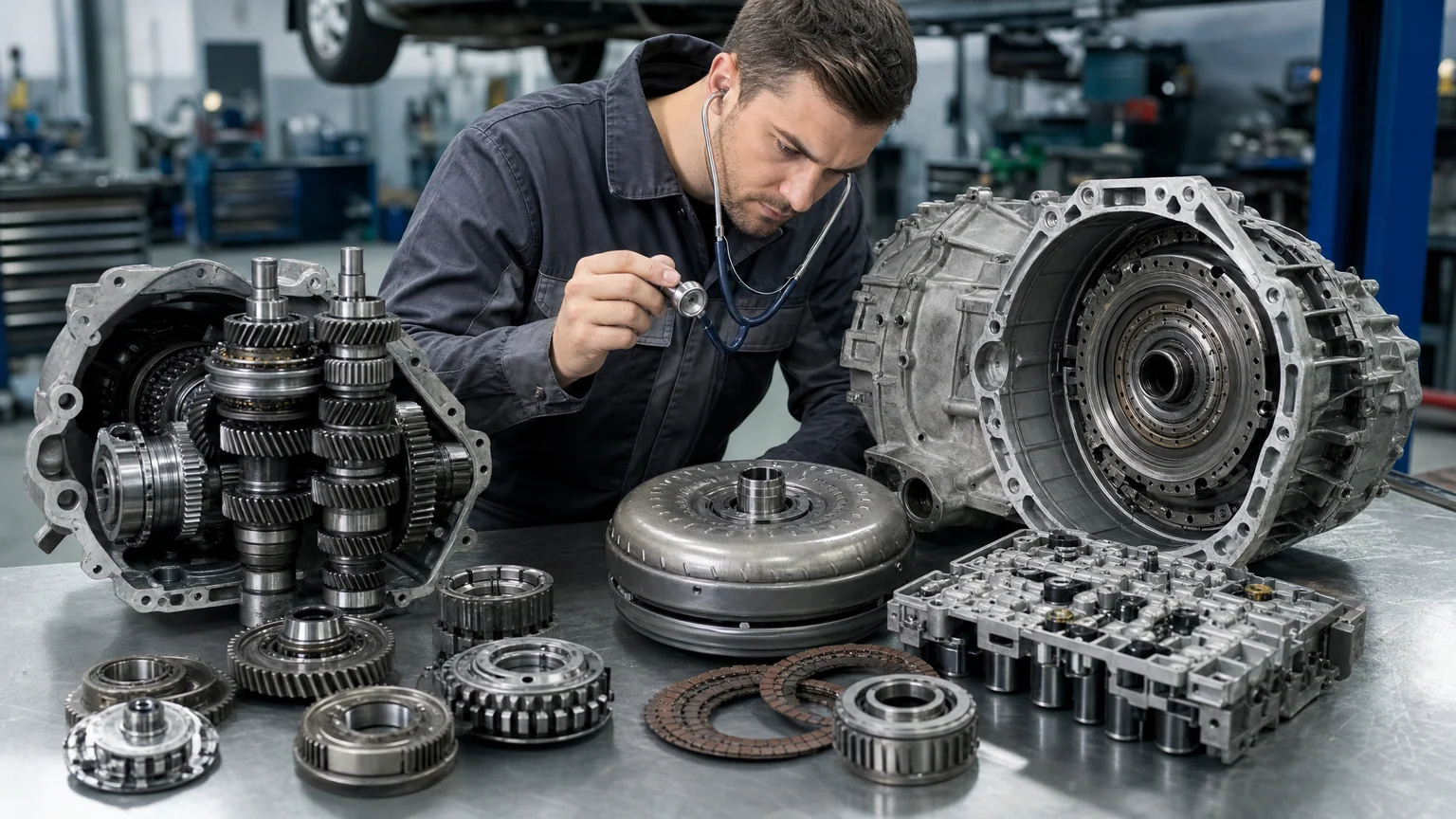
Noise in a manual or automatic transmission is one of the clearest warnings that something in the drivetrain needs attention. A transmission can whine, hum, grind, clunk, rattle, buzz, or knock, and each sound points toward different possible causes.
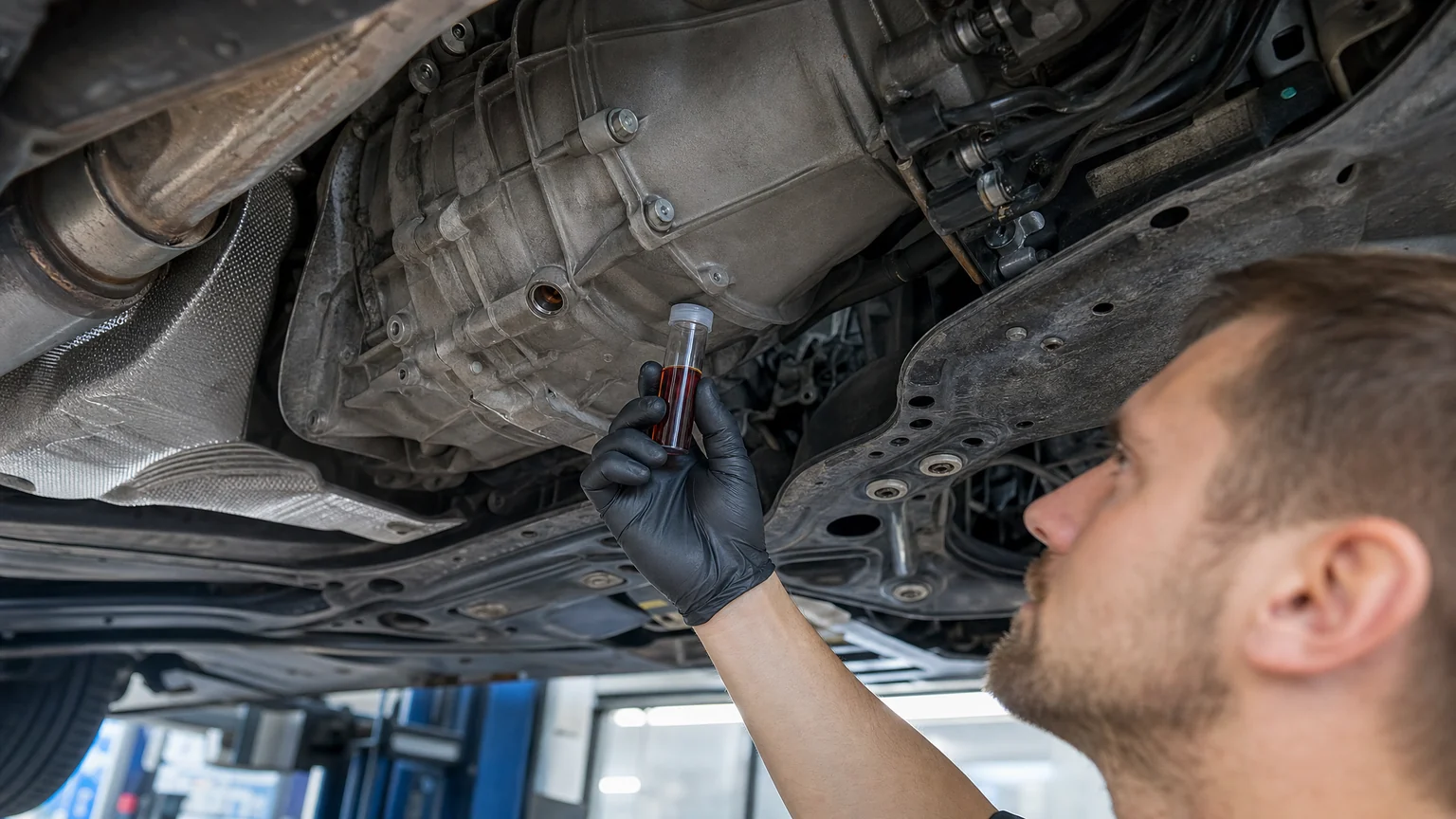
The safest first step is simple: check the transmission fluid level and condition if the vehicle design allows it. Low, dirty, burnt, or incorrect fluid can cause noise in both manual and automatic transmissions. If the noise is loud, sudden, or paired with slipping gears, delayed engagement, or metal particles in the fluid, stop driving and diagnose it before the repair becomes bigger.
Contents
Common transmission noises and likely causes
| Noise | When it happens | Possible causes |
|---|---|---|
| Whining or humming | Acceleration, cruising, or all gears | Low fluid, worn bearings, gear wear, differential noise, pump whine |
| Grinding | During gear changes | Manual clutch drag, worn synchros, low gear oil, shift linkage problem |
| Clunking | Shifting into Drive/Reverse or changing gears | Worn mounts, driveline play, U-joints/CV joints, harsh engagement |
| Buzzing | Idle or low speed | Low automatic transmission fluid, pump noise, solenoid or valve body issues |
| Rattle in neutral | Manual transmission at idle | Input shaft bearing, clutch release bearing, flywheel, gear rollover noise |
| Clicking or knocking | Speed-related or load-related | Damaged gears, worn CV joints, loose mounts, internal wear |
Manual transmission noise causes
Manual transmissions are mechanical and direct, so noise often changes with clutch pedal position, vehicle speed, gear selection, and load. A hum that rises with speed may come from bearings or differential gears. A grind during shifts often points to clutch drag, worn synchronizers, or incorrect gear oil. A rattle at idle that changes when you press the clutch can point toward the release bearing, input shaft bearing, or flywheel area.
- Low or wrong gear oil: causes bearing and gear noise and accelerates wear.
- Worn synchronizers: cause grinding when shifting into specific gears.
- Clutch not fully disengaging: causes difficult shifts and gear clash.
- Worn bearings: create humming, whining, or growling that changes with speed or gear.
- Damaged flywheel or clutch parts: can rattle, knock, or vibrate.
Automatic transmission noise causes
Automatic transmissions rely on hydraulic pressure, fluid quality, solenoids, valve body passages, clutches, and a torque converter. A whine during acceleration may come from low fluid, a restricted filter, pump wear, torque converter issues, or internal gear wear. Harsh clunks when shifting into Drive or Reverse can be caused by mounts, low fluid pressure, worn clutches, or driveline play.
If the transmission slips or an overdrive light flashes, the fluid system should be checked early. These related posts may help: can low transmission fluid cause gear slip? and can low transmission fluid cause the overdrive light to flash?.
How to diagnose transmission noise safely
- Note when the noise happens: idle, acceleration, deceleration, turning, shifting, or only in one gear.
- Check fluid level and condition using the correct procedure for the vehicle.
- Look for leaks around the pan, axle seals, cooler lines, drain plug, or case seams.
- Scan for transmission control module codes if the vehicle has an automatic transmission.
- Inspect mounts, CV joints, driveshaft joints, and wheel bearings so you do not blame the transmission too early.
- Do not perform aggressive test drives if the transmission is slipping, grinding badly, or making metallic noises.
Transmission fluid clues
| Fluid condition | What it suggests | Action |
|---|---|---|
| Clear red or amber and correct level | Fluid may be healthy | Continue diagnosis if noise remains |
| Low level | Leak or incorrect service level | Top up with correct fluid and repair leak |
| Dark or burnt smell | Overheating or clutch wear | Service/diagnose soon; avoid hard driving |
| Metal flakes or glitter | Internal wear | Professional inspection recommended |
| Foamy fluid | Overfill, wrong fluid, air entry, pickup issue | Correct level and diagnose cause |
Can you keep driving with transmission noise?
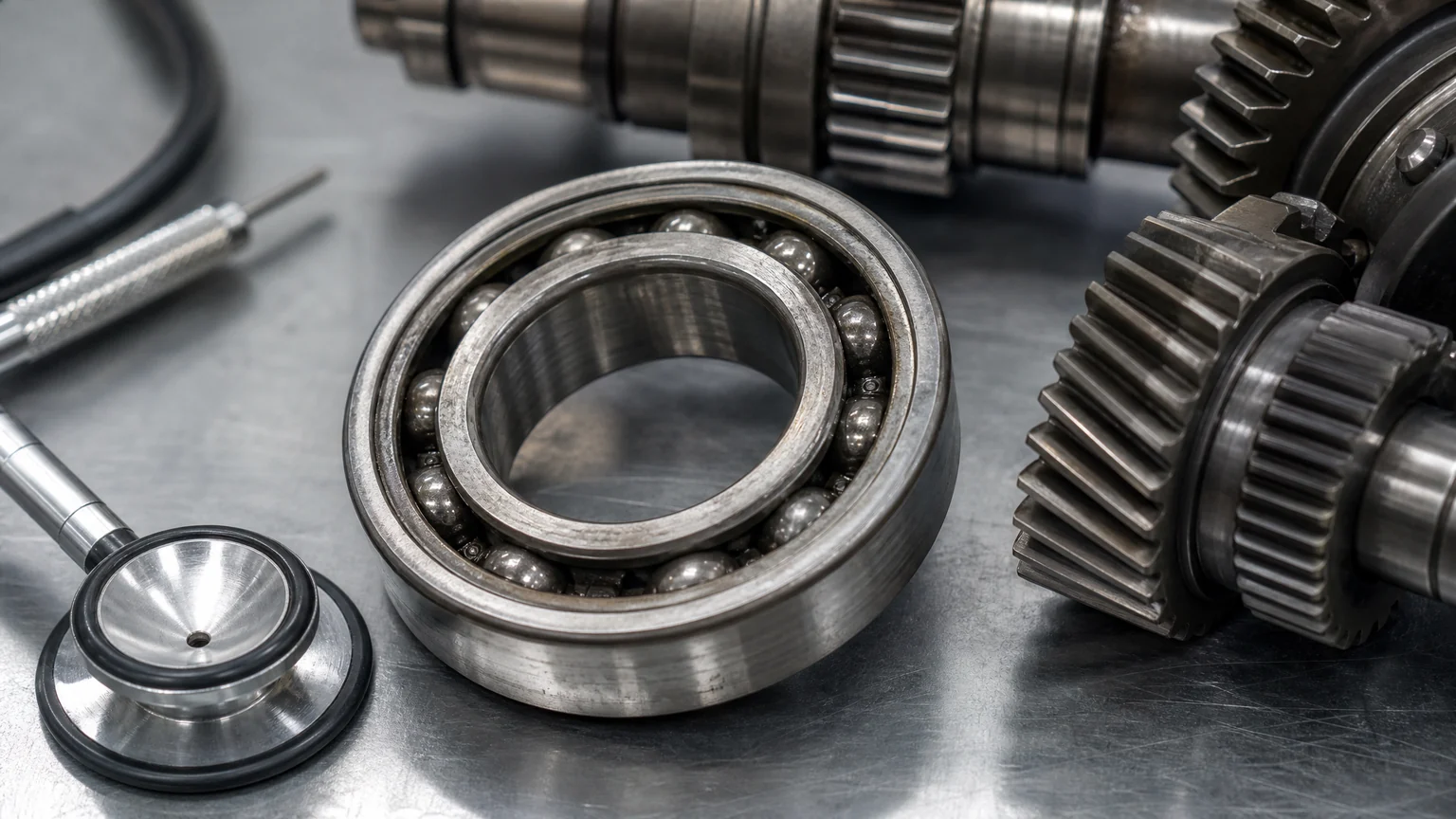
It depends on the sound. A faint whine that has been stable for months is less urgent than sudden grinding, banging, slipping, burning smell, or warning lights. However, transmission noise usually gets worse when ignored. Low fluid can destroy bearings, clutches, pumps, and gears quickly.
Repair options
- Fluid top-up or fluid/filter service if the fluid is low or contaminated and no major internal damage is present.
- Leak repair if seals, cooler lines, or pan gaskets are causing low fluid.
- Clutch adjustment or repair for manual transmission grinding caused by clutch drag.
- Synchronizer, bearing, or gear repair if internal manual transmission wear is confirmed.
- Torque converter, valve body, solenoid, or pump diagnosis for automatic transmission whine or harsh engagement.
- Transmission rebuild or replacement if metal debris, severe slipping, or internal failure is present.
FAQ
Why does my transmission whine when accelerating?
Common causes include low fluid, worn bearings, gear wear, pump noise, torque converter problems, or differential noise. The exact cause depends on whether the sound follows engine rpm, vehicle speed, or gear selection.
Why does my manual transmission grind when shifting?
Grinding often means the gear speeds are not matching during the shift. Causes include worn synchronizers, clutch drag, low or wrong gear oil, or shift linkage problems.
Is transmission noise always expensive?
No. Some noises are caused by low fluid, mounts, external driveline parts, or service issues. But internal grinding, metal in fluid, or slipping can become expensive fast, so early diagnosis matters.
Conclusion
Manual and automatic transmission noises are useful clues. Listen for when the sound happens, check fluid condition first, and inspect related driveline parts before assuming the gearbox is finished. If the noise is loud, sudden, metallic, or paired with slipping or delayed engagement, stop driving and get the transmission checked quickly.
