
Quick answer: A spoiler is useful when it is engineered for the specific car and driven at speeds where airflow matters. On many normal road cars, especially small cosmetic lip spoilers, the effect is mostly visual and may add little or no real traction.
Contents
What a spoiler is supposed to do
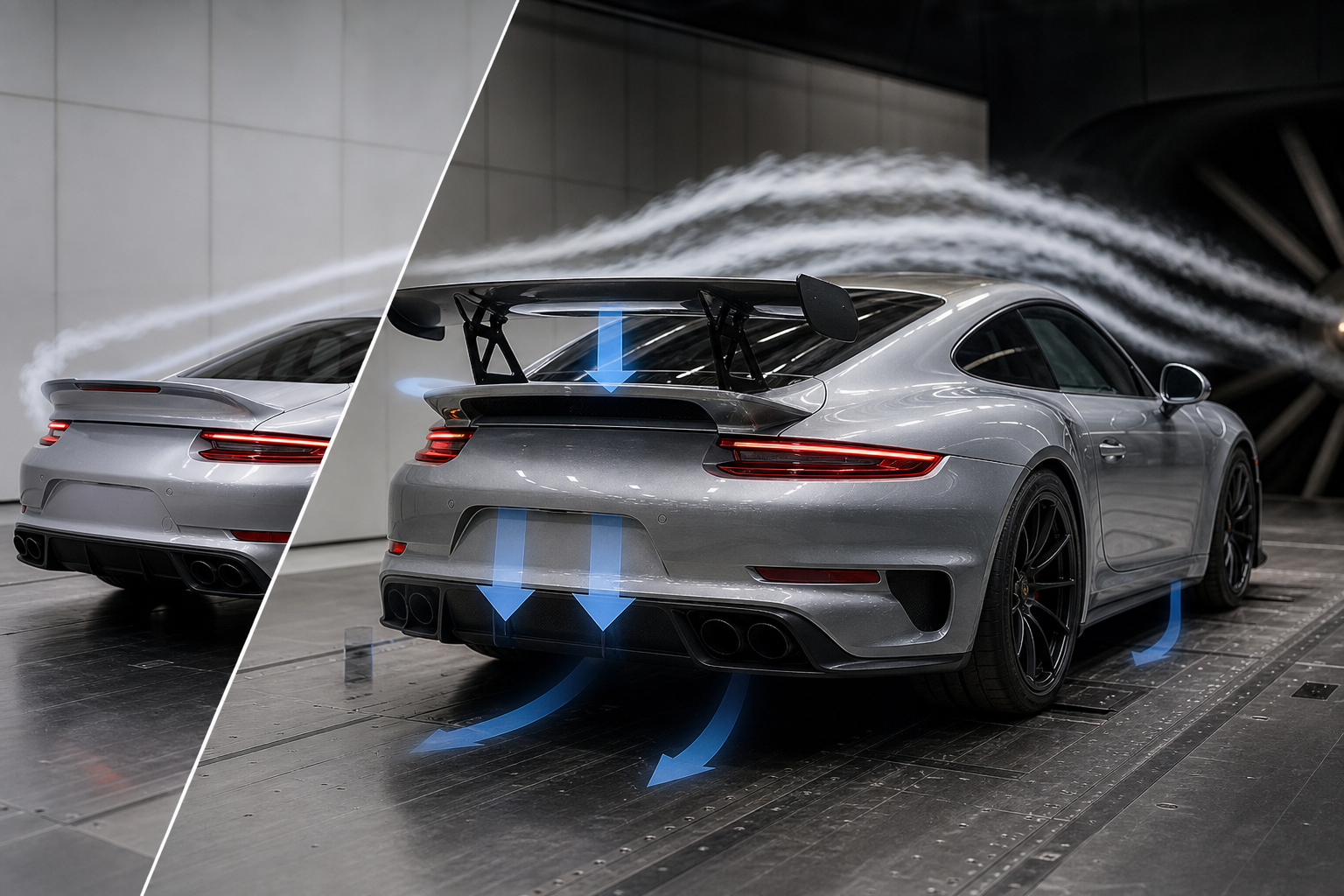
A spoiler changes airflow around the rear of the vehicle. Depending on shape and placement, it can reduce lift, reduce drag in some cases, or help keep the rear of the car more stable at speed. A true wing can create downforce, but that downforce usually comes with extra drag.
| Type | Main purpose | Useful for |
|---|---|---|
| Small trunk lip spoiler | Reduce lift or clean airflow | Some sedans and coupes at highway speed |
| Large rear wing | Generate downforce | Track cars and high-speed performance cars |
| Roof spoiler on hatch/SUV | Manage rear airflow and dirt/wake | Stability, rear-window cleanliness, styling |
| Universal aftermarket spoiler | Often cosmetic | Only useful if properly engineered and mounted |
When a spoiler is genuinely useful
- The car was designed or tested with that spoiler.
- The vehicle is driven at speeds where aerodynamic load matters.
- The spoiler improves front-to-rear balance instead of only adding rear drag.
- It is mounted strongly enough to handle airflow loads.
- It does not block visibility or create unsafe sharp edges.
When a spoiler is mostly cosmetic
Many factory-style or aftermarket spoilers on daily drivers are installed mainly for appearance. That is not automatically bad, but it should be understood as styling rather than a guaranteed handling upgrade. At city speeds, tire quality, suspension condition, alignment, and driver inputs matter far more.
Possible downsides
A poorly chosen spoiler can increase wind noise, reduce fuel economy, trap water, stress the trunk lid, make cleaning harder, or make a front-wheel-drive car feel less balanced if the rear is loaded without considering the front axle.
Bottom line
Spoilers can be useful, but only when design, speed, mounting, and vehicle balance all support the goal. For most street cars, the best “performance upgrade” is still good tires, brakes, suspension maintenance, and driver training.
FAQ
Do spoilers make a car faster?
Usually no. A spoiler can reduce lift or add downforce, but it can also increase drag. That may improve stability while slightly reducing top speed or fuel economy.
At what speed does a spoiler start working?
It depends on the design, but aerodynamic effects become more meaningful at highway speeds and above. At city speeds, most spoilers do very little.
Can an aftermarket spoiler make handling worse?
Yes. A badly designed or poorly mounted spoiler can add drag, upset balance, create noise, damage the trunk lid, or reduce rear visibility.
Is a rear wing the same as a spoiler?
Not exactly. A spoiler usually disrupts airflow to reduce lift, while a wing is shaped to generate downforce. Many street-car parts use the names loosely.
Note: This guide is educational. If a symptom affects braking, steering, fuel leaks, overheating, or the car’s ability to move safely, have the vehicle inspected by a qualified mechanic before driving.
