
Quick answer: Bigger cars often have an advantage in two-vehicle crashes because of mass and structure, but they are not automatically safer. Crash-test performance, stability control, braking distance, tire condition, visibility, rollover risk, and driver behavior matter just as much.
Contents
Why size can help in a crash
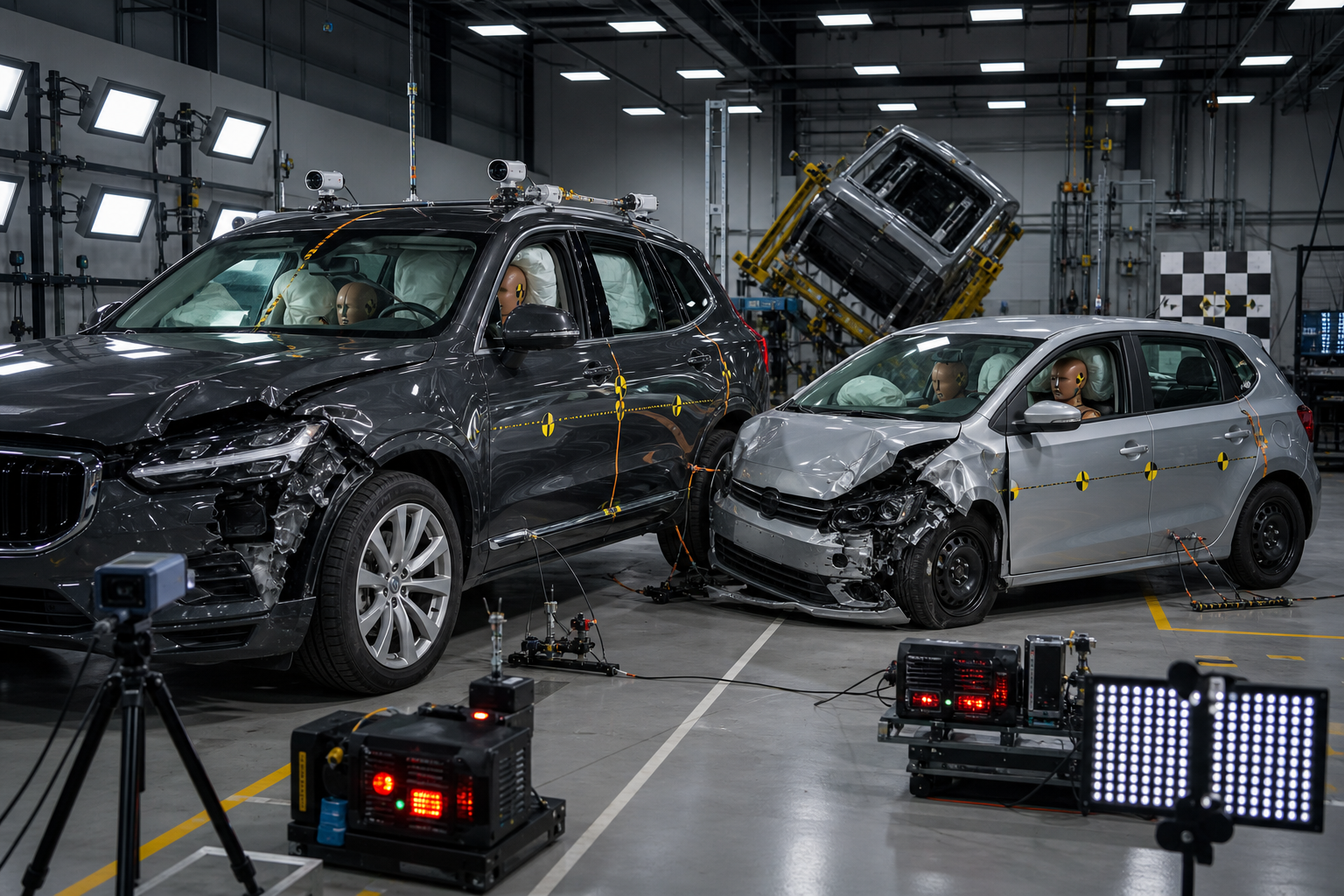
Vehicle mass and structure matter. In a collision between two vehicles, the heavier one often experiences a smaller change in speed, which can reduce forces on its occupants. Larger vehicles may also have more space for crumple zones that absorb energy before it reaches the cabin.
| Factor | Why it matters | Bigger car advantage? |
|---|---|---|
| Mass | Can reduce occupant deceleration in some two-car crashes | Often yes |
| Crumple zones | Absorb crash energy before the cabin | Often yes, if well designed |
| Rollover risk | Higher center of gravity can be a disadvantage | Not always |
| Braking distance | More weight can require more stopping force | Not automatically |
| Safety technology | Prevents or reduces crashes | Depends on model and year |
Why bigger does not always mean safer
A large vehicle with poor structure, old tires, weak headlights, no modern driver-assistance systems, or bad maintenance can be less safe than a smaller newer car with excellent crash results. Rollover risk is also important for taller vehicles, especially when loaded incorrectly or driven aggressively.
Crash-test ratings matter more than assumptions
Before buying, compare independent crash-test results for the exact model and year. Look at small-overlap protection, side-impact performance, head restraints, roof strength, headlight ratings, and pedestrian safety. Safety changes dramatically between generations of the same model.
Safety for everyone, not only occupants
Bigger vehicles can create more risk for pedestrians, cyclists, and occupants of smaller cars. Good visibility, automatic emergency braking, speed control, and careful driving are part of responsible ownership.
Best buying advice
Choose the safest vehicle that fits your real needs, not simply the biggest one. Prioritize crash ratings, stability control, automatic emergency braking, good tires, proper maintenance, and clear visibility.
FAQ
Is an SUV always safer than a small car?
No. A modern small car with excellent crash ratings can be safer than an older or poorly rated SUV. Compare independent crash-test results, not size alone.
Why do larger vehicles often protect occupants better?
More mass and longer crumple zones can reduce crash forces on occupants in some collisions, especially when hitting a smaller vehicle.
What safety disadvantage can bigger cars have?
Higher center of gravity, longer stopping distance, larger blind spots, and more weight can increase rollover or pedestrian risk if the vehicle is poorly designed or driven aggressively.
What should I check before buying for safety?
Look at IIHS/NHTSA or Euro NCAP ratings, automatic emergency braking, lane support, stability control, tire quality, headlight rating, and real-world visibility.
Note: This guide is educational. If a symptom affects braking, steering, fuel leaks, overheating, or the car’s ability to move safely, have the vehicle inspected by a qualified mechanic before driving.
