
Prospective pre-owned buyers and current operators frequently research
reliability records for the 2016 Mercedes-Benz C300 to anticipate mechanical
liabilities, budget for maintenance, and identify safety vulnerabilities.
Because the vehicle entered the market over a decade ago, long-term operational
data exists across federal repositories, enthusiast registries, and professional
workshop networks. However, sorting online discourse requires distinguishing
verified mechanical failures from subjective complaints.
In technical evaluations, the car issues fall into three distinct
classifications:
- Official recall or investigation: A government-tracked campaign or defect
inquiry overseen by regulators such as the National Highway Traffic Safety
Administration (NHTSA) or formally declared by the manufacturer. - Owner-reported complaint: An unverified, self-selected report submitted by
an operator to public portals or enthusiast forums detailing a personal
vehicle failure. - Expert or editorial assessment: An evaluation published by professional
automotive testing organizations, workshop technicians, or engineering
tear-downs analyzing design strengths and failure modes.
- The 2016 C300 in Context: generation, platform, engine and trim differences
The 2016 C300 represents the second model year of the fourth-generation C-Class,
internally designated as the W205 chassis. Built upon Mercedes-Benz’s Modular
Rear Architecture (MRA), this generation adopted substantial structural aluminum
to reduce curb weight compared to its W204 predecessor. In the United States
market, North American sedans were primarily assembled at the manufacturer’s
production facility in Vance, Alabama.
For the 2016 model year in North America, the C300 lineup consisted primarily of
four-door sedans, with two-door coupes and convertibles arriving later in the
cycle. Buyers could choose between the standard rear-wheel-drive (RWD) C300
configuration and the 4MATIC permanent all-wheel-drive system, which uses an
integrated transfer case to distribute torque between the front and rear axles.
Both drivetrains share an identical powertrain configuration: a longitudinally
mounted 2.0-liter turbocharged four-cylinder gasoline engine mated to a
seven-speed automatic transmission. Trim differences were organized around Sport
and Luxury aesthetic packages rather than distinct mechanical ratings, although
Sport variants included firmer suspension damping and revised front brake
rotors.
Because the W205 represented a clean-sheet redesign launched for the 2015 model
year, the 2016 iteration inherited several production revisions intended to
resolve initial launch assembly snags, while maintaining the same underlying
mechanical architecture.
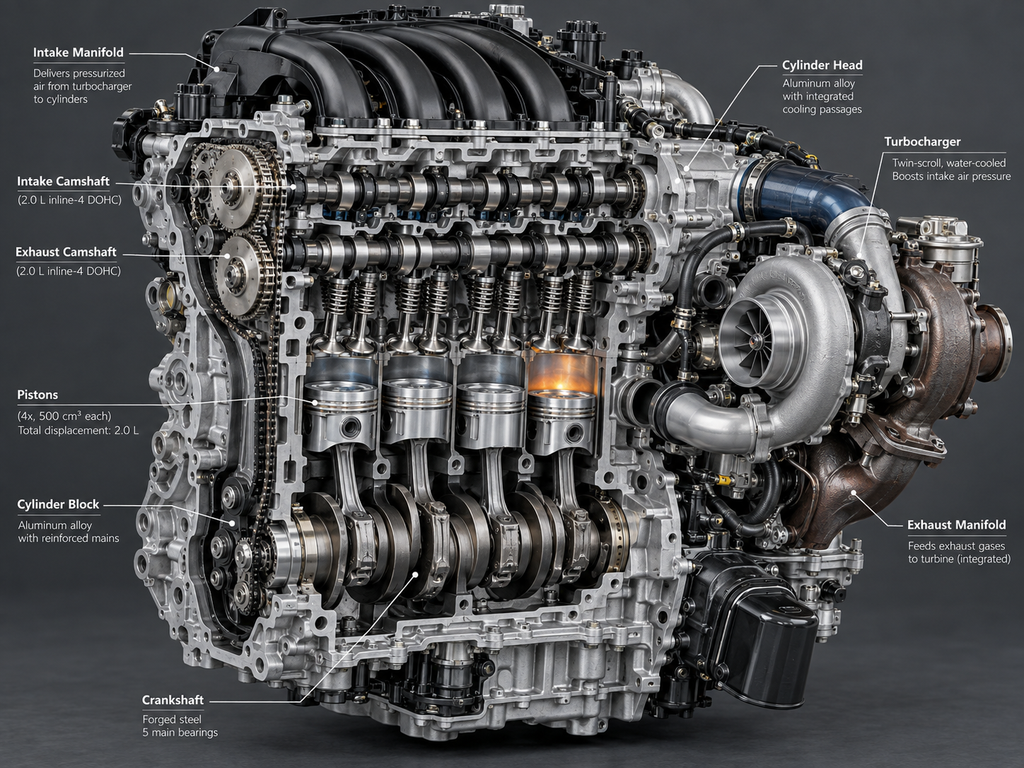
- Engine and Drivetrain: the 2.0-liter turbocharged four-cylinder
The heart of the 2016 C300 is the M274 engine—specifically the 2.0-liter (1,991
cc) direct-injected, turbocharged dual-overhead-cam inline-four. In United
States specification, this powerplant produces 241 horsepower and 273 pound-feet
of torque. Across the broader lifecycle of the M274, owner documentation and
service bulletins highlight specific mechanical vulnerabilities alongside areas
of normal operation.
Wrist Pin Tolerances and Technical Service Bulletins
- Classification: Expert or editorial assessment corroborated by manufacturer
technical communications. - Evidence: Early M274 engines experienced wrist pin dimensional anomalies,
prompting Mercedes-Benz to publish Technical Service Bulletin
LI03.10-P-060916. The bulletin noted that unfavorable manufacturing
tolerances in the piston wrist pin could produce cold-start rattling or
clattering noises during deceleration. In September 2022, NHTSA’s Office of
Defects Investigation opened a defect petition (DP22-002) evaluating 2015
C300 applications. The petition was denied in January 2025 after federal
reviewers found insufficient evidence of sudden loss of vehicle control
across the broad population. Mercedes-Benz stated in technical filings that
the noise did not precipitate catastrophic structural failure. Although the
manufacturer updated wrist pin specifications during early 2015 production,
some owners of early-run 2016 vehicles report lingering cold engine clatter.
Piston Ring-Land and Cylinder Piston Failures
- Classification: Owner-reported complaint (unverified and self-selected)
alongside expert assessment. - Evidence: A pattern documented in NHTSA complaint filings and technical
forums involves cracked piston lands, predominantly on cylinder number one.
Affected owners report sudden engine misfires, rough idling, thick exhaust
smoke, and an unmetered loss of propulsion while operating at highway
speeds. Independent engine builders and technical analysts have investigated
these failures; experts believe that low-speed pre-ignition (LSPI), high
boost pressures at low engine speeds, and thermal loading can stress fragile
cast piston skirts. While there is evidence suggesting that combustion
anomalies damage the piston crown, researchers debate whether material
metallurgy or aggressive engine mapping is the dominant root cause. In
official communications, this remains a hypothesis without an active safety
recall.
Ancillary Engine Components: Thermostats and PCV Systems
- Classification: Expert assessment and owner complaints.
- Evidence: Workshop records and editorial repair trackers frequently document
premature failure of the electronically mapped engine thermostat. When the
internal heating element or mechanical gate fails, it typically defaults
open, triggering diagnostic trouble code P0597 and illuminating the check
engine light. Additionally, the positive crankcase ventilation (PCV) oil
separator assembly can deteriorate with age; replacing this assembly
requires labor-intensive disassembly due to its position beneath the intake
manifold.
- Transmission and Drivability: the automatic transmission
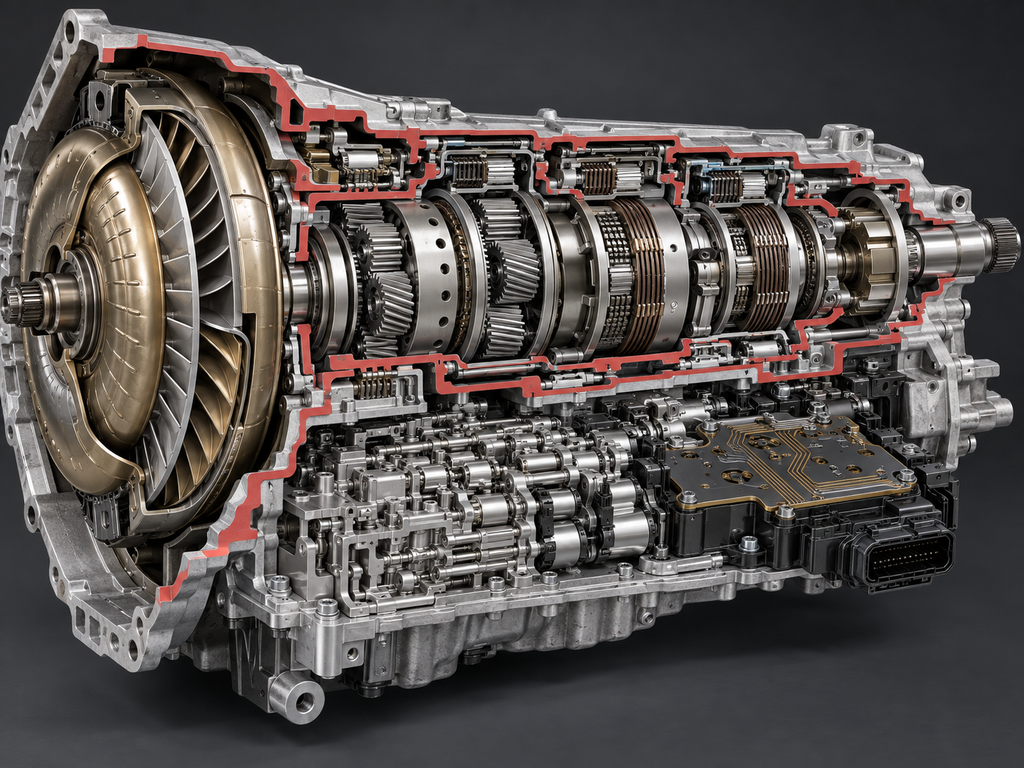
For the 2016 model year in the United States, the C300 retained the 7G-TRONIC
PLUS (Mercedes-Benz 722.9) seven-speed torque-converter automatic transmission,
preceding the widespread adoption of the nine-speed 9G-TRONIC in subsequent
model revisions.
Low-Speed Shift Quality and Hesitation
- Classification: Owner-reported complaint and expert assessment.
- Evidence: The most common drivability critique recorded by automotive
reviewers at Edmunds and detailed in owner complaint registries involves
irregular shifting behavior during low-speed transitions. Owners describe
harsh downshifts from third to second gear, or from second to first gear
when decelerating to a complete stop, followed by a slight hesitation when
re-accelerating. In technical documents, Mercedes-Benz authorized workshops
to perform transmission control module (TCM) software recalibrations and
dynamic adaptation drive cycles to smooth hydraulic clutch engagement. These
software revisions modified shift pressure timings to alleviate abrupt
deceleration behavior.
Conductor Plate and Speed Sensor Wear
- Classification: Expert assessment.
- Evidence: As the 722.9 transmission ages beyond ten years and surpasses high
mileage thresholds, the internal electro-hydraulic control unit—frequently
referred to as the conductor plate—can suffer internal speed sensor circuit
faults. When sensor components (such as turbine speed sensors Y3/8n1 or
Y3/8n2) fail to transmit valid RPM data to the transmission control module,
the gearbox enters “limp-home mode,” locking into third gear or neutral to
prevent internal damage. Fluid degradation accelerates this mechanical wear,
making periodic transmission fluid flushes essential.
- Infotainment and Electronics: display, Bluetooth, camera, and sensor complaints
The 2016 C300 interior features the COMAND infotainment platform or the standard
Audio 20 system, characterized by a tablet-style central display screen and a
console-mounted rotary dial with an overlying touchpad.
Center Display and Bluetooth Connectivity
- Classification: Owner-reported complaint.
- Evidence: Operator complaints submitted to NHTSA and owner forums describe
occasional display freezes, unexpected reboot cycles, and temporary screen
blanking. In hot ambient temperatures, owners report sluggish screen
response upon initial startup. Bluetooth pairing problems also appear across
complaint databases, where mobile devices disconnect intermittently during
hands-free calls or drop audio streaming links. Dealers addressed many early
electronic glitches through firmware flashes to the central audio head unit.
Rearview Camera Intermittent Operation
- Classification: Official recall and owner-reported complaint.
- Evidence: Drivers have documented delay times or black screens when shifting
into reverse gear. Mercedes-Benz issued technical software campaigns across
multiple model lines to address backup camera stability. Furthermore, in
broader safety monitoring, communication module software bugs led to federal
recall actions (such as NHTSA campaign 21V-058) because malfunctioning
connectivity modules could miscalculate vehicle coordinates during emergency
call (eCall) activations.
- Warning Lights and Sensors: what complaint categories exist
Electronic monitoring systems in the 2016 C300 monitor thousands of operating
parameters. Over time, physical sensor degradation, voltage sags, and
environmental fouling cause various instrument warnings to illuminate.
Collision Prevention Assist Plus Inoperative
- Classification: Owner-reported complaint and expert assessment.
- Evidence: A frequent dashboard alert reported by C300 owners is the
“Collision Prevention Assist Plus Inoperative” message. This system relies
on a front-mounted radar sensor positioned behind the grille emblem. When
heavy road grime, packed snow, or physical misalignment obscures the radar
path, the system disables forward collision mitigation and displays a
warning prompt. Workshop technicians also find that internal sensor faults
or auxiliary battery voltage drops trigger this message.
Auxiliary Battery Malfunction Warnings
- Classification: Expert assessment.
- Evidence: Unlike older vehicles relying on a secondary lead-acid battery,
the W205 chassis utilizes an auxiliary battery capacitor unit located in the
front passenger footwell to support start-stop functionality and electronic
gear selector hold commands. When internal capacitors deteriorate, the
instrument cluster triggers an “Auxiliary Battery Malfunction” alert,
disabling the ECO start-stop feature until the capacitor module is replaced.
Blind Spot Assist and Parking Sensor False Warnings
- Classification: Owner-reported complaint.
- Evidence: Ultrasonic parking sensors embedded in the front and rear bumpers
can register false obstacle detections due to physical weathering, stone
impacts, or water ingress. Similarly, rear radar sensors located inside
bumper fascias can fault intermittently in high-moisture conditions,
resulting in temporary amber indicator alerts on the exterior side mirrors.
- Recalls and Official Safety Actions
Federal regulations require manufacturers to submit safety recall notices to
NHTSA whenever a vehicle component presents an unreasonable risk of accident or
injury. Below are verified safety recall campaigns applicable to the 2016
Mercedes-Benz C300.
| NHTSA Campaign ID | Manufacturer Code | Component Involved | Defect Summary |
|---|---|---|---|
| 17V-114 | 2017080002 | Electrical System (Starter Limiter) | If the engine or transmission cannot turn over, starting current limiters can overheat from repeated attempts, posing a fire risk. Dealers install an inline fuse. |
| 16V-087 | — | Visibility (Panoramic Sunroof) | Panoramic roof glass may have been improperly bonded at the supplier due to primer omission, allowing panels to detach. Inspected and replaced. |
| 21V-197 / 23V-854 | 2021070010 | Structure (Front Roof Panel) | Polycarbonate front roof panels located between the windshield and panoramic sunroof may detach due to adhesive failure. Dealers replace the panel. |
| 16V-438 | — | Steering (Electric Assist System) | Power steering control module software faults could cause sudden loss of steering assist, requiring increased manual effort at low speeds. |
| 16V-609 | — | Electronic Stability Program (ESP) | Damaged ESP control units installed during production could inadvertently activate stability control or disable the electronic parking brake. |
| 17V-177 | — | Airbags (Control Software) | Incorrect control software installation on specific control units could cause improper airbag deployment during a collision. |
| 21V-058 | — | Electrical / Communication Module | Software in the eCall system could relay inaccurate vehicle coordinates to emergency operators after a crash. |
| 21V-961 | 2022030003 | Fuel System (Fuel Rail) | Foreign particles trapped between the fuel rail and injectors could cause fuel leakage, creating an engine compartment fire risk. |
How United States Recall Remedies Work
Under federal law, safety recalls are completed free of charge by authorized
Mercedes-Benz franchised dealerships regardless of whether a vehicle is under
its original factory warranty. Although statutory limitations under 49 U.S.C.
§ 30120 relieve manufacturers of providing free remedies if a defect is first
identified more than ten years after original purchase, manufacturers
universally service active safety campaigns on existing safety-flagged VINs.
Because recall applicability depends strictly on build date, production plant,
and installed equipment, owners should verify their vehicle’s status at
nhtsa.gov/recalls or via the official Mercedes-Benz owner portal.
- Maintenance and Ownership Costs
Maintaining a ten-year-old 2016 Mercedes-Benz C300 requires adhering to factory
service regimens to preserve hydraulic and mechanical longevity. The factory
schedule rotates between Service A and Service B at 10,000-mile or 12-month
intervals.
- Service A (every 10,000 miles / 1 year): Synthetic engine oil and filter
replacement, brake fluid inspection, fluid level adjustments, tire inflation
check, and multi-point vehicle inspection. - Service B (every 20,000 miles / 2 years): Includes all Service A items plus
cabin dust/pollen filter replacement, brake fluid system flush, and thorough
chassis visual inspection. - Major Intermediate Services: The factory maintenance schedule calls for
spark plug renewal every 50,000 miles or 5 years, along with automatic
transmission fluid and filter replacement on the 7G-TRONIC unit at 60,000
miles or 6 years.
Repair and maintenance expenses vary widely depending on regional labor rates,
municipal sales tax, and whether work is completed at a franchised dealer or an
independent European specialty facility. According to published ownership data
compiled by automotive platforms like RepairPal, the annual average repair and
maintenance cost for a Mercedes-Benz C-Class ranges from approximately $700 to
$900 for routine upkeep, with unexpected component repairs pushing higher.
Routine dealership oil and filter services typically bill between $200 and $400,
while complex mechanical interventions like thermostat replacement or conductor
plate overhauls can exceed $1,200 to $2,500 depending on shop rates and
replacement part sourcing.
- Buying a Used 2016 C300: a pre-purchase checklist
Purchasing a decade-old compact luxury sedan requires rigorous mechanical
verification to prevent immediate, costly out-of-pocket repairs. Buyers should
execute the following checklist prior to closing an agreement:
- Verify Open Recalls by VIN: Request the vehicle’s 17-digit Vehicle
Identification Number and input it directly into the NHTSA database
(nhtsa.gov/recalls). Confirm that critical campaigns—especially the starter
fuse recall (17V-114), panoramic roof adhesive inspections, and fuel rail
recalls—reflect completed status. - Review Complete Maintenance Records: Confirm that the previous owner
observed strict 10,000-mile synthetic oil service intervals using
Mercedes-Benz approved 229.5 specification oils. Ensure the transmission
fluid and filter service was documented around the 60,000-mile mark. - Commission an Independent Pre-Purchase Inspection (PPI): Hire an independent
European repair facility equipped with Mercedes-Benz XENTRY diagnostic
software. Have the technician scan all electronic modules for stored,
pending, or shadowed diagnostic fault codes, including thermostat circuit
errors and ABS/transmission communication logs. - Inspect Physical Roof Panels: Carefully examine the front roof panel between
the windshield and the glass sunroof for loose edges, peeling clear coat, or
adhesive separation. - Cold-Start Mechanical Evaluation: Start the vehicle when the engine is
completely cold. Listen closely for sharp rattling or clattering sounds
during the initial 60 seconds of idling and deceleration, which can indicate
timing chain slack or piston-wrist pin anomalies. - Transmission Road Test: During the test drive, cycle the transmission
through light, moderate, and hard acceleration. Note whether downshifts
coming to a stop sign are smooth or produce violent, shuddering bumps.
Verify that manual paddle-shift commands respond promptly without slipping.
- Bottom Line: a balanced verdict
The 2016 Mercedes-Benz C300 represents an appealing balance of modern cabin
design, confident ride dynamics, and respectable fuel efficiency on the
pre-owned market. Its MRA chassis dynamics and passenger accommodations rival
peer luxury competitors of the same era.
However, mechanical evidence confirms that ownership is not without liabilities.
What the evidence confirms is that electrical accessories, panoramic roof
adhesives, starter current limiters, and transmission calibration have generated
documented recalls and service campaigns. Furthermore, electronic sensors and
auxiliary capacitor components exhibit predictable, age-related wear.
What remains uncertain and debated is the broad prevalence of catastrophic M274
internal engine failures, such as cylinder piston cracking. While documented in
enthusiast forums and federal complaint dockets, federal regulators declined a
formal defect investigation, noting insufficient evidence of systemic vehicle
safety failure. Prospective buyers who verify recall completion, insist on
comprehensive maintenance histories, and commission a rigorous pre-purchase
inspection can mitigate these risks effectively.
Sources
- National Highway Traffic Safety Administration (NHTSA): Recalls, Defect
Petitions (DP22-002), and Complaints Database (nhtsa.gov) - Federal Register: Denial of Motor Vehicle Defect Petition DP22-002 (90
FR 7238, Published January 21, 2025) - Mercedes-Benz USA: Manufacturer Communications, Technical Service Bulletin
LI03.10-P-060916, and Recall Campaigns (2017080002, 2021070010, 2022030003) - Edmunds: 2016 Mercedes-Benz C-Class Consumer Reviews, Ratings, and
Specifications (edmunds.com) - Consumer Reports: Mercedes-Benz C-Class Reliability History and Owner Survey
Data (consumerreports.org) - Car and Driver: 2015-2016 Mercedes-Benz C-Class Road Tests and Technical
Specifications (caranddriver.com) - RepairPal: Mercedes-Benz C300 Reliability Overview and Repair Cost Indices
(repairpal.com) - Wikipedia: Mercedes-Benz C-Class (W205) platform and powertrain technical
specifications (en.wikipedia.org/wiki/Mercedes-Benz_C-Class_(W205))
