
A configuration mismatch is a documented explanation for blinking mileage digits on certain KL vehicles, but the display alone cannot identify the faulty component. You do not need mechanical training to collect useful information before booking a repair. Start by recording the symptom, noting recent work, and checking for other warnings. Below, manufacturer documentation is separated from technician observations and owner reports so you can make decisions without treating internet anecdotes as a diagnosis.
Contents
What a Flashing Odometer Means (and What It Doesn’t)
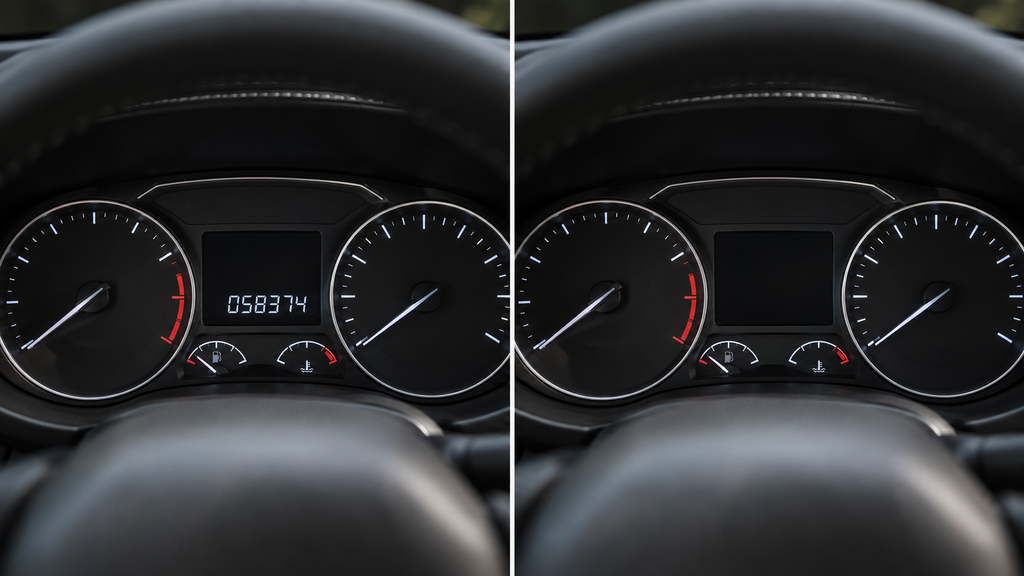
Describe the symptom precisely before looking for a fix:
- Flashing digits: The mileage reading repeatedly disappears and reappears. Configuration synchronization deserves investigation; diagnostic-tool developer JScan identifies blinking mileage as a common sign on PROXI-equipped vehicles, including the KL.
- Dim or blank display: Treat this as a separate visibility or electrical complaint. Ask the shop to investigate illumination, display operation, and power supply rather than assuming configuration alignment is the answer.
- Pulsing brightness: The digits remain visible while their lighting brightens and dims. The KL owner’s manual confirms that the instrument-panel dimmer changes display brightness.
The suggested headlamp-dimmer explanation for pulsing brightness remains an unverified, anecdotal repair-site lead here. [VERIFY] It is not evidence of a KL dimmer defect or a remedy for blinking mileage digits. A shop should establish which symptom you have before recommending parts.
Why It Happens: Module Configuration Mismatch and Code B2204
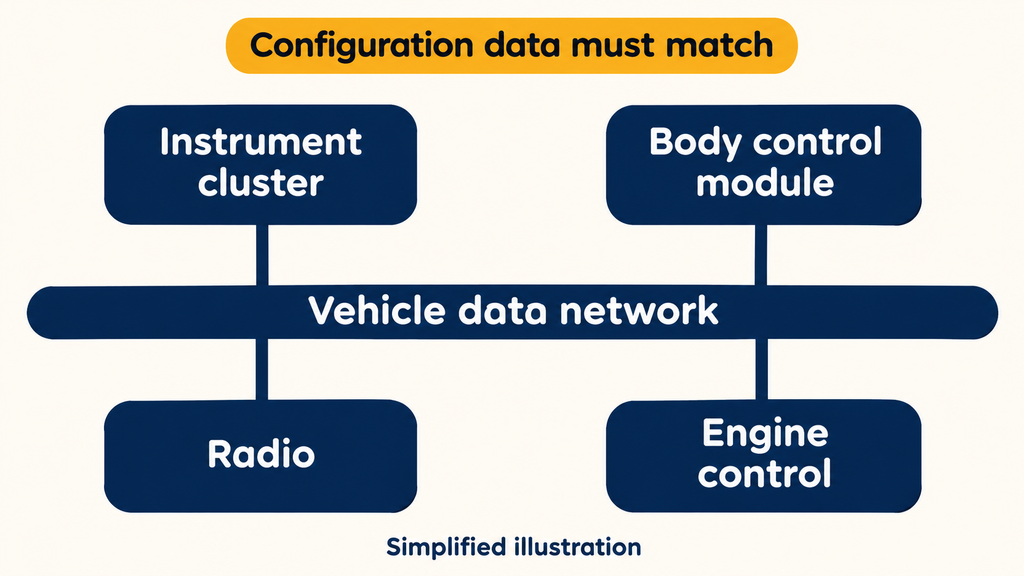
Think of the vehicle’s electronic modules as computers sharing an equipment list. The body control module, or BCM, holds the central configuration. Participating modules on the vehicle data network need settings consistent with it. PROXI alignment synchronizes those configuration settings; it is not a wheel-alignment procedure.
There is direct KL-specific manufacturer evidence. A bulletin covering certain 2019–2020 Cherokees explicitly links a flashing odometer with B2204-55, described as “ECU Configuration Mismatch – Not Configured,” alongside possible lane-departure and park-assist problems. Its applicability includes specific production dates, so it is not a diagnosis for every KL.
Separately, one technician case log records a 2014 Cherokee Latitude 3.2L with a flashing odometer and stored B2204. The request was posted in December 2023; the publicly visible entry does not establish a verified repair outcome.
These records support investigating a software/configuration problem, not assuming a mechanical odometer failure. They do not establish that every blinking display has the same cause.
Common Triggers Reported by Technicians and Owners
The labels below describe reporting patterns, not measured failure rates.
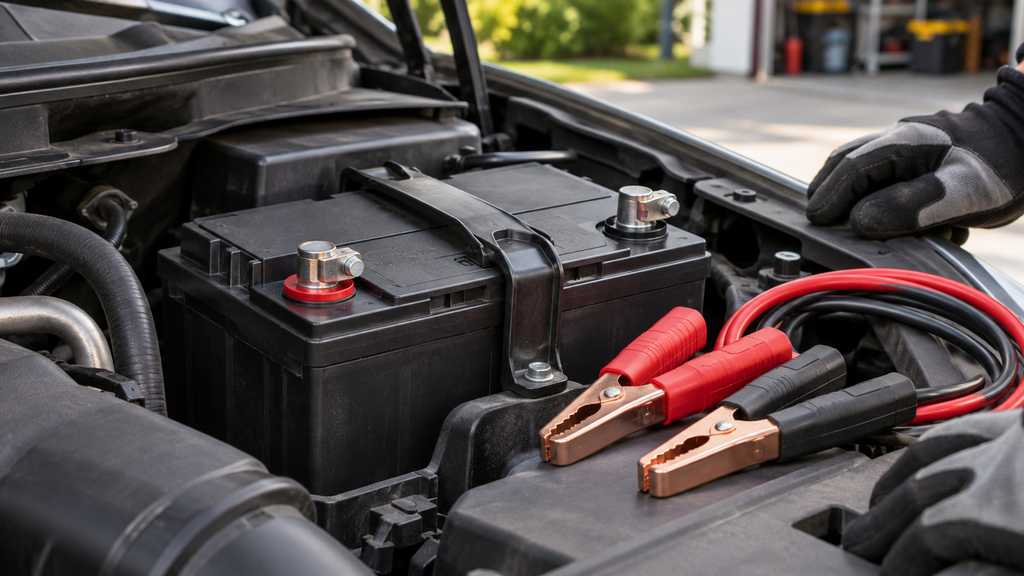
Battery replacement or jump-starting, commonly reported. One owner describes a 2014 Cherokee whose odometer flashed after a dead battery and jump-start, continuing after battery replacement. That account establishes the owner’s reported sequence, not proof that the jump-start damaged a module.
Low-voltage events, commonly reported. In a separate discussion involving a 2017 Cherokee after battery trouble, a technician contributor reports encountering configuration-alignment needs after battery failure. This is experience-based reporting, not a manufacturer finding about every KL. The precise claim that a particular voltage drop at a body module causes this symptom remains unconfirmed in the KL primary records reviewed.
Module or cluster replacement, commonly reported, with stronger technical support. Diagnostic-tool manufacturers describe configuration alignment after applicable module changes. A replacement or swapped component can require configuration work; that does not automatically mean the replacement itself is defective.
Disconnected modules or fuses,less documented as a specific KL trigger in the reviewed sources. Mention recent disconnections to the shop, but do not pull fuses or unplug modules as a trial repair. Whether a missing fuse explains an individual flashing-display case requires diagnosis.
How to Diagnose a Flashing Odometer
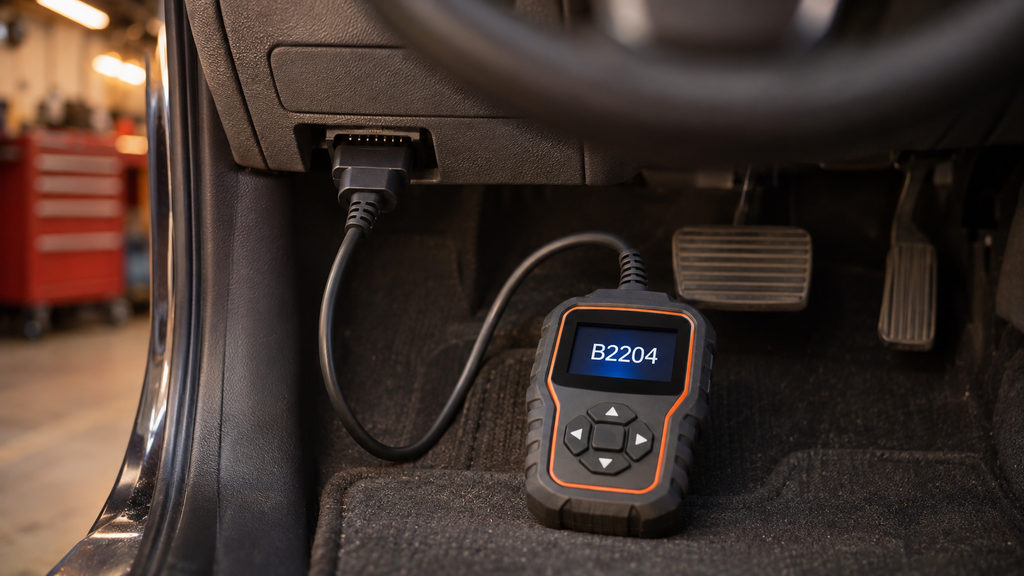
Start with observation, then move to vehicle-specific testing. Ask whether the flashing is continuous, whether it began immediately after work, and whether the radio or another feature stopped operating at the same time. A short video taken while parked is more useful than the description “the dash is flashing.”
A basic scanner can be a useful first check, but confirm its coverage. Bosch’s entry-level scanner documentation, for example, describes engine-code access and limited additional system coverage. That illustrates why an inexpensive reader’s “no codes” result should not be treated as a complete body-module assessment.
For the professional inspection, request a scan of the relevant vehicle modules, including the BCM, with the full codes and reporting modules recorded. Ask the technician to distinguish stored history from faults present during testing and to identify configuration-status problems before recommending an alignment.
The iATN case is a useful caution: its public preview reports a BCM configuration code without a check-engine light or codes in other modules. A quiet engine-warning lamp therefore did not exclude the reported configuration complaint in that individual vehicle.
What to Do Step by Step When Your Odometer Flashes
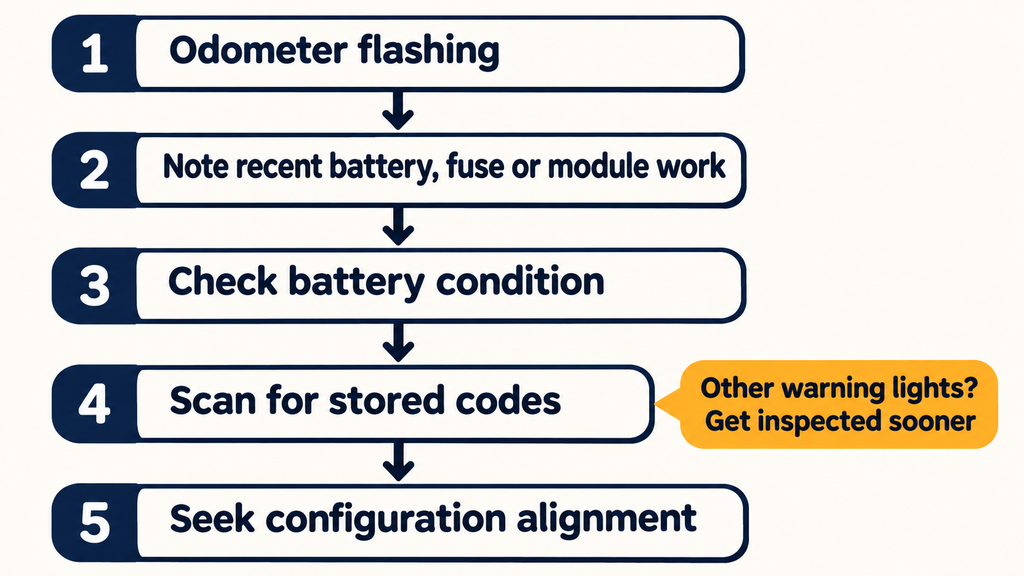
- Park safely and document the symptom. Photograph the mileage and record a short video. Note whether only the digits blink or the whole panel changes brightness. Do not film while driving.
- Check for other warnings. Record messages and any change in braking, steering, starting, or engine operation. If operation feels unsafe, stop and arrange professional assistance rather than continuing a troubleshooting drive.
- Review battery condition without dismantling anything. Note slow starting or a recent flat battery and arrange a battery/charging-system test if appropriate. Do not disconnect the battery simply to try a reset.
- Write down recent work. Include battery replacement, jump-starting, radio installation, cluster changes, and any shop visit involving electrical components. Bring invoices if available.
- Read codes only if you already have a basic scanner and can follow its instructions safely. Save the complete results. Do not erase them merely to see whether the flashing disappears; give the shop the original record.
- Book a qualified Jeep-capable shop. Ask for diagnosis before parts replacement and confirm it can perform KL configuration alignment when indicated. Request the scan findings and proposed repair in writing.
This checklist is preparation, not a programming procedure. Leave configuration changes, electrical disassembly, and module testing to the technician.
How It Is Fixed: Configuration Alignment, Reprogramming and Cluster Replacement
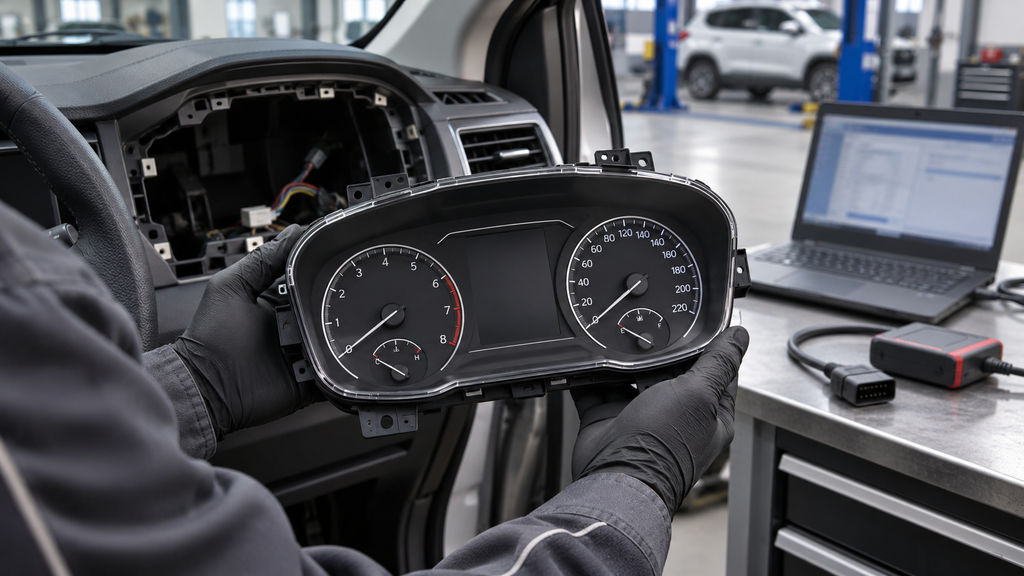
Configuration alignment synchronizes equipment settings across participating modules. Appcar’s own documentation describes copying configuration from the BCM to other modules. It requires suitable diagnostic access; simply clearing codes is not the same operation.
For the affected 2019–2020 KL population, the manufacturer procedure includes PROXI alignment and an electronic-power-steering learn procedure. That is a specific documented repair path, not permission to apply it to unrelated symptoms or other production ranges.
Reprogramming updates software. Snap-on distinguishes PROXI alignment from reflashing an engine controller. A 2014 KL radio bulletin provides a practical example: under specified equipment and production conditions, it calls for radio software updating followed by alignment. It addresses B2204 after configuration work; it does not explicitly describe flashing mileage digits.
Cluster replacement should follow diagnosis, not precede it. A separate 2015 KL bulletin covers updating or replacing particular clusters for translation, street-name formatting, and range-display concerns. It does not list a blinking odometer as its complaint. Its existence therefore does not justify a replacement for this symptom alone.
Before approving a cluster, ask what testing supports replacement, what programming applies to your exact vehicle, and how the shop will document the displayed mileage. Do not purchase a used cluster on the assumption that it is plug-and-play.
Is It Safe to Keep Driving? Does It Affect Mileage Records?
The flashing display alone is not enough to declare the vehicle safe or unsafe. The documented 2019–2020 KL condition can include unavailable assistance features. Do not assume every system works normally just because the engine starts.
If other warning lights, drivability problems, or electrical faults appear, arrange prompt inspection. If braking or steering changes, the engine runs poorly, or essential displays become unreadable, stop somewhere safe and seek assistance. Follow the warning-specific instructions in your model year’s owner’s manual.
Do not infer a mileage error from blinking alone. The evidence above concerns configuration faults; it does not establish that flashing digits mean distance recording has stopped. Equally, do not accept a blanket assurance that a replacement cluster automatically receives the correct mileage from another module: that transfer process was not established by the KL primary documents reviewed.
Keep a dated photograph of the reading, maintenance records, and repair invoices. Ask the shop to record the displayed mileage before and after any cluster work and explain any discrepancy before returning the vehicle.
Frequently Asked Questions
Will replacing the battery stop the blinking?
Not necessarily. Owners report cases where the flashing continued after a new battery was installed. Have battery health checked if there has been starting trouble, but do not treat replacement as a confirmed configuration repair. If the symptom persists, ask for a proper module scan instead of repeatedly disconnecting the battery.
Can a basic OBD reader fix it?
Do not assume so. Basic readers vary in system coverage, and reading engine codes is different from accessing body-module configuration functions. The manufacturer-documented KL repair uses appropriate diagnostic equipment and a configuration routine.Save whatever codes your reader can retrieve, then let a qualified shop determine whether alignment or another repair is needed.
Does B2204 mean the instrument cluster has failed?
No: the code description identifies a configuration mismatch, not a confirmed failed cluster.In the reviewed 2014 radio bulletin, the prescribed work concerns radio software and alignment under specific conditions. Ask which module stored the code and what testing identifies the underlying problem before agreeing to replace a dashboard assembly.
Is this the same problem as on a Grand Cherokee?
Do not assume that. This guide is limited to the Cherokee KL. Diagnostic-tool documentation explicitly warns against choosing a configuration procedure merely because a vehicle belongs to the same brand. Give the shop your model, year, and VIN so it can select applicable service information rather than borrowing a different model’s fix.
Sources and Further Reading
Manufacturer bulletin: Lane Departure and Park Assist Features Inoperable
Manufacturer bulletin: radio configuration mismatch after Proxi
2014 Jeep Cherokee Owner’s Manual
Manufacturer bulletin: Incorrect Instrument Cluster Displays
Bosch OBD 1100 scanner coverage
Jeep manufacturer announcement: all-new 2014 Cherokee
Owner account: Jeep Cherokee DTCs after battery swap
Owner account: 2014 Cherokee after a battery failure
iATN: 2014 Cherokee Latitude 3.2L, Odometer Flashes
Appcar DiagFCA: Proxi Configuration Alignment
