
“Reduced Engine Power” is driver-facing language for a protective strategy. Depending on the fault and operating conditions, the PCM may limit throttle response, torque output, boost requests, or engine speed so it is not repeatedly asking the engine to perform in a condition it cannot verify or control correctly.
This behavior is often called limp mode or fail-safe mode. Its exact limits vary with the fault, but acceleration can be noticeably weaker.
Your 2018 Chevy Equinox may still start, idle, and move under its own power, but it can feel flat when you press the accelerator—especially when merging, climbing a hill, or carrying passengers. If a scan reveals code P0299, the computer has detected that the engine is not producing the boost pressure it expected.
The restriction is intended to reduce risk while the control module sees an abnormal condition. GM’s owner information warns that reduced propulsion power can affect acceleration. Adjust your driving and arrange diagnosis; do not treat the message as proof the vehicle is safe to drive indefinitely.
That does not automatically mean the turbocharger itself has failed. P0299 is a diagnosis starting point, not a parts-ordering instruction. A hose leak, bad sensor data, a control problem, or an internal turbo issue can all create the mismatch.
Contents
What Does the P0299 Code Mean?
P0299 is a generic OBD-II diagnostic trouble code: “Turbocharger/Supercharger Underboost Condition.” Generic does not mean trivial. It means the basic code definition is standardized and can appear on many makes and models that use forced induction, not just Chevrolet or GM vehicles.
A turbocharged engine uses exhaust energy to spin a turbine and compressor. The compressor increases intake-air pressure, commonly called boost, so the engine can receive more air when operating conditions call for it. The PCM estimates or commands the boost it expects, then compares that expectation with sensor data from the intake/charge-air system. When actual pressure stays lower than the control system expects under the right test conditions, it may store P0299 and illuminate the malfunction indicator lamp.
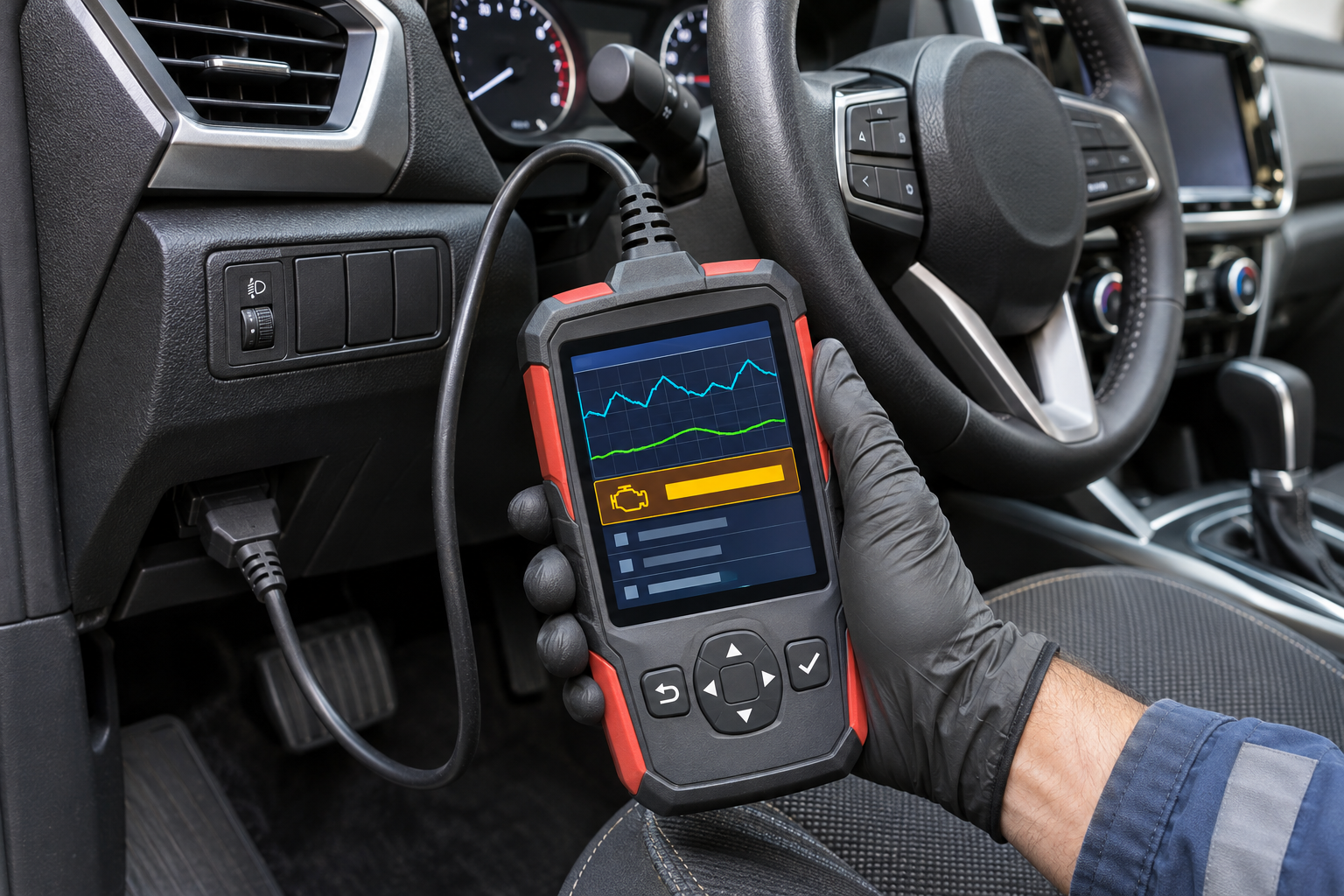
The code alone does not identify one bad component. It also does not prove that every driveability complaint is caused by a turbocharger. P0299 can be set by an air leak, a restriction, a pressure-control fault, wiring trouble, inaccurate sensor information, or a mechanical problem. Other stored codes, freeze-frame data, and a physical inspection are important because they give the technician context that the code description cannot.
Why This Appears on the 2018 Equinox
The 2018 Equinox was offered with a turbocharged lineup. Gasoline versions included a 1.5-liter turbocharged four-cylinder and a 2.0-liter turbocharged four-cylinder; a 1.6-liter turbo-diesel was also offered later in the model year. Because these engines rely on pressurized intake air and electronically managed boost control, their diagnostic systems can recognize when measured pressure does not track the requested operating condition.
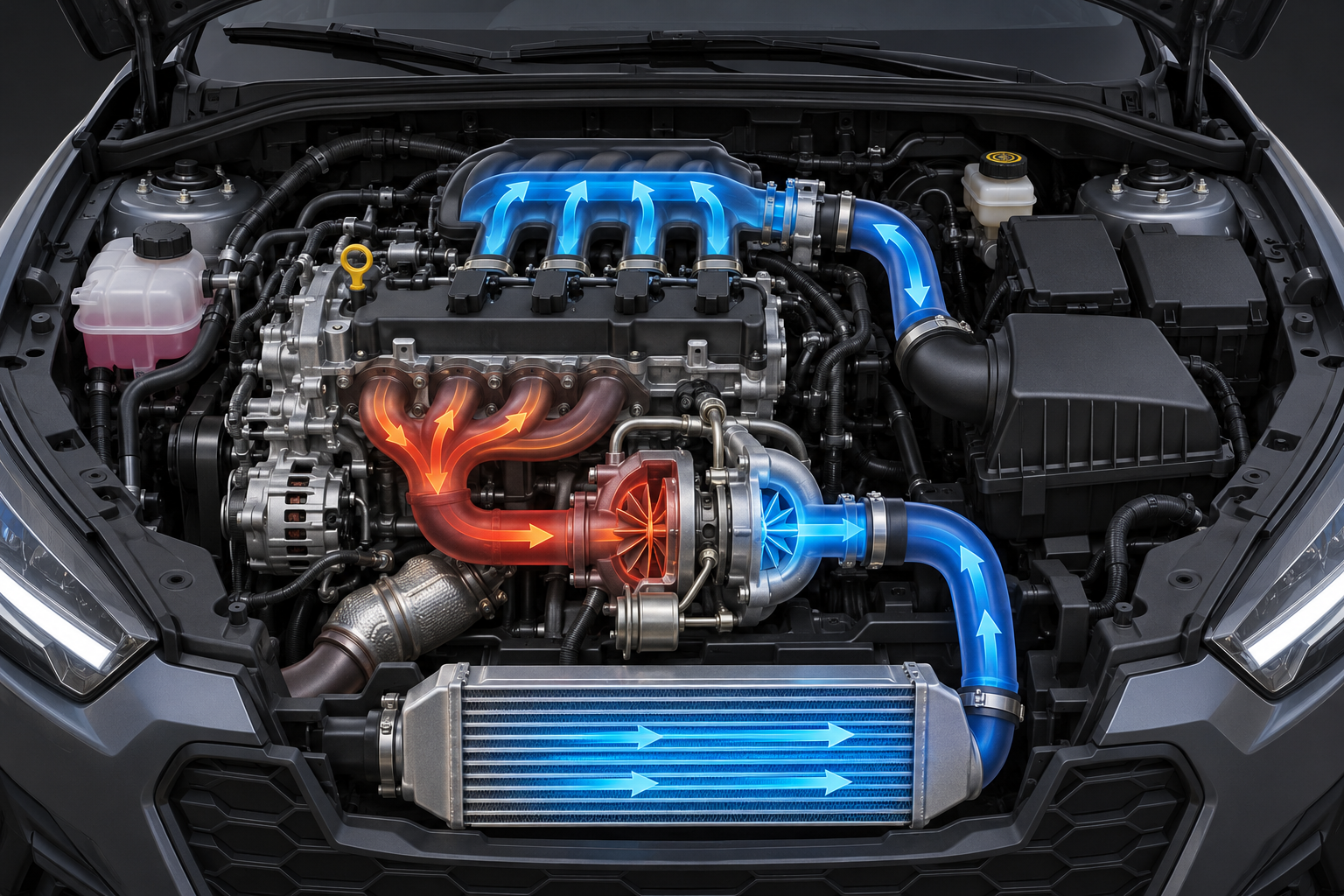
That context matters because P0299 is an underboost code, not a universal “2018 Equinox turbo failure” verdict. GM technical material has addressed certain cold-weather moisture/charge-air-cooler conditions on some affected turbocharged applications. That does not establish the same cause for every Equinox; engine, weather history, codes, and inspection findings should determine the repair path.
On the gasoline engines, boost-control hardware can include a wastegate arrangement that manages exhaust flow through the turbocharger. A diesel turbo system may use different control hardware. For that reason, a diagnosis should begin with the engine actually installed in the vehicle rather than applying a repair video or parts list from a different Equinox engine.
Common Causes
Leaks in boost, intake, or vacuum plumbing
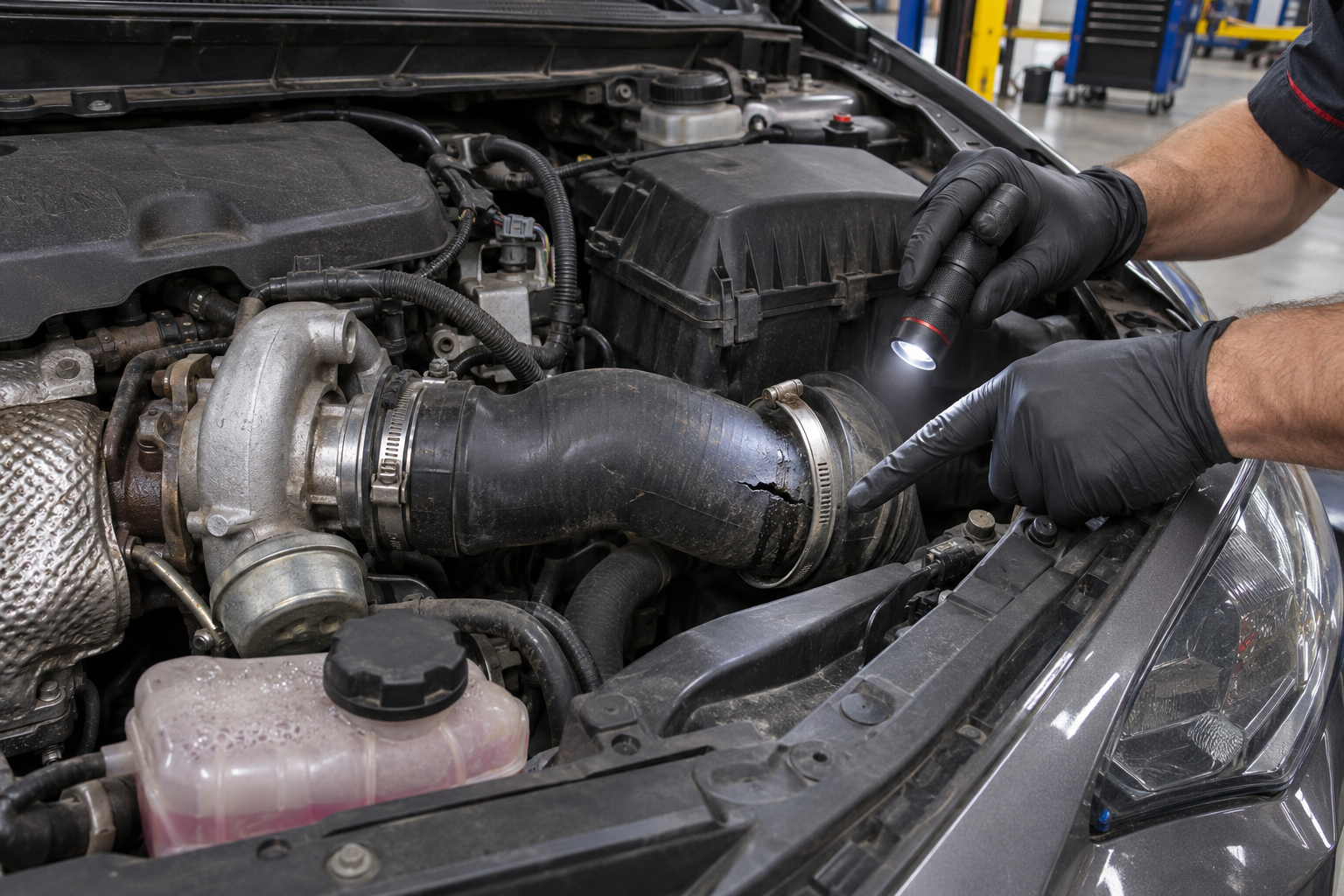
Pressurized air travels through hoses, pipes, couplers, and the charge-air cooler before it reaches the engine. A split hose, loose clamp, damaged seal, disconnected line, or cracked plastic connection can let air escape. A smoke or pressure test often finds smaller leaks better than a visual glance.
Vacuum lines and related controls also deserve attention where the engine design uses them. A line that is brittle, oil-soaked, pinched, or disconnected can interfere with an actuator’s ability to move as commanded.
Wastegate actuator or boost-control concerns
On systems that use a wastegate, the actuator and linkage help regulate turbo speed and boost. If the linkage binds, the actuator does not move correctly, the control solenoid or wiring has a problem, or the wastegate does not seal as intended, the engine may not develop the requested pressure. Mechanics frequently check commanded versus actual boost and actuator movement before condemning a turbocharger.
Turbocharger wear or damage
A turbocharger can develop mechanical faults, such as bearing wear, damaged compressor or turbine components, or a sticking internal control mechanism. These concerns may be accompanied by unusual whine, smoke, oil consumption, or visible damage, but symptoms vary. A P0299 code by itself is not enough to diagnose internal turbo damage. The intake path and control system should be checked first, and a professional should inspect for shaft play or damage when appropriate.
Faulty boost or MAP sensor data
The PCM needs dependable pressure information. A manifold absolute pressure (MAP) sensor, boost/charge-pressure sensor, connector, or wiring circuit that reports an implausible value can create an apparent underboost problem even if the turbo is physically capable of making pressure. Corrosion, loose terminals, damaged wiring insulation, and contamination at a sensor connection are all worth inspecting carefully.
PCV and air-management problems
The positive crankcase ventilation (PCV) system is part of the engine’s overall air-management system. Depending on the engine and the specific fault, a PCV restriction, leak, or related intake issue can affect crankcase pressure or airflow calculations. It is a plausible diagnostic area, but it should not be treated as the automatic cause of P0299. A technician should follow the correct engine-specific test procedure and look for evidence rather than replacing PCV parts on a guess.
Diagnostic Steps
A good diagnosis moves from information gathering to targeted testing. Replacing the turbocharger before checking the rest of the system can turn a smaller repair into an expensive mistake.
1. Scan all codes and save freeze-frame data
Use a capable scan tool to read all current, pending, and history codes—not only P0299. Freeze-frame data records conditions when the fault was recognized, such as engine speed, vehicle speed, load, and relevant sensor values. A companion sensor, actuator, misfire, fuel-system, or circuit code can change the diagnostic direction.

Also compare desired/commanded boost with actual pressure data during an appropriate road test or controlled test. This should be done safely and, ideally, by someone who knows how the scan tool labels the vehicle’s data parameters. A brief difference during a transition is not the same as a sustained underboost condition under load.
2. Inspect hoses, pipes, connectors, and the air filter path
With the engine cool, inspect the charge-air tubes, clamps, intercooler connections, intake ducting, vacuum/control lines, and electrical connectors. Look for oil residue near a joint, rubbing damage, loose clamps, torn rubber, corrosion, and components that are not fully seated. Check the air-filter housing and intake path for restrictions or assembly issues.
This inspection should be systematic. It is easy to focus on the turbocharger and miss a hose connection farther downstream.
3. Perform a boost-leak or smoke test
A proper boost-leak or smoke test can reveal leaks that are invisible during a stationary inspection. The tester is connected using the correct procedure, and the system is evaluated without exceeding safe pressure. Because improper pressurization can damage components or create misleading results, this is often a shop-level test.
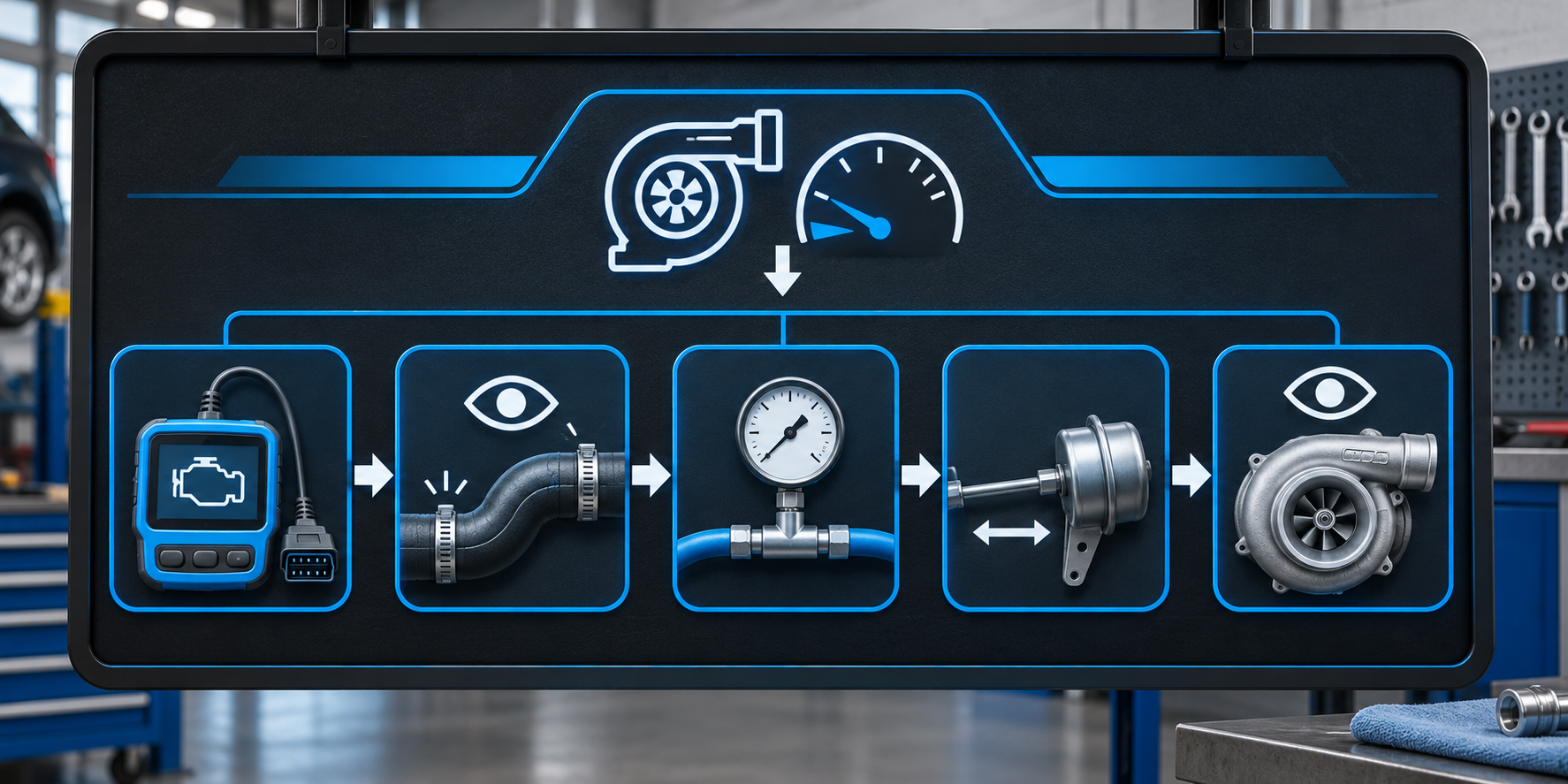
4. Test the boost-control system
For an engine with a wastegate actuator, diagnosis may include checking actuator command, linkage movement, control supply, solenoid operation, and wiring. The exact test is engine-specific. Do not force a linkage or apply random pressure/vacuum values without factory service information.
5. Confirm the root cause before repair
If the plumbing is sound and sensor/control tests point elsewhere, the technician may inspect the turbocharger and related air-management components more closely. A professional diagnosis is especially valuable when the fault is intermittent, occurs only in cold weather, returns after a repair, or is accompanied by smoke, loud turbo noise, overheating, or multiple codes.
Repair Considerations
The repair can range from a hose or wiring repair to a sensor, control component, or turbocharger-related repair. Cost varies by the failed part, engine, labor time, shop rates, parts availability, and region. Get a written local estimate after diagnosis rather than relying on a generic internet price.
Ask the shop to explain what test identified the failed part, whether any related hoses or seals should be renewed, and whether the repair includes a road test and code-clear/recheck. If a turbocharger replacement is recommended, it is reasonable to ask whether the intake and charge-air system were inspected for the original cause. Replacing a turbo without correcting a leak, restriction, lubrication problem, or control fault may not solve the underlying issue.
When to See a Professional
Arrange professional service promptly if the Equinox has severe power loss, flashing check-engine light, smoke, overheating, loud siren-like turbo noise, abnormal oil loss, or trouble maintaining safe traffic speed. Avoid hard acceleration, towing, or high-load driving while the message is active.
If reduced power makes it unsafe to merge, climb grades, or keep up with traffic, do not continue driving it. Pull over safely and arrange towing or roadside assistance. The owner’s manual message may allow limited driving in some situations, but that is not a substitute for judging the actual road and vehicle condition.
FAQ
Can I drive a 2018 Equinox with P0299?
Sometimes the vehicle can be driven gently for a short trip to a repair facility, but there is no one answer for every case. Reduced acceleration can create a safety issue. Do not continue if the vehicle has severe symptoms, smoke, overheating, a flashing check-engine light, or cannot safely maintain traffic speed.
Does P0299 always mean the turbocharger is bad?
No. P0299 means the control system detected lower-than-expected boost. Leaks, sensors, wiring, actuators, air restrictions, and control faults can produce the same code. Testing should identify the cause before major parts are replaced.
Will clearing P0299 fix Reduced Engine Power?
Clearing the code may turn off the warning temporarily, but it does not repair the condition that caused it. If the fault remains, the PCM can set P0299 again and restore reduced-power operation.
Is P0299 unique to Chevrolet?
No. P0299 is a standardized generic OBD-II code used across manufacturers on applicable turbocharged or supercharged vehicles. The diagnostic details and component layout differ by vehicle.
Conclusion
A 2018 Chevy Equinox showing Reduced Engine Power with P0299 is telling you that expected and measured boost are not lining up. Start with the code data and the complete intake/charge-air/control system, not an assumption that the turbo must be replaced. A careful inspection, pressure-leak test, scan-data review, and engine-specific control testing can separate a hose, sensor, actuator, PCV/air-management issue, or turbocharger concern. Address the fault promptly, drive conservatively when necessary, and use a qualified professional when the symptoms or tests point beyond a basic visual inspection.
