
Leaving a manual car in gear when parked is not automatically bad. In fact, it is often a sensible extra layer of protection, especially on a hill. The important detail is that the gear should support the parking brake, not replace it in everyday parking.
The parking brake is designed to hold the car still. A selected gear adds resistance through the engine and drivetrain if the parking brake slips. Used together, they make the car much less likely to roll.
Contents
Should you park a manual car in gear?
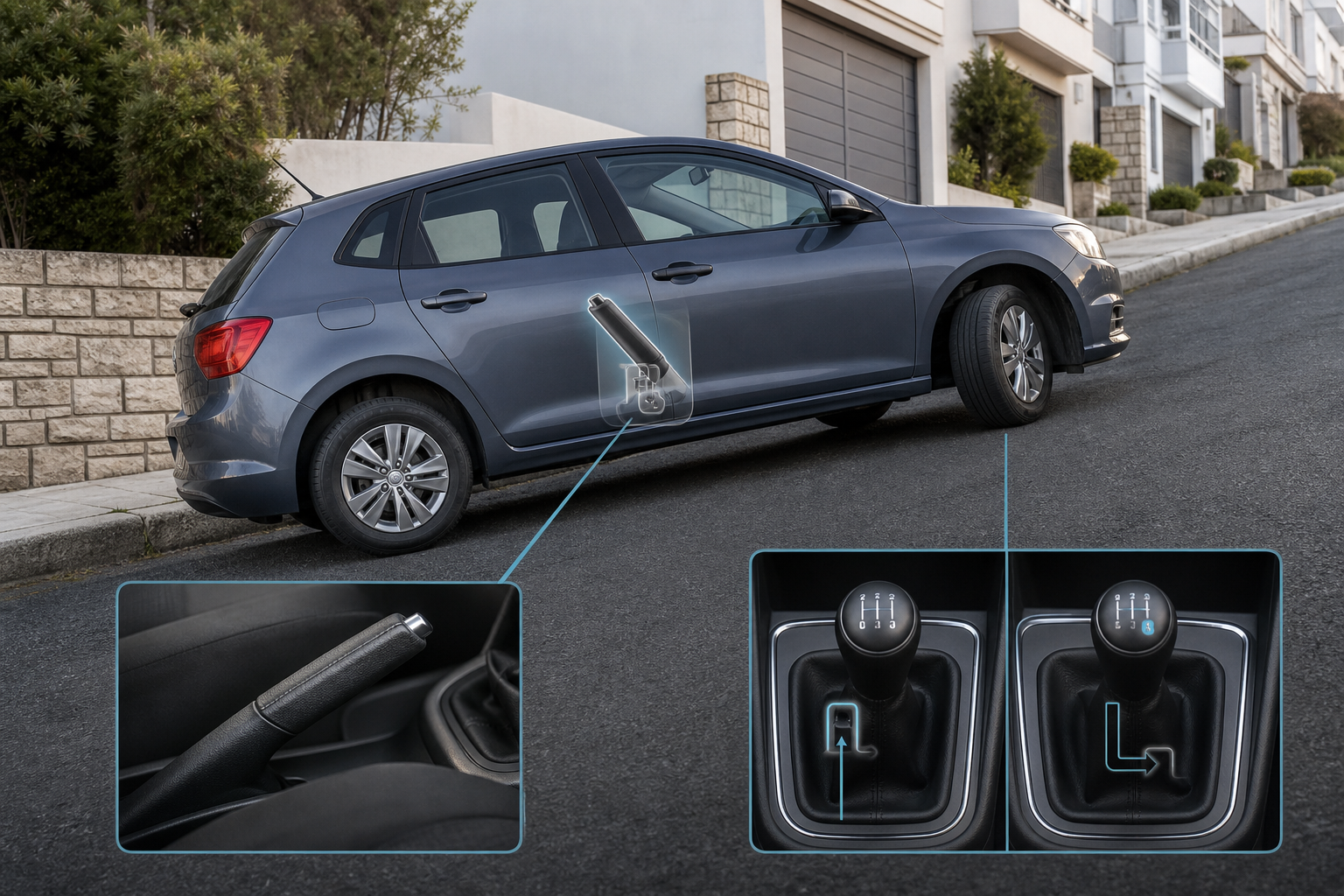
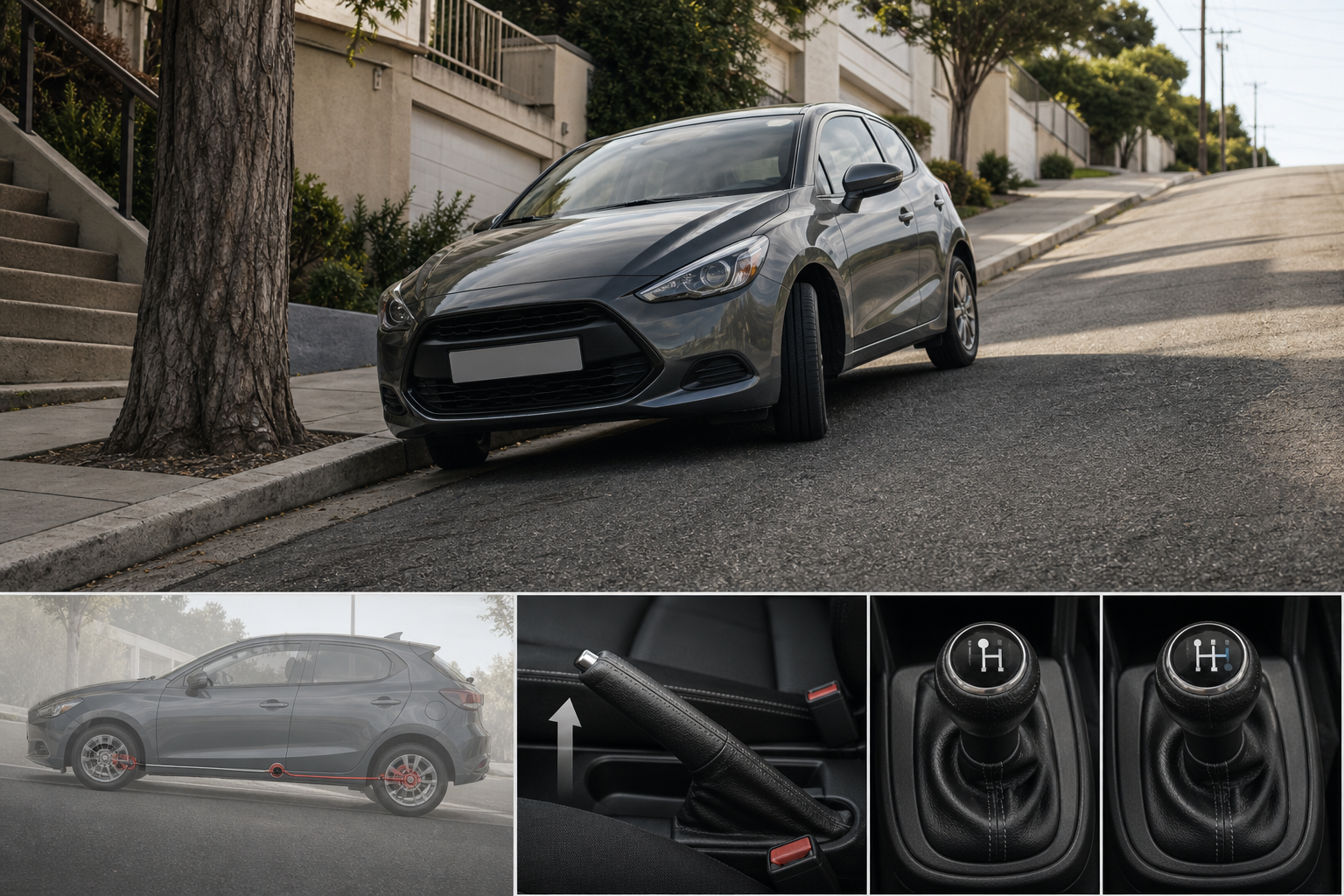
Yes, it is usually recommended to leave a manual car in gear after applying the parking brake. This is especially useful on slopes, in windy conditions, or anywhere a rolling car would be dangerous.
The best sequence is:
- Stop the car fully with the foot brake.
- Apply the parking brake firmly.
- Release the foot brake gently so the parking brake takes the load.
- Select the correct gear as a backup.
- Turn the front wheels toward the curb when parking on a hill.
Which gear should you use when parked?
| Parking situation | Recommended gear | Extra step |
|---|---|---|
| Flat ground | First gear or reverse | Use the parking brake |
| Facing uphill | First gear | Turn wheels away from curb where appropriate |
| Facing downhill | Reverse gear | Turn wheels toward curb where appropriate |
| Automatic transmission | Park (P) | Apply parking brake before releasing the foot brake |
Some drivers use first gear in most situations because it is easy to remember. Reverse can provide strong resistance too. The main point is not to rely on the gearbox alone when the parking brake is available and working.
Can leaving a car in gear damage it?
For normal parking, leaving a manual car in gear does not usually cause meaningful damage. The drivetrain is not spinning, and the selected gear is simply adding resistance. Problems are more likely when the car is parked on a steep incline and the parking brake is not used, because the full load rests against the drivetrain.
If the car is bumped hard while left in gear, forces can pass through the driveline. That is another reason to use the parking brake properly: it reduces how much the transmission has to act as the main holding device.
Parking brake first, gear second
The common mistake is letting the car roll against the selected gear before the parking brake is set. This makes the engine and transmission hold the vehicle weight. Instead, apply the parking brake while your foot is still on the brake pedal, then ease off the pedal to confirm the brake is holding.
After the parking brake has taken the load, put the car in gear. That way, the gear is a backup rather than the main parking system.
What about freezing weather?
In very cold or wet conditions, some drivers avoid the parking brake because old cables or rear brake mechanisms can freeze. This can happen, especially on neglected systems. Still, for a modern car in good condition, the parking brake should work reliably if maintained.
If your parking brake often sticks, that is a repair issue rather than a reason to trust the transmission alone. Leaving the car in gear can help temporarily, but the safer long-term fix is to service the parking brake.
What about automatic cars?
With an automatic, use Park (P) and the parking brake. On a slope, apply the parking brake before shifting fully into Park or before releasing the foot brake. This prevents the car’s weight from resting heavily on the parking pawl, which is the small locking mechanism inside the transmission.
FAQ
Is it better to leave a manual car in neutral or in gear?
When parked, in gear is usually safer because it adds a backup if the parking brake slips. Neutral is fine only when the car is secured another way, such as during certain service procedures.
Can I leave my car in gear without the handbrake?
You can, but it is not the best habit. The parking brake is designed to hold the car; the gear should be a backup.
Will the car jump when I start it?
It can if you forget the car is in gear and start it incorrectly. Always press the clutch and brake before starting a manual car, and check the shifter position.
Should I use wheel chocks?
Use chocks when parking trailers, working on the car, parking on a steep slope, or whenever extra security is needed.
Conclusion
Leaving a manual car in gear when parked is not bad when done correctly. The safest everyday habit is to apply the parking brake first, let it hold the car, and then select the right gear as a backup. On hills, add proper wheel direction toward or away from the curb for another layer of protection.
