
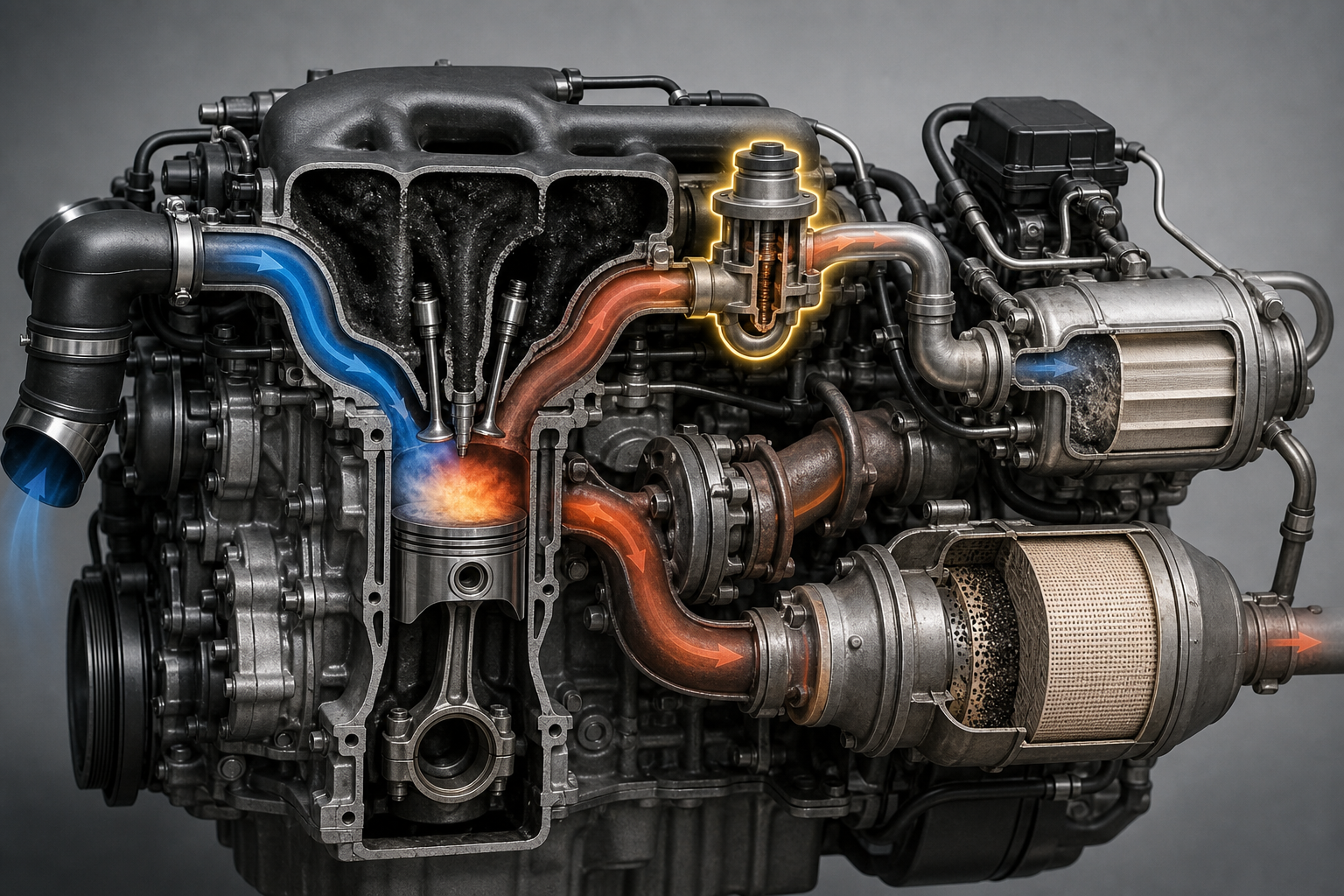
An EGR delete removes or disables the exhaust gas recirculation system so exhaust gases no longer flow back into the intake. Some drivers consider it because a dirty or failing EGR valve can cause rough idle, loss of power, fault codes, smoke, and intake soot buildup.
But an EGR delete is not just a simple reliability upgrade. It changes emissions behavior, can be illegal for road use, may create inspection problems, and can raise combustion temperatures in ways the engine was not calibrated for. Before removing anything, it is important to understand both sides.
Contents
What does the EGR system do?
EGR stands for exhaust gas recirculation. The system routes a controlled amount of exhaust gas back into the intake. That exhaust gas does not burn like fresh air-fuel mixture, so it lowers peak combustion temperature and helps reduce nitrogen oxide emissions.
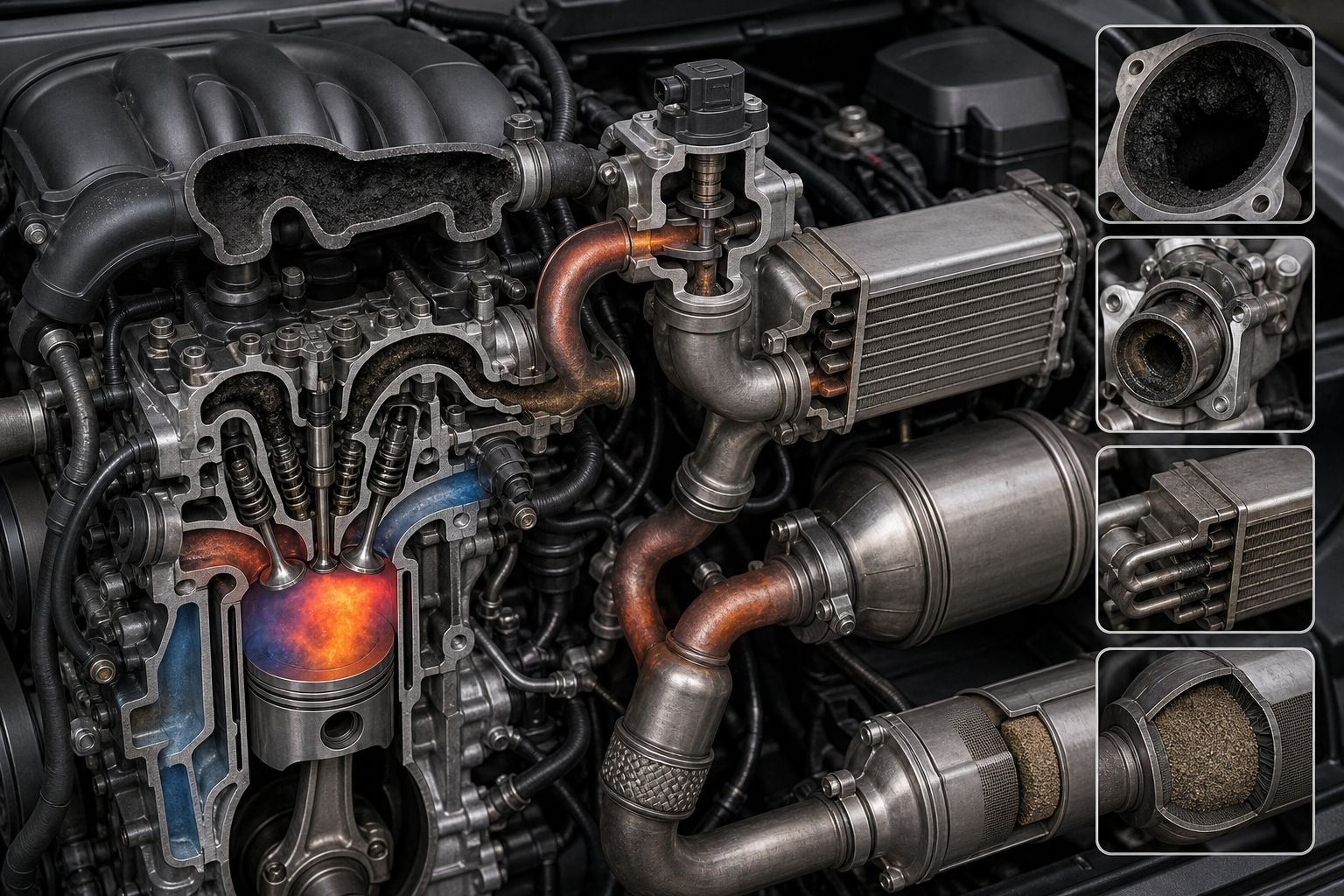
On many diesel engines, the EGR valve, cooler, and intake passages can become restricted with soot and oil vapor deposits. Short trips, poor fuel quality, excessive idling, worn injectors, and crankcase ventilation issues can make the buildup worse.
Common signs of EGR problems
- Rough idle or unstable rpm
- Engine hesitation or poor acceleration
- Check engine light with codes such as P0401, P0403, P0404, P0405, P0406, P0407, P0408, or P0409
- Excessive smoke from the exhaust
- Higher fuel consumption
- Limp mode on some turbo diesel vehicles
- Hard starting or stalling
If these symptoms sound familiar, also see this guide to bad EGR valve symptoms and solutions.
Benefits people expect from an EGR delete
| Claimed benefit | Why it can happen | Important caution |
|---|---|---|
| Cleaner intake | Less exhaust soot enters the intake manifold | Oil vapor from the PCV system can still create deposits |
| Fewer EGR-related faults | The failed valve/cooler is removed from the equation | Software must be altered, which can be illegal and unreliable |
| Improved response on some engines | More fresh air may enter under certain conditions | Modern ECUs are calibrated around EGR operation |
| Lower repair cost short term | Skipping replacement parts may seem cheaper | Inspection failure, fines, or engine issues can cost more later |
The downsides are serious
The biggest issue is legality. In many countries and regions, deleting or disabling emissions equipment on a road vehicle is illegal. Even if the car feels better, it may fail inspection or create problems when the vehicle is sold.
There are mechanical risks too. The ECU, turbocharger, diesel particulate filter, oxygen sensors, temperature sensors, and emissions monitors may all expect the EGR system to behave a certain way. Removing it can cause fault codes, limp mode, more exhaust smoke, higher combustion temperatures, and unpredictable drivability.
EGR delete vs EGR repair
| Option | Best for | Pros | Cons |
|---|---|---|---|
| Clean the EGR valve/intake | Moderate soot buildup | Keeps car legal, often cheaper than replacement | May not fix an electronically failed valve |
| Replace faulty EGR parts | Failed valve, cooler, or sensor | Restores factory operation | Can be expensive on some engines |
| Fix root causes | Repeated EGR clogging | Addresses injectors, PCV, boost leaks, driving cycle issues | Requires proper diagnosis |
| EGR delete | Off-road/race-only situations where legal | Removes one soot source | Usually illegal for road use and may cause calibration problems |
Does an EGR delete increase horsepower?
Sometimes drivers feel better throttle response after an EGR delete, especially if the old EGR valve was stuck open or the intake was badly clogged. That does not mean the delete itself is a proper performance upgrade. In many cases, simply repairing the EGR system and cleaning the intake restores the lost power without compromising legality.
On newer engines, deleting EGR without a high-quality calibration can reduce performance, trigger limp mode, or create problems with DPF regeneration and exhaust temperature management.
How much does an EGR delete cost?
The hardware may look inexpensive, but the real cost depends on the vehicle and software work. A cheap delete can become expensive if it causes inspection failure, warning lights, poor tuning, turbocharger issues, or resale problems. Compare that with the cost of cleaning or replacing the EGR valve before deciding.
FAQ
Is an EGR delete legal?
For road vehicles, it is illegal in many places because it disables emissions equipment. Laws vary, but the safe assumption is that a street-driven car should keep its emissions systems working.
Will an EGR delete stop intake soot forever?
It can reduce exhaust soot entering the intake, but oil vapor and other issues can still create deposits. It also does not fix the underlying reason the system clogged quickly.
Can a bad EGR valve damage the engine?
A stuck or malfunctioning EGR valve can cause rough running, stalling, excessive smoke, higher fuel use, and poor performance. It should be diagnosed and repaired before it causes wider problems.
Is cleaning the EGR valve worth trying?
Yes, if the valve is dirty but not electrically failed. Cleaning the EGR and intake can restore drivability while keeping the car legal.
Conclusion
An EGR delete can reduce one source of intake soot and may hide certain EGR-related failures, but it comes with legal, emissions, calibration, and reliability risks. For most road cars, the better choice is to diagnose the fault, clean the intake and EGR system if appropriate, and replace failed parts with proper components.
