
The 2018 Chevrolet Equinox is frequently discussed by owners for drivability warnings, hesitation or intermittent stalling, and brake-pedal concerns because each can affect confidence in a vehicle that may otherwise run normally between episodes. The important distinction is that a dashboard message or owner report identifies a symptom, not a diagnosis: the 1.5L turbo Equinox can set similar complaints for several different faults, while brake feel needs immediate, vehicle-specific inspection.
Contents
Reduced Engine Power Warning
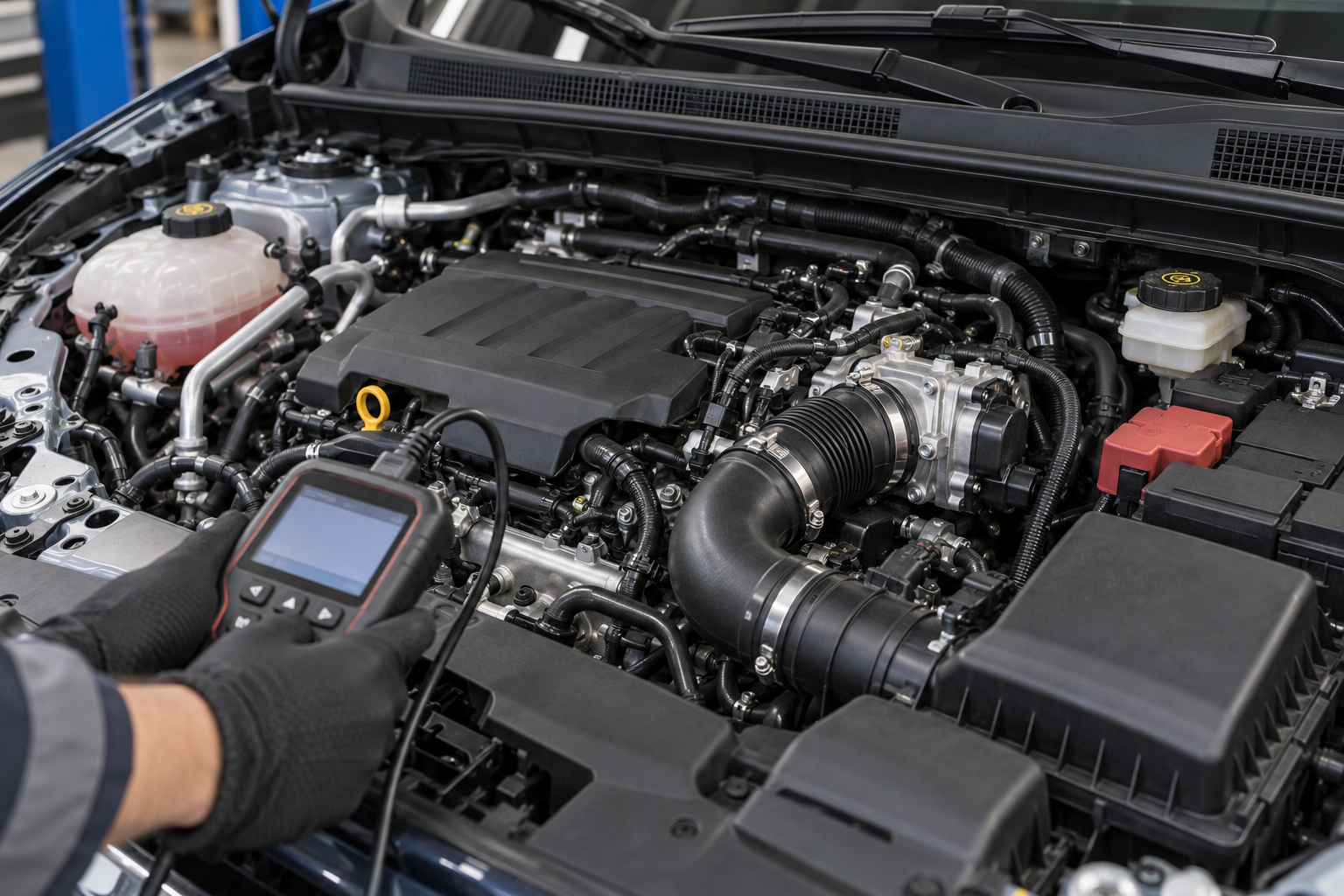
“Reduced Engine Power” is the vehicle’s way of saying the engine-control system has detected a condition that requires it to limit available torque. In practical terms, the accelerator may feel less responsive, the vehicle may struggle to merge or climb, and the check-engine light may be on. It is not a repair instruction and it does not automatically mean the throttle body itself has failed.
GM material for certain 2018–2022 Equinox models with the 1.5L LYX engine documents one concrete path to this message: the charge-air-cooler outlet tube can separate from the throttle-body connection. GM says that condition can accompany reduced power and fault codes associated with mass-air-flow performance, fuel trim, underboost, low idle, or intake-air-flow performance. The prescribed inspection is focused on the tube, retainer, O-ring seal, and throttle-body connection—not automatic replacement of every related sensor or throttle component.
Generic advice about an electronic throttle-control failure can be too broad. Owner and repair reports cite sensor, wiring, air-leak, turbocharge, and throttle-actuator concerns, but do not establish one universal cause. Record codes and freeze-frame data before clearing anything.
Treat a reduced-power warning as more urgent when acceleration is sharply limited, the vehicle stalls, the check-engine light flashes, the engine runs roughly, or the warning appears while entering fast traffic. Avoid forcing the vehicle to maintain highway speed. If it cannot accelerate predictably, pull over safely and arrange an inspection rather than trying to “drive it out.”
Engine Hesitation and Stalling
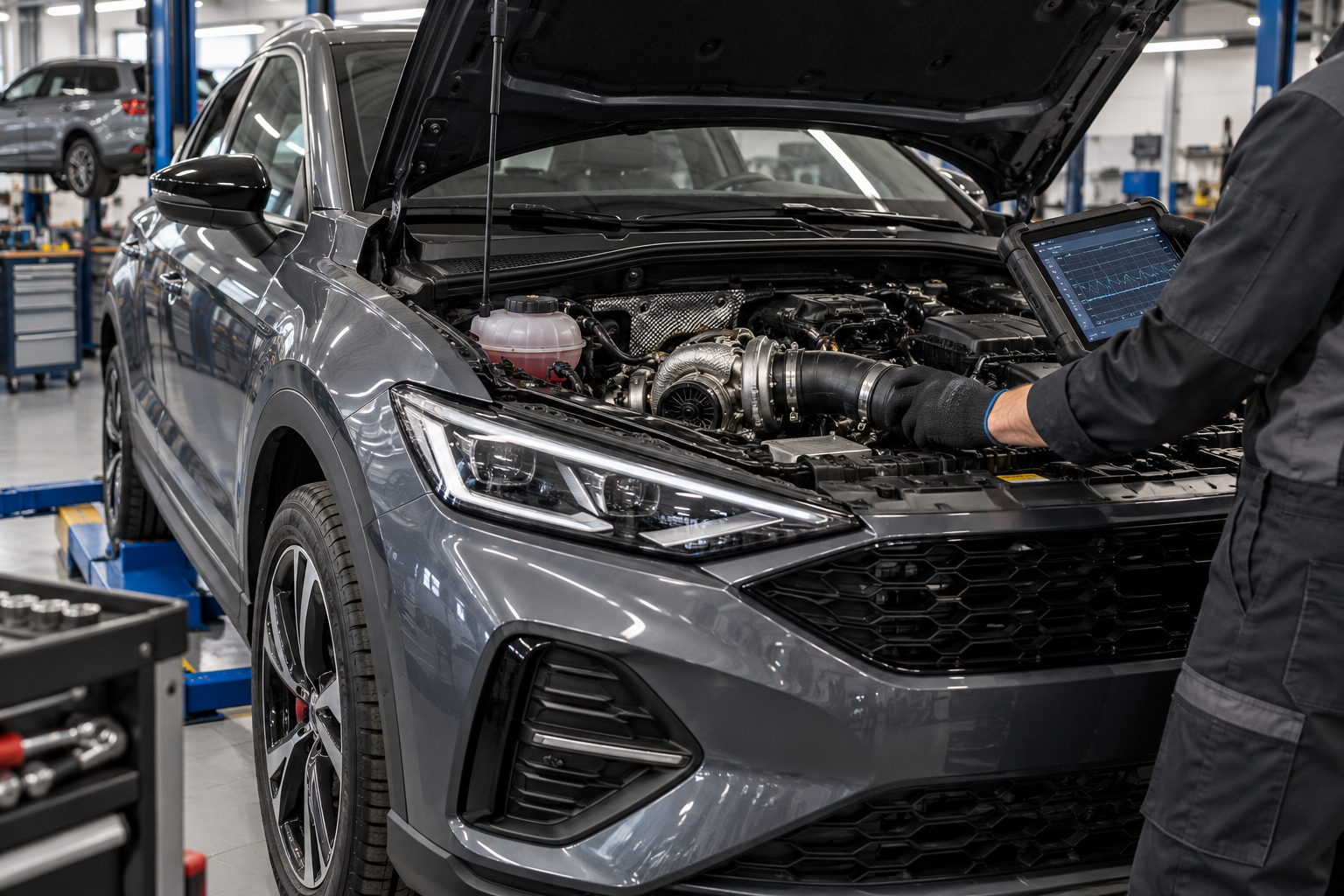
Hesitation is broader than a no-start or a permanent loss of power. Owners may describe a pause after pressing the accelerator, a stumble at low speed, a surge, rough idle, or an engine that dies when coming to a stop. Some consumer reviews for the 1.5L turbo describe shudder, shake, or low-speed drivability behavior, while other reports describe check-engine warnings or reduced power. These reports are useful for recognizing the complaint, but they cannot by themselves separate an engine problem from a transmission response, calibration behavior, or a sensor fault.
For the 1.5L turbocharged engine, the first diagnostic step should be to establish whether the problem is related to air, fuel, ignition, mechanical timing, boost control, or transmission operation. GM’s reduced-power bulletin shows why this matters: an intake/charge-air connection issue can create underboost or airflow-related codes and feel like hesitation. A leak, loose connection, damaged seal, or unrelated sensor signal can imitate a much more serious failure.
PCV-system faults, timing-chain wear or stretch, and turbocharger problems are often cited in general online troubleshooting discussions for turbocharged four-cylinder engines. They should be handled as reported possibilities rather than settled explanations for the 2018 Equinox. In particular, do not assume that a PCV or timing-chain issue known from an earlier Equinox generation automatically applies to this engine. Repair sources note that cam/crank correlation or variable-valve-timing-related codes can be associated with several causes, including oil condition, sensors, actuators, wiring, and mechanical timing. A timing-chain repair should follow confirmed test results, not an internet symptom match.
A stall, fuel smell, severe misfire, flashing check-engine light, abnormal mechanical noise, overheating, or oil-pressure warning changes the situation. Stop driving and have the vehicle evaluated. Continuing to operate a misfiring or stalling turbocharged engine can turn a diagnosis into collateral damage.
Brake Problems
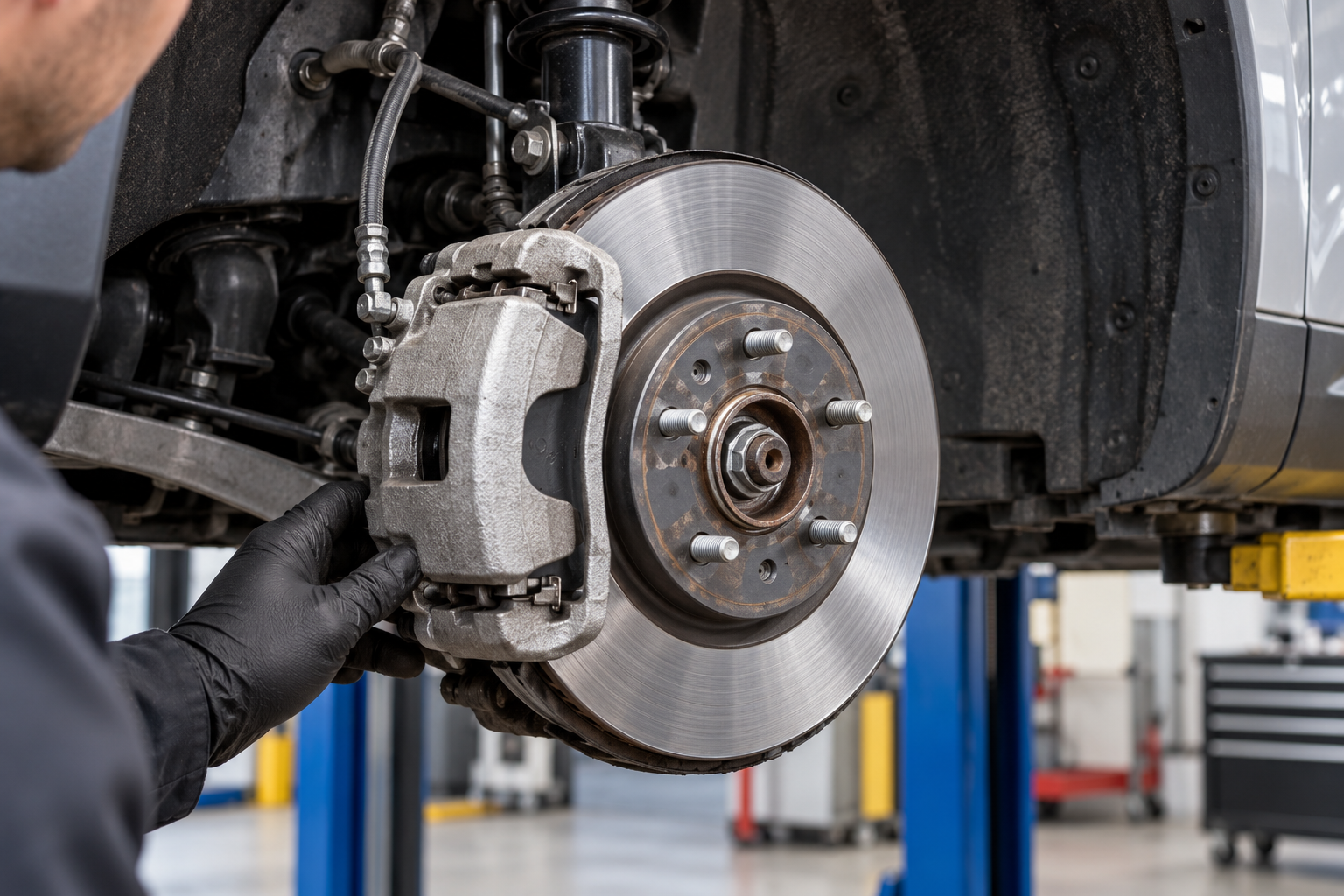
Brake complaints deserve separate treatment from ordinary noise or wear. A soft, low, sinking, unusually hard, or inconsistent pedal can result from a hydraulic, vacuum-assist, electronic, or mechanical issue. If pedal travel suddenly increases, stopping distance changes, a brake warning appears, or fluid is low, do not continue normal driving until the system is inspected.
NHTSA recall material for some 2018 Equinox vehicles describes a rear-caliper manufacturing issue that could allow gas pockets to form and reduce rear-brake performance; the remedy involved brake-system bleeding. Because recall applicability is VIN-specific, owners should check the exact vehicle rather than assume every 2018 Equinox is included.
GM service information also documents a brake-pedal squeak or creak condition on certain 2018 Equinox vehicles, with potential sources that include the pedal pivot area and, for some vehicles, brake-fluid-related noise. That bulletin addresses noise, not a blanket explanation for poor stopping or a soft pedal. Separately, repair documentation for broader GM applications discusses a low-pedal condition after master-cylinder removal when an O-ring seal between the master cylinder and booster is missing, damaged, or displaced. It is a useful inspection consideration only when the service history and symptoms fit; it should not be used to diagnose an untouched vehicle by assumption.
Online owner reports sometimes mention booster or master-cylinder concerns. Those reports support asking a shop to inspect the entire system, including fluid level and condition, leaks, pad and rotor condition, caliper operation, hydraulic bleeding, booster vacuum supply, and stored brake-control codes. They do not prove that either component is defective.
Recalls and Technical Service Bulletins
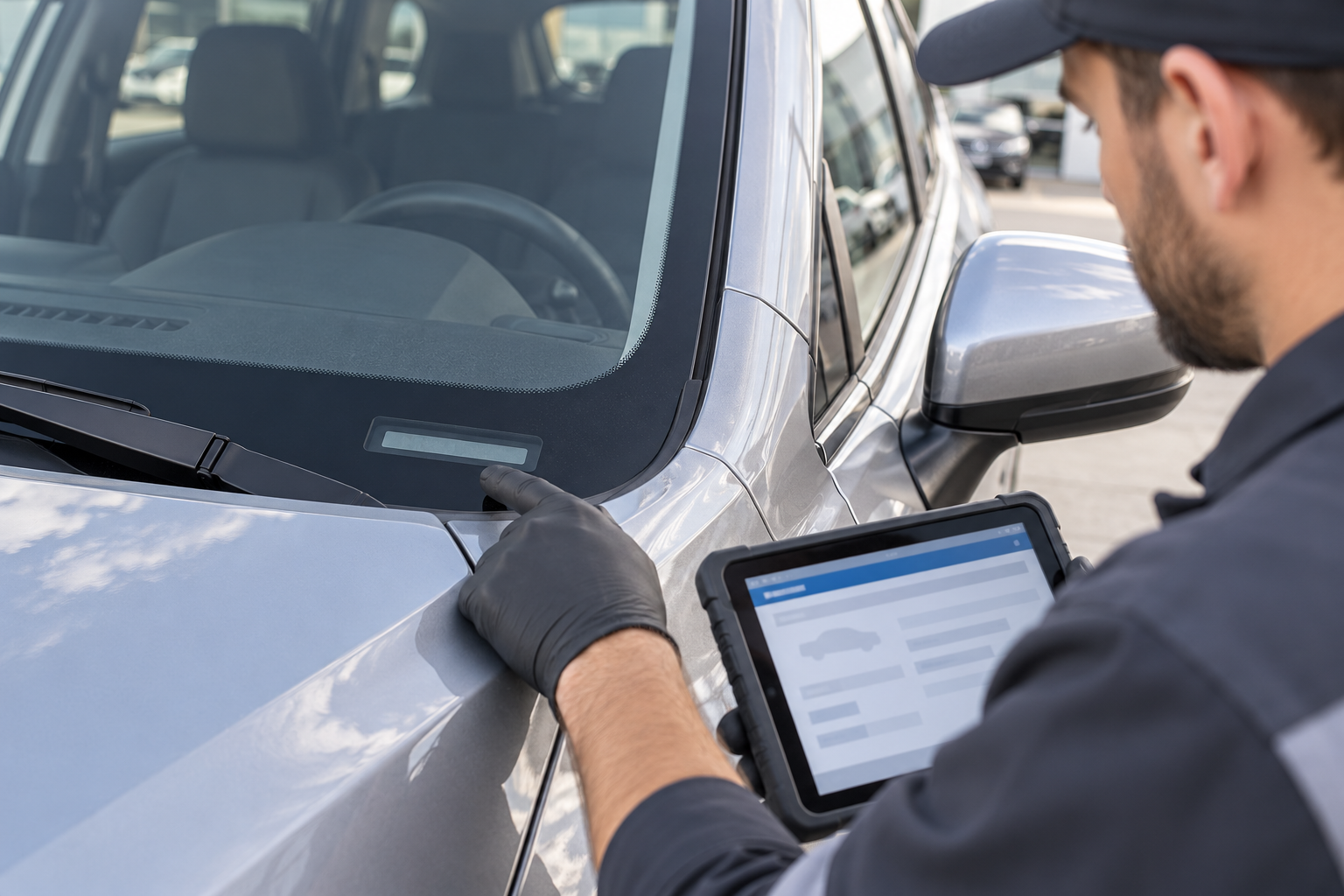
The 2018 Equinox has recalls, service updates, and manufacturer communications that cover more than the three symptoms in this article. The categories worth checking by VIN include brake-hydraulic performance, engine-control-module or calibration-related actions, fuel-system safety actions, drivetrain or transmission actions, and other safety items such as glass or driveline components. [VERIFY]
A recall is a safety campaign and, when open for the VIN, is generally performed by the manufacturer without charge. A technical service bulletin gives dealer technicians diagnostic guidance; it does not mean every vehicle has the condition or is covered outside warranty.
Use the VIN lookup at Chevrolet and NHTSA, then ask a dealer to print the open-campaign results. Also ask whether the vehicle has relevant manufacturer communications for the recorded codes and build configuration. The 1.5L LYX engine, drivetrain, and repair history matter; a bulletin for another engine, another model year, or a different market may not apply.
How to Diagnose These Symptoms
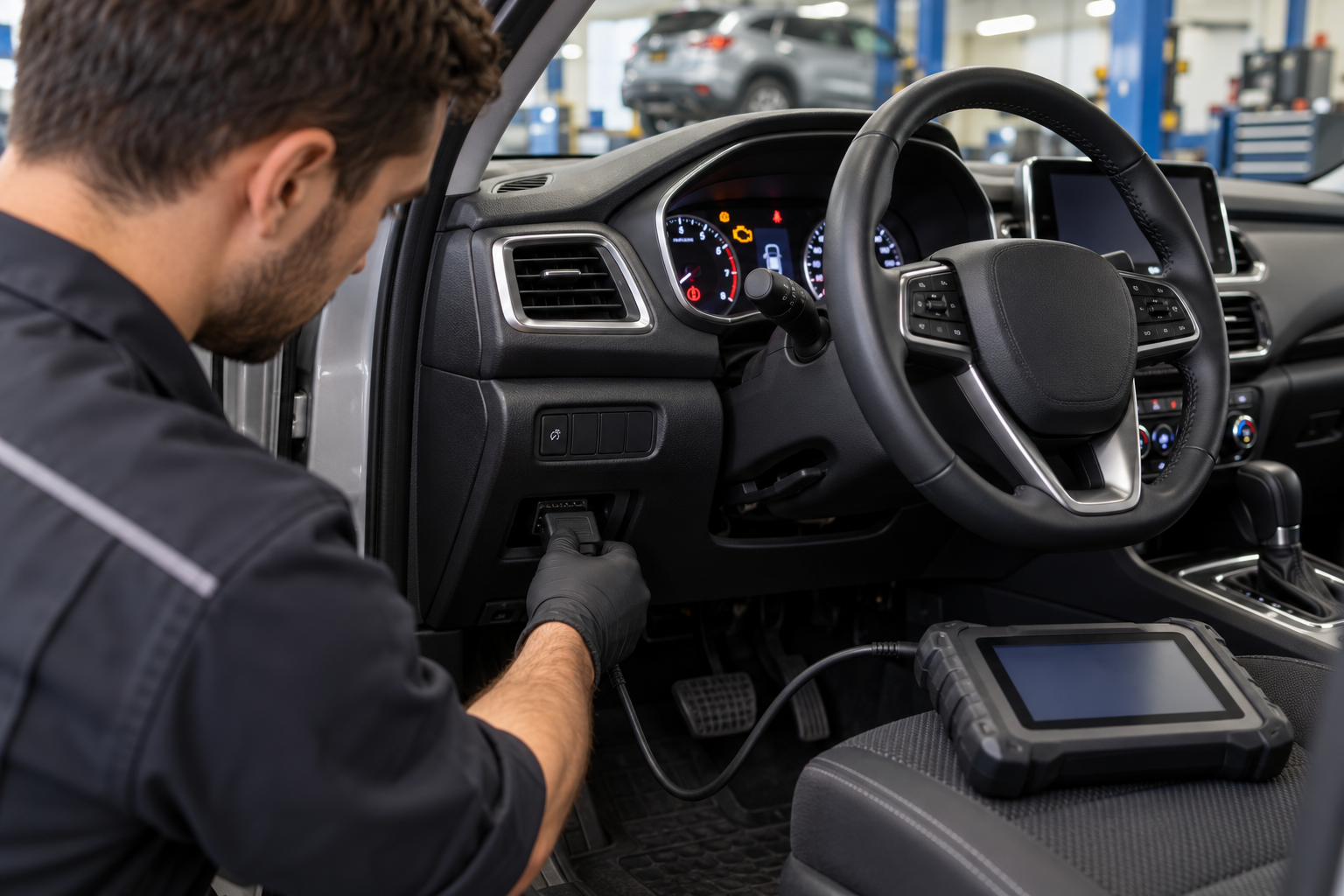
Start with safety. For reduced power, stalling, or major hesitation, stop in a safe location if traffic conditions allow and avoid hard acceleration. For brake symptoms that change stopping feel or trigger a warning, do not rely on a short test drive to decide whether the vehicle is safe.
- Capture the symptom. Write down the warning text, check-engine or brake-warning status, speed, weather, and whether the engine was cold or fully warm.
- Scan before clearing codes. A capable scan tool should retrieve stored, pending, and history codes plus freeze-frame data. Generic code readers are helpful, but module-specific data may be needed.
- Inspect the basics. A professional should check battery voltage, engine-oil level and condition, visible air/charge-pipe connections, fluid leaks, brake-fluid level, and obvious wiring or connector damage.
- Test, do not guess. For reduced power or hesitation, that may include intake/boost-leak testing, sensor rationality checks, fuel/ignition checks, and comparison of commanded versus actual values. For brakes, it may include hydraulic inspection, booster-assist checks, scan-tool checks, and a controlled road test only after the system is judged safe.
- Check VIN campaigns. Confirm recalls and applicable programs before approving a customer-pay repair.
Typical Repair Cost Ranges
The ranges below are commonly reported planning ranges, not quotes or guaranteed repair prices.
- Diagnostic scan and drivability testing: commonly reported from about $100 to $250, with additional time possible for intermittent faults.
- Air-intake, charge-pipe, clamp, or seal repair: commonly reported from roughly $150 to $700 when the repair is localized; damaged related components can raise the total.
- Sensor, throttle-body, or related electrical repair: commonly reported from about $250 to $1,200, depending on the confirmed component and programming needs.
- Ignition, PCV-related, or minor air/fuel repair: commonly reported from around $150 to $800, but the range is not a substitute for diagnosis.
- Turbocharger or mechanical-timing repair: commonly reported from roughly $1,500 to $4,000 or more because labor, related parts, and root-cause work can be substantial.
- Brake inspection, bleeding, pads/rotors, or hydraulic repair: commonly reported from about $150 for basic inspection/bleeding work to well over $1,500 when major hydraulic or assist components are confirmed.
For an expensive recommendation, ask what failed measurement supports it and whether an open recall or applicable manufacturer program was ruled out first.
FAQ
Is “Reduced Engine Power” the same as a bad throttle body?
No. It is a protective operating mode triggered by a detected fault. A throttle issue may be found, but GM documentation for the 1.5L also identifies charge-air plumbing as a possible cause in certain conditions.
Can I keep driving if the Equinox only hesitates occasionally?
An intermittent symptom still needs diagnosis. Avoid extended driving if it progresses to loss of acceleration, stalling, a flashing check-engine light, overheating, unusual noise, or a warning that affects safe merging.
Are timing-chain and PCV problems confirmed common failures on every 2018 1.5L Equinox?
No. They are reported possibilities in repair and owner discussions, not a diagnosis for every vehicle. Confirm engine configuration, codes, oil condition, and test results before authorizing major work.
Does a brake-pedal squeak mean the brakes are unsafe?
Not necessarily. GM guidance distinguishes some noise conditions from braking-performance defects. But a soft, sinking, low, or inconsistent pedal, warning light, or reduced stopping confidence requires prompt inspection.
How do I know whether a recall applies?
Use the VIN in the manufacturer or NHTSA recall lookup and confirm open campaigns with a Chevrolet dealer. Model year and trim alone are not enough.
Bottom Line
The practical approach to 2018 Chevrolet Equinox reduced-power, hesitation, and brake complaints is evidence first: preserve codes, inspect the exact system implicated, and check the VIN for open campaigns before replacing parts. Treat reduced acceleration, stalling, or changed brake feel as safety issues—not as symptoms to solve with a generic parts list.
Sources
- NHTSA manufacturer communication: reduced engine power and charge-air-cooler outlet tube inspection
- NHTSA recall material: high-pressure fuel-pump weld concern
- NHTSA manufacturer communication: ECM circuit-board connection campaign
- NHTSA vehicle recall lookup for the 2018 Chevrolet Equinox
- Edmunds 2018 Chevrolet Equinox owner reviews
- RepairPal: camshaft position sensor replacement information for the 2018 Equinox
