
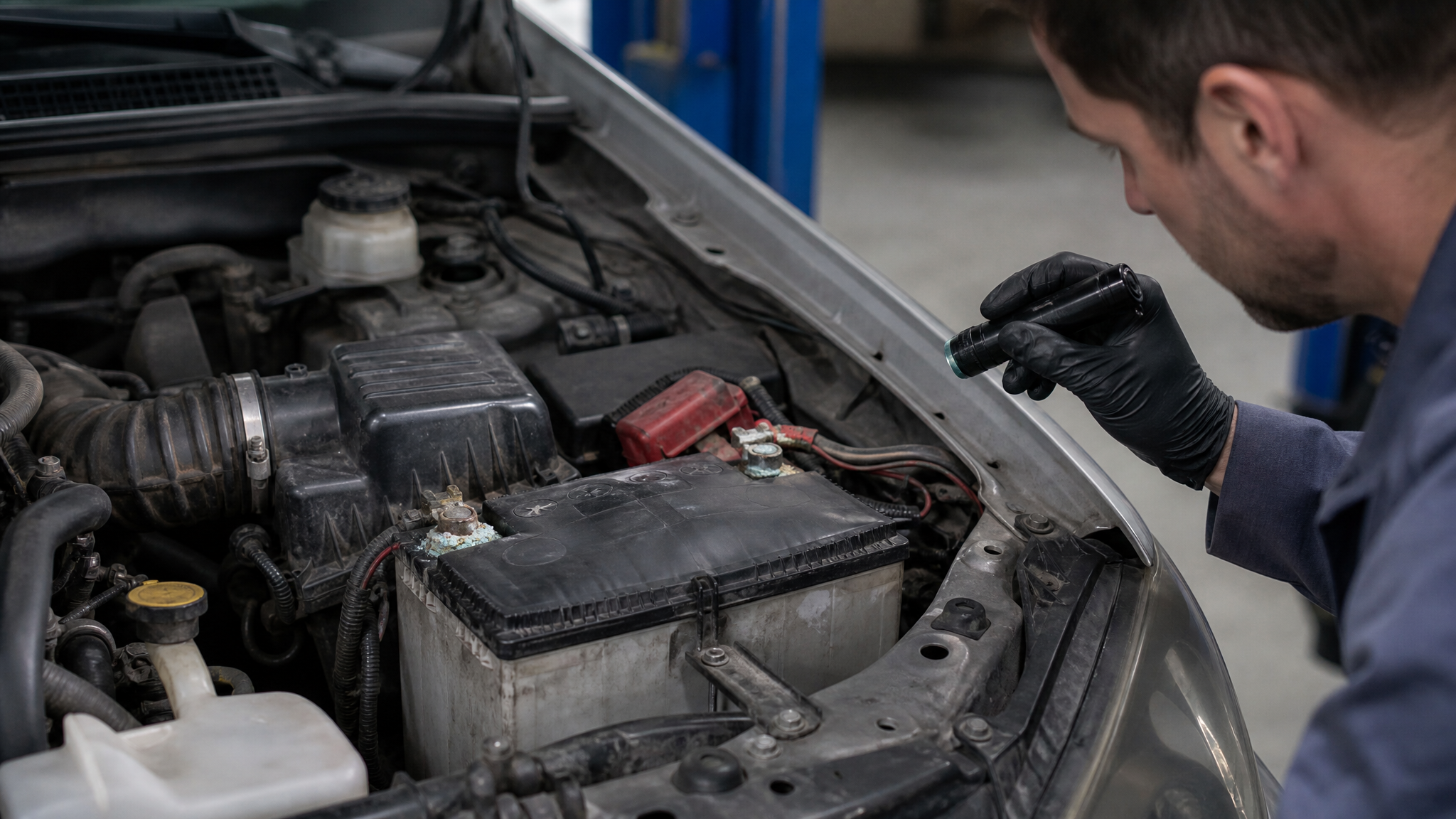
A swollen car battery is a serious warning sign. The case should be flat and firm, not bulging, rounded, or distorted. Once a battery swells, it is usually unsafe to keep using it because internal pressure, heat, gas buildup, freezing damage, or overcharging may have changed the battery structure.
Do not try to “fix” a swollen battery by charging it, opening it, pressing the case back into shape, or adding water unless a professional has confirmed it is a serviceable flooded battery and the case is not damaged. In most cases, replacement is the safest option.
Contents
Main causes of a swollen car battery
| Cause | What happens | What to check |
|---|---|---|
| Overcharging | Excess voltage creates heat and gas pressure | Alternator output and voltage regulator |
| Extreme heat | Battery fluid evaporates and internal pressure rises | Engine bay temperature and battery age |
| Freezing | A discharged battery can freeze and expand | Battery state of charge and cold-weather history |
| Internal short | Heat builds inside one or more cells | Load test and battery replacement |
| Blocked vents | Gas cannot escape normally | Vent path and battery condition |
| Wrong charger settings | Too much charging current or voltage overheats the battery | Charger type and mode |
Overcharging from the alternator
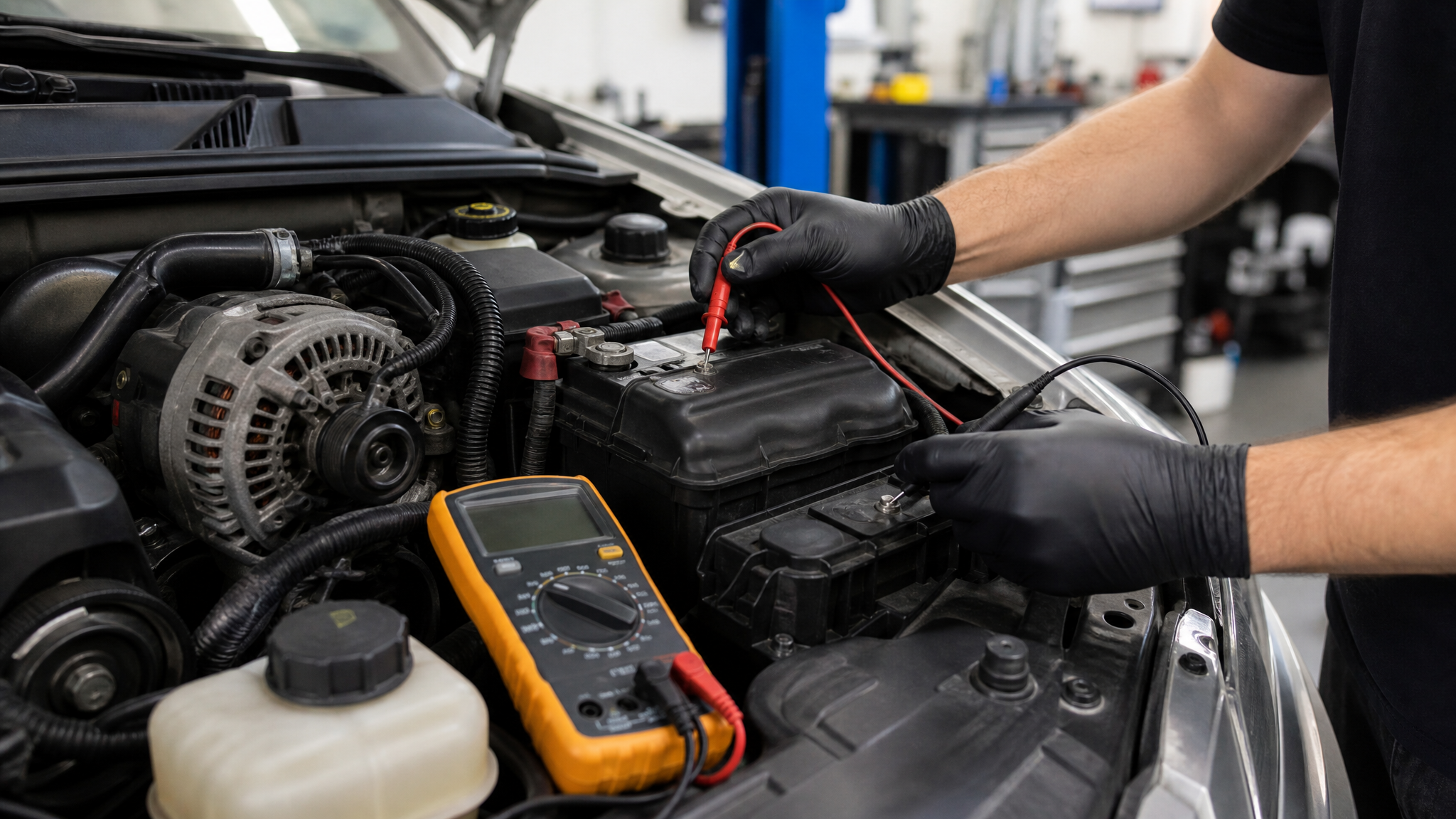
One of the most common causes of a swollen battery is overcharging. A healthy charging system usually keeps voltage around 13.8 to 14.7 volts while the engine is running, depending on temperature and vehicle design. If the alternator or voltage regulator sends too much voltage, the battery can overheat and produce excessive gas.
Signs of overcharging can include:
- Swollen or hot battery case
- Rotten egg smell from sulfur gas
- Battery warning light or electrical warnings
- Headlights that seem unusually bright or fluctuate
- Frequent bulb failures or electrical issues
If you replace the battery without fixing an overcharging problem, the new battery may fail too.
Heat damage
High under-hood temperatures can shorten battery life and contribute to swelling. Heat speeds up chemical reactions inside the battery and can evaporate electrolyte in flooded designs. Batteries mounted near hot engine components or used in hot climates are especially vulnerable.
Heat-related swelling is more likely when the battery is old, low on electrolyte, frequently fast-charged, or already weak.
Freezing in cold weather
A fully charged battery is less likely to freeze, but a discharged battery can freeze at much higher temperatures. When the electrolyte freezes, it expands and can bulge or crack the case. This is common when a weak battery sits unused in cold weather.
If you suspect the battery has frozen, do not charge it while frozen. A frozen or cracked battery can leak acid or fail violently. Let a professional inspect it and replace it if the case is distorted.
Internal short or failed cell
An internal short can create localized heat and gas buildup. The battery may swell, smell bad, lose charge quickly, or fail to crank the engine even after charging. Internal shorts are not repairable in normal automotive use. The battery should be replaced.
Wrong battery charger or charging mode
Using the wrong charger, too high an amperage setting, or an incompatible mode for AGM/EFB batteries can overheat the battery. Smart chargers reduce this risk, but only when set correctly. Never use a charger intended for a different battery chemistry unless the manufacturer says it is compatible.
Is it safe to drive with a swollen battery?
It is not recommended. A swollen battery can leak acid, fail suddenly, release flammable gas, or damage the battery tray and cables. If the battery is very hot, leaking, hissing, or smelling strongly of sulfur, do not drive the car. Keep sparks and flames away and have the vehicle inspected safely.
What to do if your battery is swollen
- Turn the engine off and avoid sparks or flames near the battery.
- Do not charge the battery if it is swollen, frozen, leaking, or hot.
- Wear gloves and eye protection if you must handle it.
- Have the charging system tested before installing a new battery.
- Replace the battery and recycle the old one properly.
FAQ
Can a swollen car battery explode?
It is possible for damaged batteries to vent gas, leak acid, or fail dangerously, especially near sparks or while being charged. Treat swelling as a safety issue.
Can I push the battery case back into shape?
No. A swollen case means internal damage or pressure has occurred. Pressing it back does not repair the battery and can be dangerous.
Will a swollen battery still start the car?
Sometimes, but that does not mean it is safe. A swollen battery can fail without warning and should be replaced.
Final thoughts
The main causes of a swollen car battery are overcharging, heat, freezing, internal shorts, blocked vents, and incorrect charging. Replace the battery, test the charging system, and avoid charging or driving with a battery that is swollen, leaking, hot, or cracked.
