
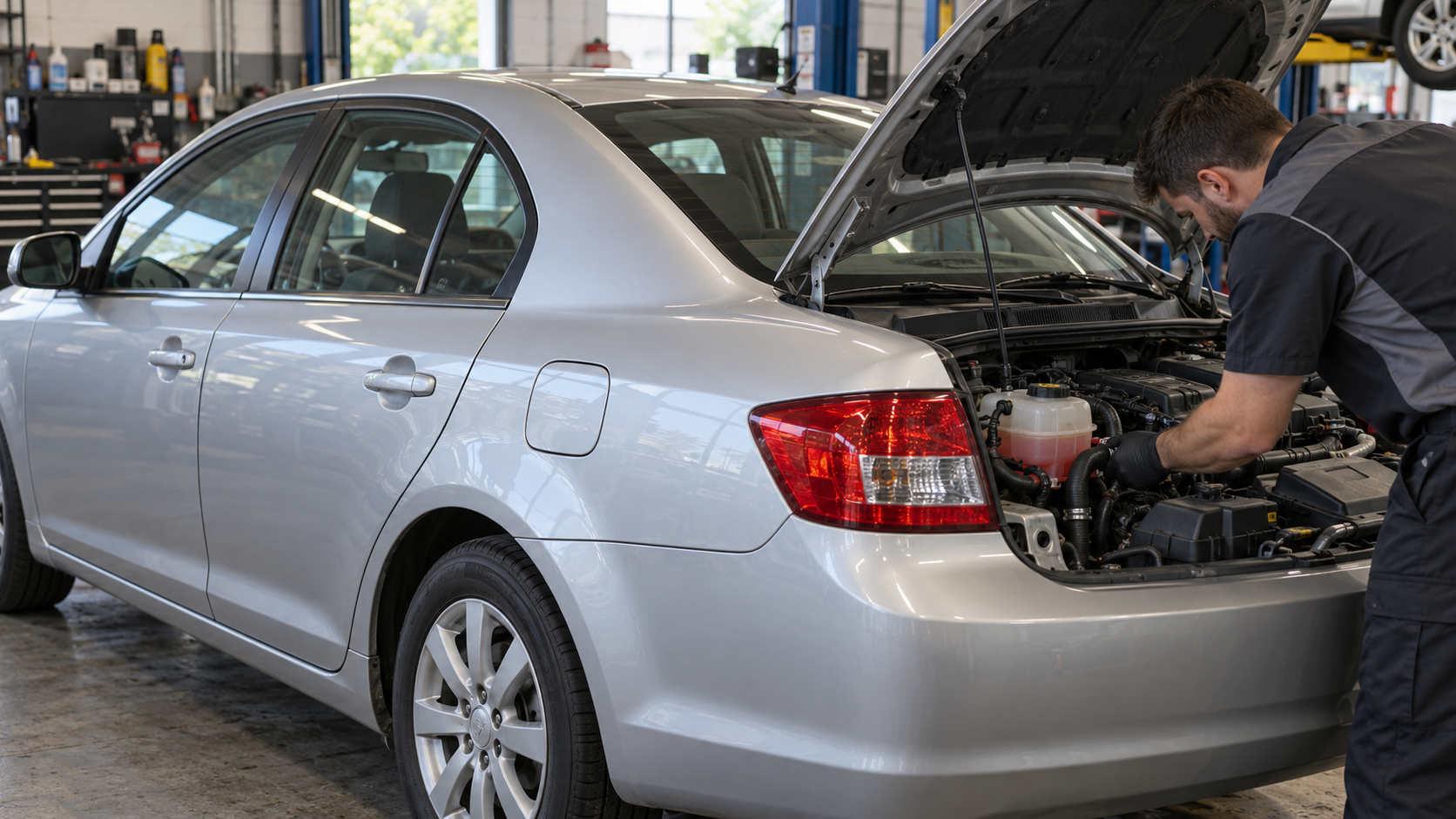
A coolant leak on a 2012 Chevrolet Cruze is not a cosmetic annoyance. Low coolant can leave the heater blowing cold, trigger an engine-temperature warning, and, if the loss is ignored, allow an engine to overheat. The 2012 Cruze was sold with two distinct four-cylinder Ecotec engines: the 1.4L turbocharged LUJ and the 1.8L naturally aspirated LUW. Both use a pressurized liquid-cooling system, but their plumbing, packaging, and documented trouble spots are not identical. That matters when a pink-orange puddle appears under the car or the surge tank keeps falling. This guide separates documented 1.4L pump concerns from broader repair experience and shows how to test before replacing parts.
Contents
How a Coolant Leak Shows Up
Coolant leaves the system only when it has a path out: an external leak, an internal engine leak, or a pressure-control issue that pushes coolant from the reservoir. The Cruze’s warning messages and gauge behavior are useful clues, but they do not identify the failed part by themselves.
Temperature changes and warnings
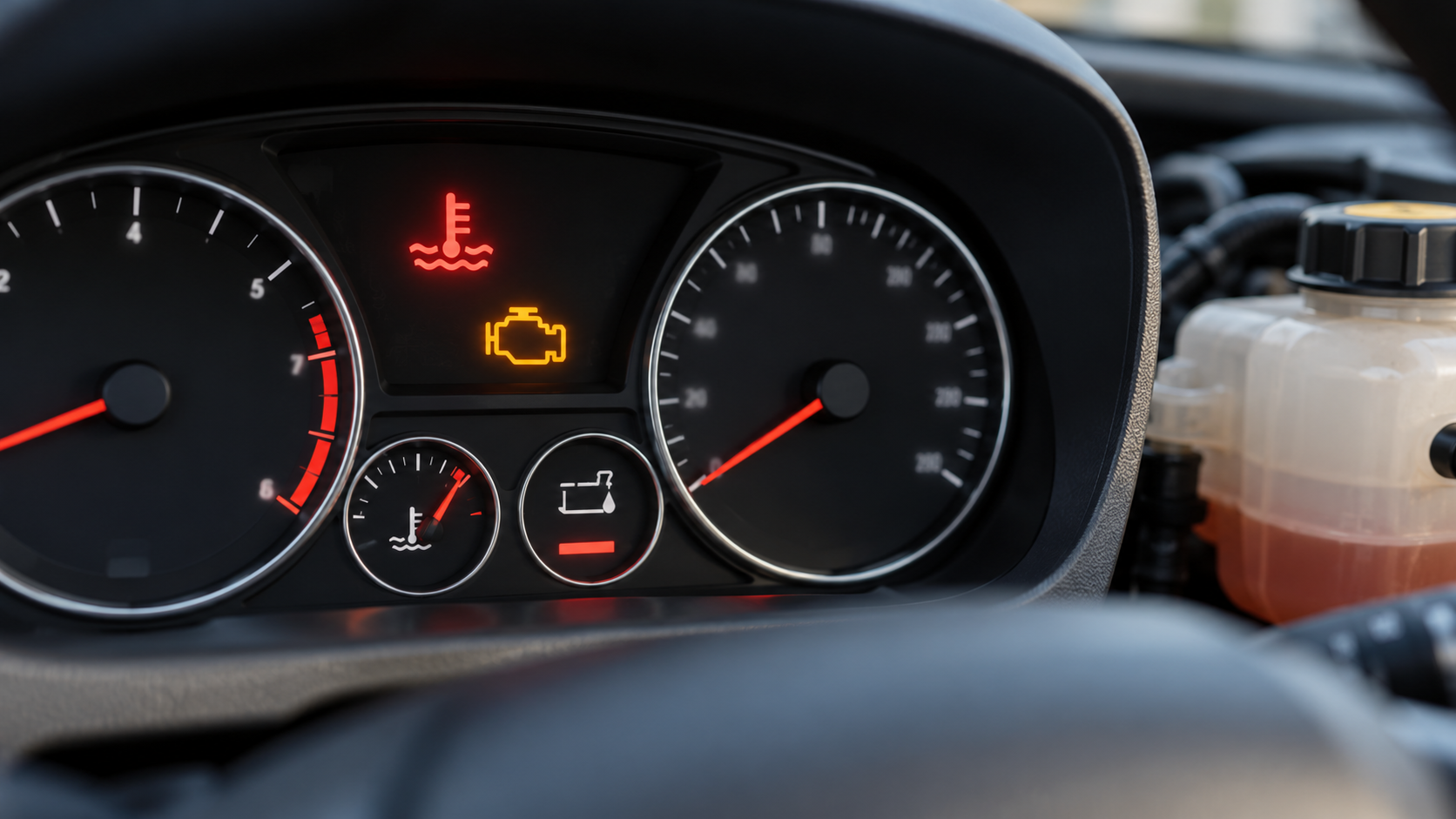
A low coolant level can cause the temperature reading to climb, an engine-hot warning to appear, or the air conditioning to be switched off by the vehicle’s protection strategy. On a 1.4L Cruze, GM service information for certain water-pump leaks specifically associates low coolant with a hot-engine message and reduced cabin heat. Do not assume every hot warning means a bad thermostat: trapped air or a leak can produce similar symptoms.
A gauge that rises and drops can indicate air moving past the sensor as coolant falls. A cooling fan running after a warning is another reason to stop and inspect. Never remove the surge-tank cap hot; pressurized coolant can cause serious burns.
Smell, puddles, and low-coolant behavior
Fresh Dex-Cool-type coolant is commonly orange or pink-orange, but color alone is not proof. Previous owners, shops, or an incomplete flush may have changed the fluid. Look instead for a sweet odor, dampness, dried crusty residue, or a wet trail beginning above the puddle. Coolant can travel along a hose, bracket, or splash shield before it drips.
A coolant odor through the vents, fogging glass, or a damp passenger-side carpet raises the possibility of a heater-core or heater-hose-area leak. GM bulletins addressing coolant odor in the passenger compartment direct technicians to inspect the water-pump seal and bolts, thermostat housing, heater-core area, and surge-tank area; the odor can also result from vapor escaping near the reservoir overflow. Those are diagnostic leads, not a diagnosis by odor alone.
Most Likely Leak Locations
“Most likely” does not mean guaranteed. Age, climate, prior repairs, and which engine is under the hood all change the odds. Start with visible evidence, then pressure-test the system rather than replacing parts based on a forum photo. Owner-forum reports can be useful for locating components, but they are anecdotal and not a measure of failure rate.
Radiator & hoses
Typical symptom
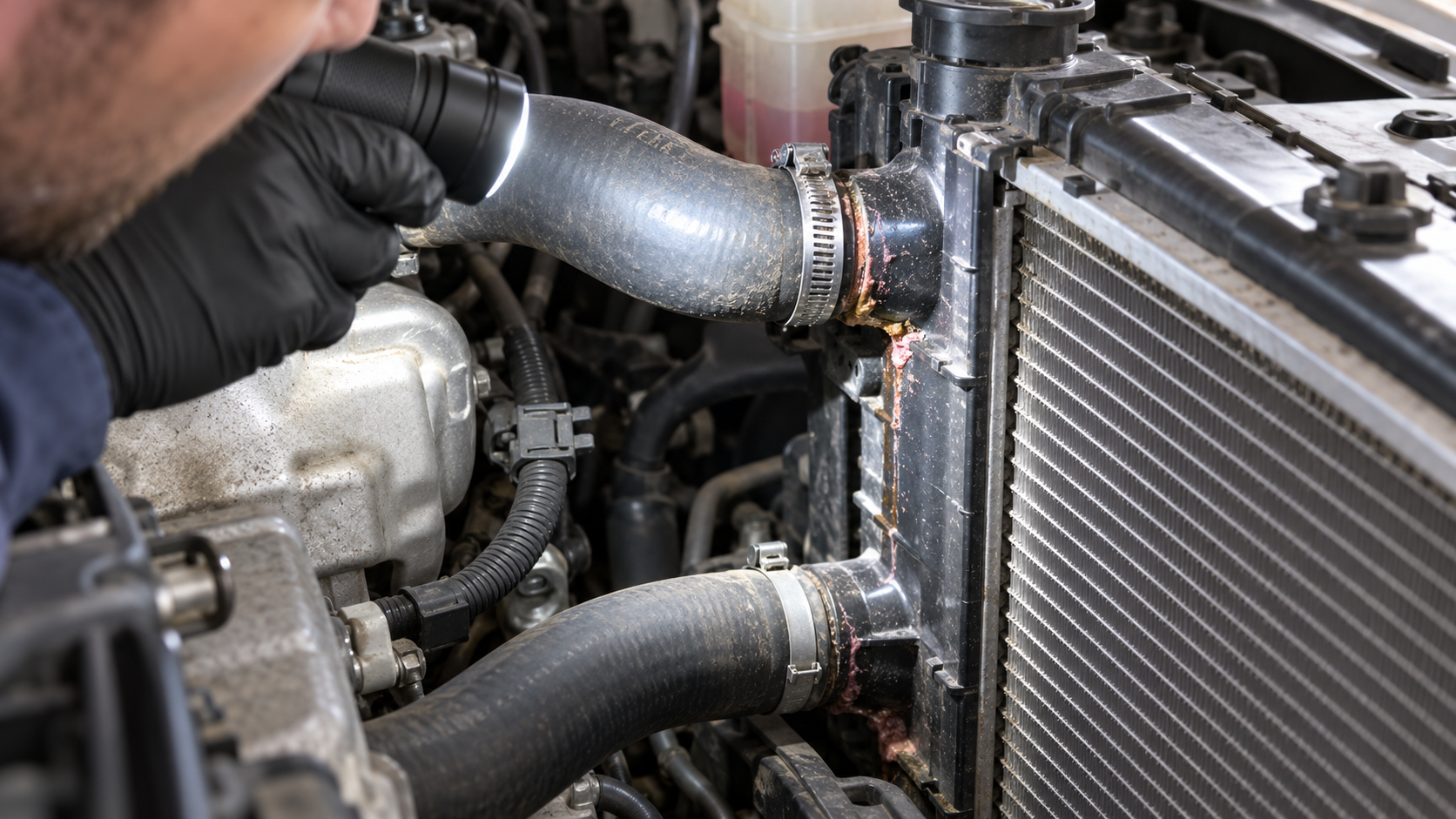
Check the radiator’s plastic end tanks, the upper and lower radiator hose connections, small bypass or throttle-body coolant hoses, and every clamp. A leak here may leave wetness at a seam, white or orange-pink residue, or a puddle near the front of the car after a hot shutdown. A hose may look acceptable while cold but open at a clamp or fitting only when pressure builds.
Both engine options use radiators and hose assemblies, so this is a sensible first inspection regardless of engine. Repair-reference guidance lists loose hose connections, radiator damage, and water-pump faults among common general causes of Cruze coolant loss. On the 1.8L, some owners have noted small leaks at plastic quick-connect fittings and the small coolant plumbing near the throttle body; treat that as an inspection lead, not a universally confirmed design defect.
Relative likelihood and caveat
Hoses and radiator seams are common wear points on many aging vehicles, but a front-end puddle does not prove the radiator is bad. Coolant from the thermostat outlet or water pump can run forward and imitate a radiator leak. Inspect from above and below with the splash shield removed if necessary.
Water pump
Typical symptom
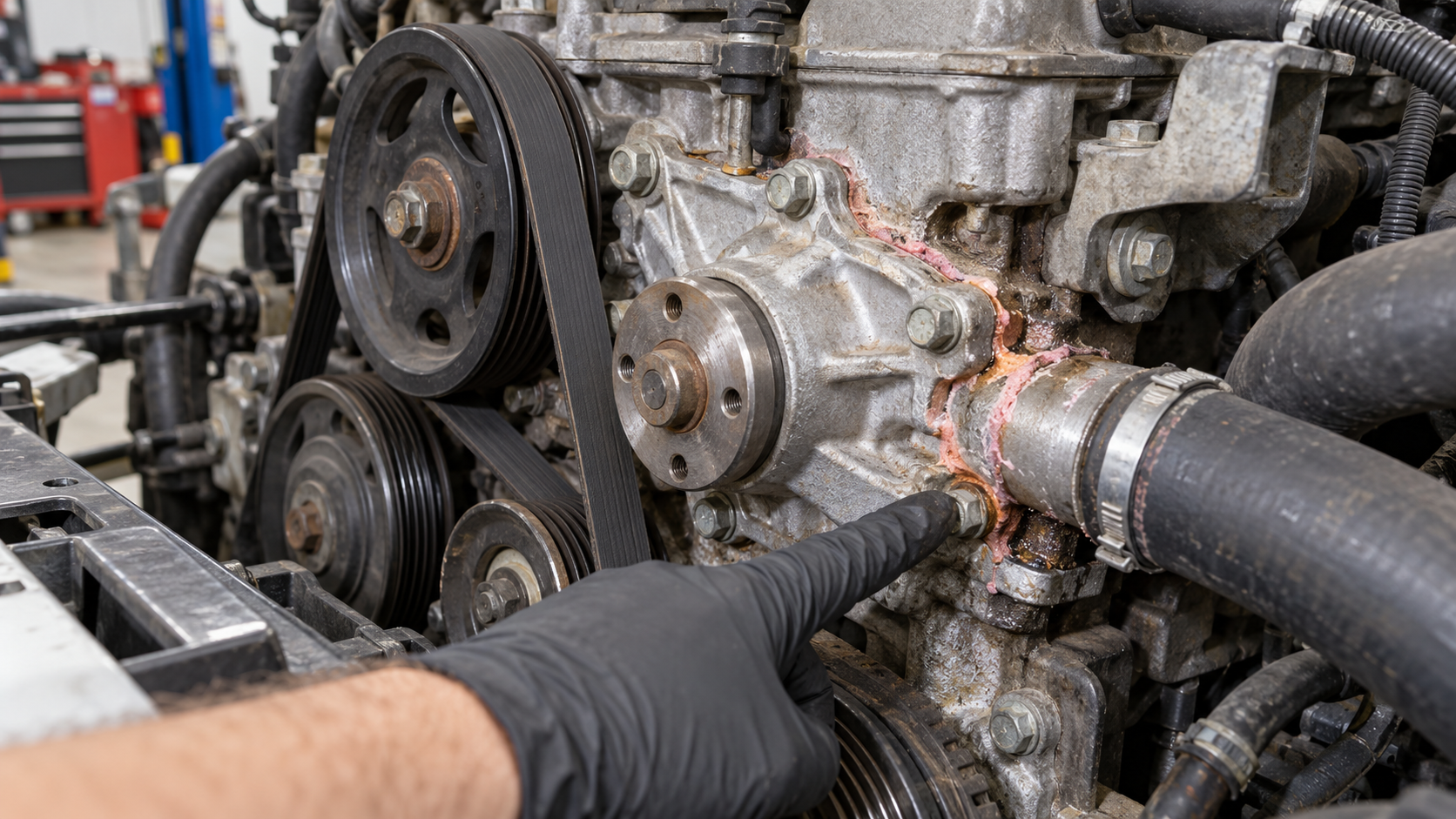
The water pump circulates coolant through the engine, radiator, heater core, and related passages. When a pump seal, gasket, or mounting area leaks, you may see coolant staining around the pump, a drip from the engine side, falling reservoir level, low heat, or an engine-hot warning. Bearing noise or wobble can coexist with a pump problem, but a quiet pump can still leak.
The 1.4L turbo has the strongest manufacturer documentation here. GM issued service information for 2011–2012 Cruzes with the 1.4L turbo describing coolant leakage from the water-pump mounting-bolt area and directing replacement of the pump and gasket rather than tightening bolts or applying sealer. GM also provided special coverage for some 1.4L Cruzes for water-pump coolant leakage, including leaks from the pump’s weep-reservoir/shaft-seal area. Coverage eligibility was vehicle-specific and time-limited, so a current owner should have a Chevrolet dealer check the VIN rather than assume coverage remains.
The 1.8L also has a belt-driven water pump and can develop ordinary seal or gasket leaks with age. However, do not transfer the 1.4L’s documented mounting-bolt bulletin to a 1.8L without confirming the engine and repair information.
Relative likelihood and caveat
A pump-area stain needs interpretation. GM has also advised technicians that a small amount of residue near certain 1.4L pump seal areas can be normal seepage rather than an active leak. A visible trail, repeated level loss, or a pressure-test leak is more persuasive than old staining alone.
Thermostat housing & intake manifold gasket area
Typical symptom
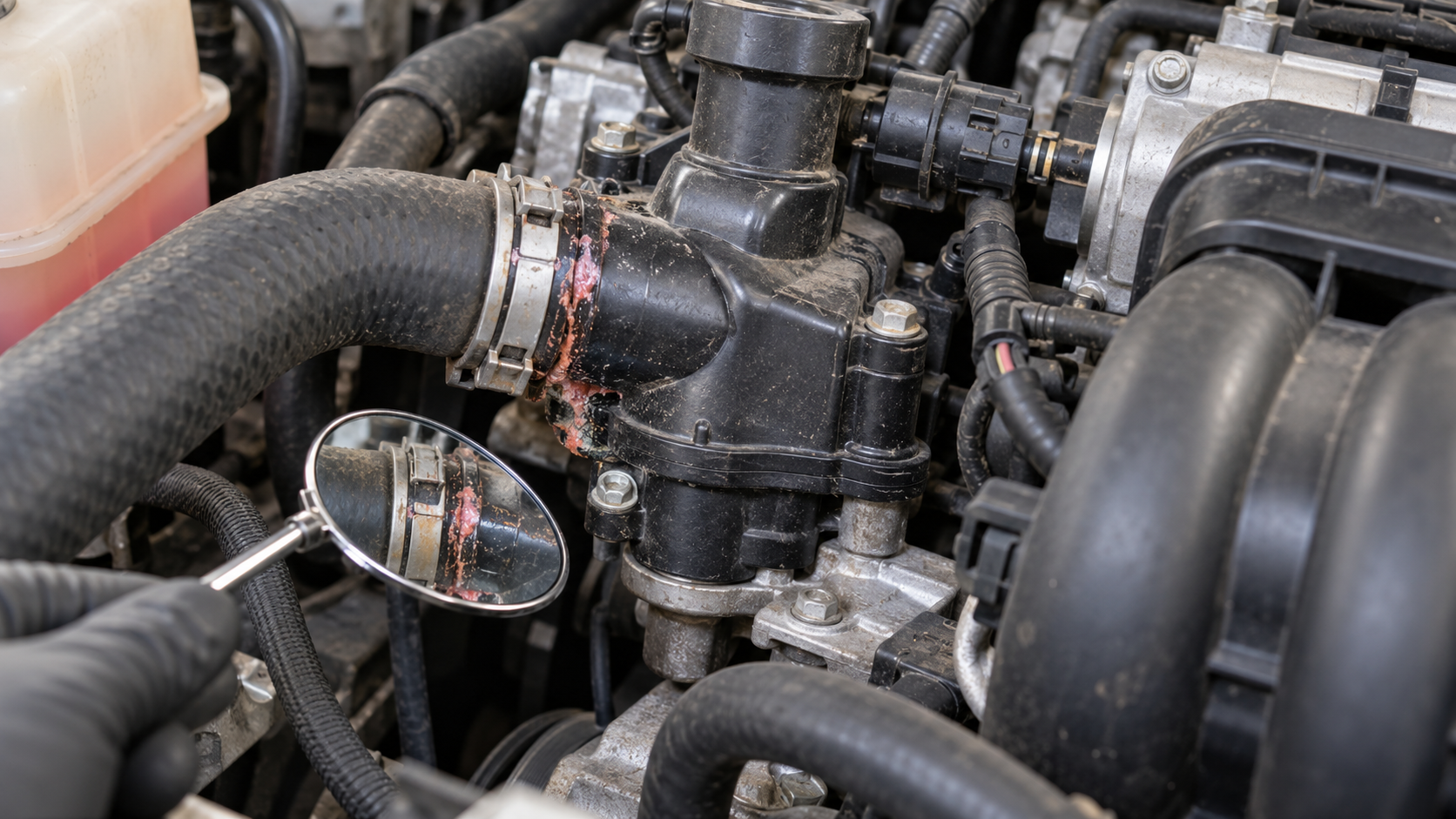
The thermostat housing and coolant outlet are high on the checklist because several hoses and sealing surfaces converge there. A leak can show up as residue around a plastic housing, wetness below a hose connection, a coolant smell after a drive, or a reservoir that falls with no obvious front-radiator drip. On a 1.4L turbo Cruze, GM odor/leak diagnostic guidance specifically identifies the thermostat-housing area as a place to inspect.
The phrase “intake manifold gasket area” deserves care. On the 1.4L, compact plumbing can place leaks near intake-side hardware, making their origin hard to see. On the 1.8L, nearby outlets and hoses may be mistaken for an intake-manifold-gasket leak. An external stain near the intake is not proof that an intake gasket is leaking coolant.
Relative likelihood and caveat
Plastic housings and quick-connect fittings experience heat cycles and can crack or warp, but data on an exact failure rate for every 2012 Cruze configuration remains limited. Check the part number and engine option before ordering a housing. Clean the area, pressure-test cold, and trace the first point that becomes wet. Replacing a thermostat housing without identifying the origin can leave a hose, seal, or water-pump leak untouched.
Heater core & coolant reservoir/surge tank cap
Typical symptom
A heater-core leak may cause a sweet smell inside, glass that films or fogs more than normal, damp carpet, or weak heat as the coolant level drops. Those symptoms can also result from a leaking heater hose or connection at the firewall, so inspect those easier-access points first. A heater core is less convenient to replace than an external hose, and it should not be condemned solely because the cabin smells of coolant.
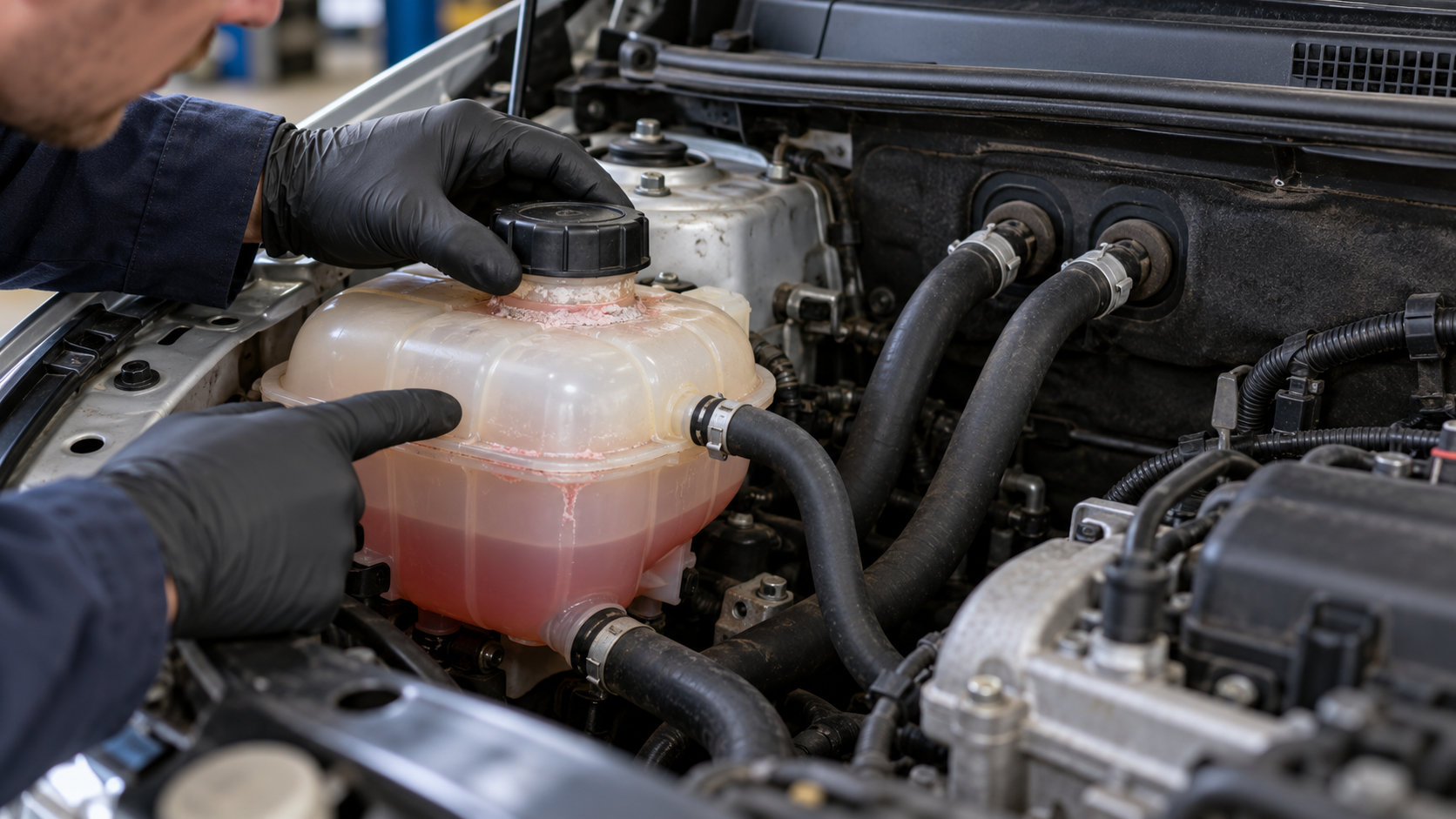
The surge tank and its cap deserve a close look. The cap maintains system pressure; a weak seal or damaged neck can allow vapor or coolant to escape. GM service guidance for Cruze coolant odor includes inspection of the surge-tank area and explains that coolant vapor from the reservoir overflow can enter the passenger compartment through gaps near the hood-to-plenum seal. A cracked tank, discolored seam, wet cap area, or dried residue around the neck supports further testing.
Relative likelihood and caveat
A tank or cap can be inexpensive compared with internal engine work, but do not use that as a reason to guess. Verify cap condition and tank integrity with the correct pressure-test adapter. Anecdotal owner reports mention cracked reservoirs and heater-line connections on both engine families; those reports are useful context, not statistical evidence.
How to Diagnose the Leak
Start only with a cold engine on level ground. Confirm the coolant level at the surge tank, note any dried residue, and photograph suspicious areas before cleaning them. Then remove the upper engine cover if fitted and use a strong light, mirror, or phone camera to inspect the water pump, thermostat/coolant outlet, radiator end tanks, hose connections, heater hoses, and surge-tank seam.
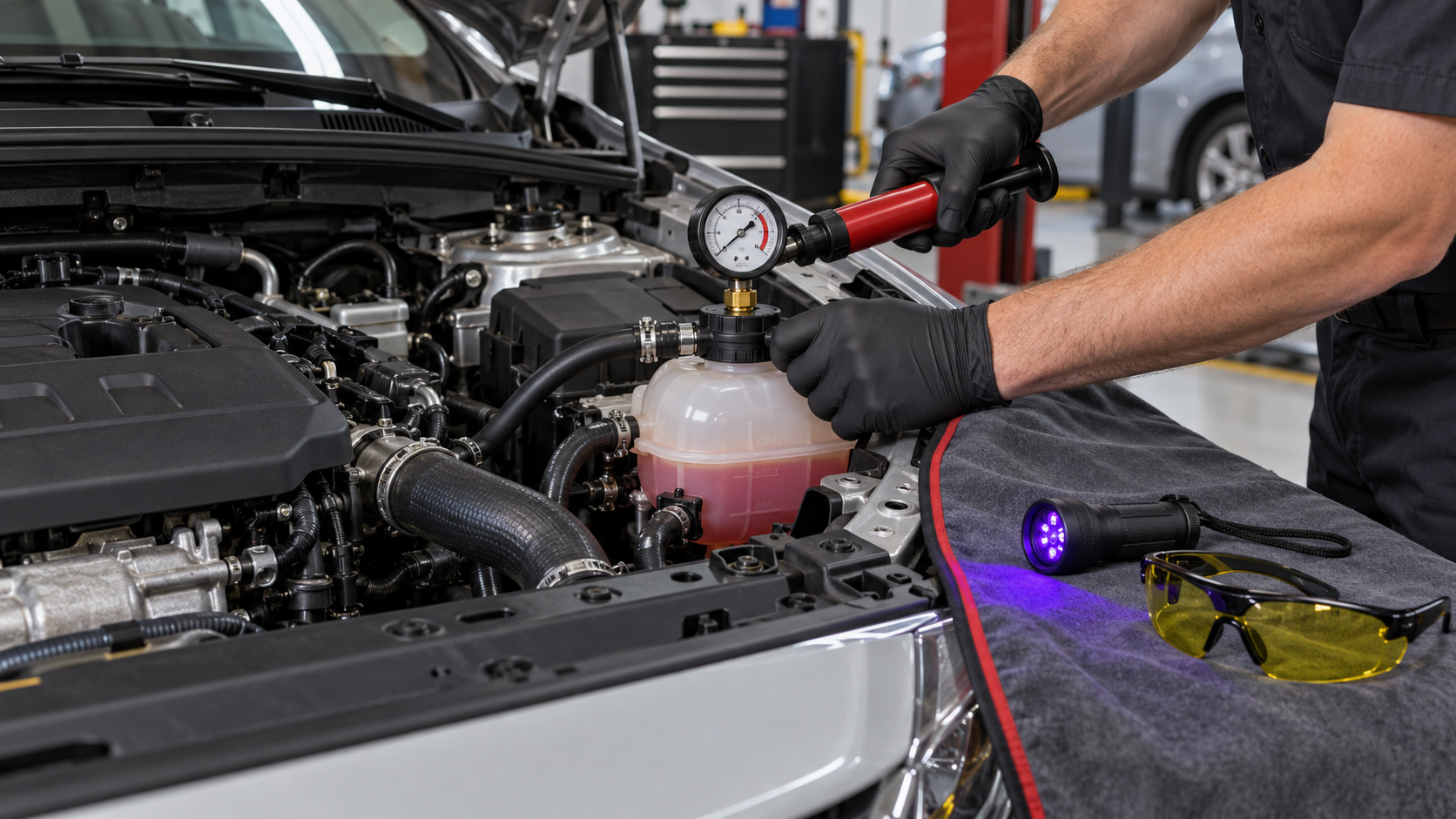
A cooling-system pressure test is the most useful next step for many external leaks. Use an adapter made for the Cruze surge-tank neck, pressurize only to the cap/system specification, and watch for the first wet point. Do not exceed the rated pressure. Some leaks appear only when warm, but a cold pressure test often finds them without running the engine near hot components.
UV dye is helpful after repairs have left the engine bay stained or when the leak is too slow to spot. Add only a cooling-system-compatible tracer in the recommended amount, run the engine through a heat cycle, then inspect with the correct UV light and glasses. GM diagnostic guidance for coolant odor specifically calls for dye and a pressure check, including inspection around the pump, thermostat housing, heater-core area, and surge tank.
Coolant color is a clue, not a test. Confirm what is in the reservoir and avoid mixing coolants unless the product is explicitly compatible. If coolant disappears with no external trace, or there are persistent bubbles, overheating, misfires at startup, or unexplained pressurization, a combustion-gas test can check for exhaust gases entering the coolant. A positive result warrants professional diagnosis; it does not by itself identify the exact failed gasket, head, or block. GM also cautions in 1.4L turbo diagnostic material that the turbocharger is an unlikely source of coolant leaking internally into the intake or exhaust, so test the complete cooling system before blaming the turbo.
When to DIY vs. See a Mechanic
A careful DIY owner can often handle inspection, hose and clamp replacement, surge-tank-cap replacement, coolant service, and a proper pressure test. Use exact-engine repair information, support the car safely, and dispose of coolant responsibly.
Move to a qualified shop when the engine overheats, the source is hidden behind major components, the heater core is suspected, coolant and oil may be mixing, or combustion gases are detected. Water-pump access, fastener procedures, belt routing, and bleeding requirements differ between the 1.4L and 1.8L. A professional diagnosis can be less expensive than replacing several plausible parts in sequence. Do not continue driving a Cruze that repeatedly warns of overheating or cannot retain coolant.
FAQ
Is a 2012 Cruze coolant leak always a water-pump problem?
No. The 1.4L water pump has manufacturer-documented leak scenarios, but hoses, the radiator, thermostat/outlet area, surge tank, cap, heater circuit, and less common internal problems can all cause coolant loss. Pressure testing is the right way to distinguish them.
Can I drive briefly with the coolant low?
It is a risk, not a safe plan. Low coolant can create air pockets, reduce heater output, and cause overheating quickly. If the level is low or an engine-hot warning appears, stop, let the engine cool, and find the cause before regular driving.
Why does the Cruze smell like coolant but leave no puddle?
The leak may be small, evaporate on hot parts, collect in a splash shield, escape as vapor near the reservoir, or occur around the heater-core/heater-hose area. A dye inspection and pressure test are more reliable than waiting for a large puddle.
