
The 2017 Hyundai Tucson can be a practical compact SUV, but the turbocharged 1.6-liter models with Hyundai’s seven-speed dual-clutch transmission have generated a recurring conversation about low-speed hesitation, shuddering, and delayed response. Those sensations can be unsettling in traffic, particularly when a driver expects the vehicle to move immediately from a stop.
The important distinction is between normal DCT character, a software-calibration concern, and a mechanical fault. Hyundai manufacturer communications document updates for slight low-speed hesitation on certain 2017 Tucsons with the seven-speed DCT. Other manufacturer material addresses abnormal low-speed clutch vibration and provides a diagnostic path that can include a transmission-control update and clutch replacement. Owner reports add useful context, but exact failure rates are not independently verified. This guide explains what the symptoms can mean, how a shop should separate them, and what practical steps owners can take.
Contents
What Is a Dual-Clutch Transmission (DCT) and Why the 2017 Tucson Uses One
A dual-clutch transmission is an automated manual transmission. Instead of using one torque converter and a conventional set of automatic-transmission clutch packs, it uses two computer-controlled clutches. One clutch manages one group of gears while the other prepares the next gear. That design can make shifts quick and can support fuel-economy goals because the transmission can reduce some of the fluid-coupling losses of a traditional automatic.
The tradeoff is that a DCT can feel different at parking-lot speeds. Pulling away from a stop, creeping uphill, reversing, or maneuvering into a space requires the clutches to engage and slip in a controlled way. A conventional automatic often feels smoother in those moments because its torque converter cushions the connection between the engine and transmission. A DCT may instead feel more direct, deliberate, or slightly hesitant.
In the 2017 Tucson, the seven-speed DCT is paired with the turbocharged 1.6-liter engine in certain trims. The naturally aspirated 2.0-liter Tucson uses a different automatic transmission, so it should not be treated as the same drivetrain. Confirm the engine and transmission before applying any online advice.
A brief pause or a mild, repeatable sensation during low-speed clutch engagement is not automatically a failed transmission. But a delay that leaves the vehicle unable to enter traffic as expected, recurring shudder, burning smell, warning light, loss of movement, or a major change from its prior behavior deserves a documented diagnosis. The goal is not to tell the driver to “get used to it”; it is to determine whether the characteristic is normal, calibration-related, or a fault.
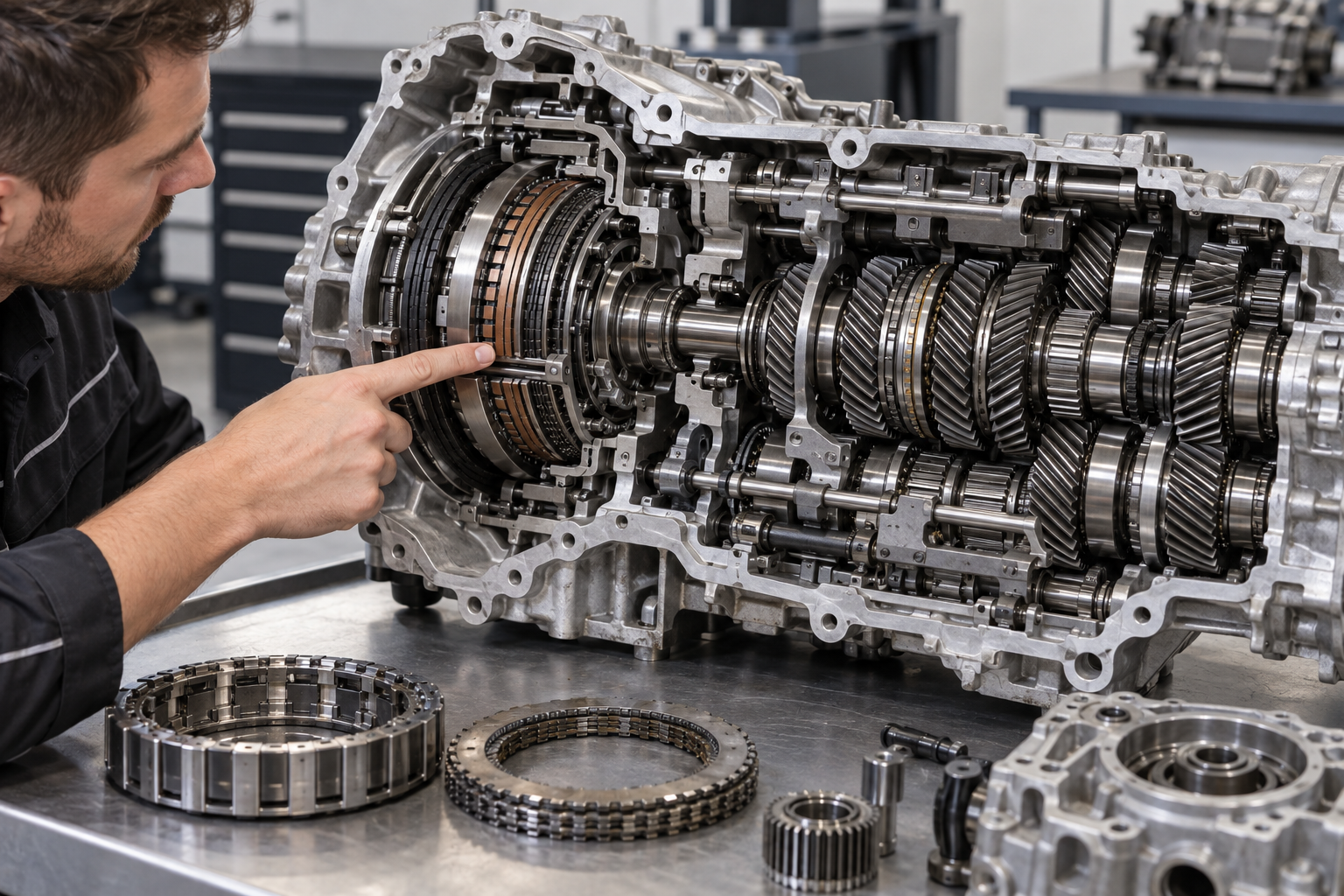
Common Symptoms Owners Report: Hesitation, Shudder, and Delayed Acceleration
Owners commonly describe hesitation as a pause after pressing the accelerator from a stop or at low speed. The engine may rev modestly before the Tucson begins to pull, or it may feel as though it is deciding which clutch to apply. Hyundai manufacturer communications for certain 2017 DCT Tucsons specifically discuss slight hesitation at low speeds in particular driving conditions. That matters because it confirms that at least some low-speed response concerns were addressed through control-software updates.
Shudder is different from a simple pause. Drivers often describe it as a vibration, chatter, or uneven grab while taking off, creeping, or backing up. Some DCT shudder can feel similar to a manual-transmission driver releasing the clutch too abruptly. Manufacturer technical material for certain Hyundai vehicles, including applicable Tucson models, describes abnormal low-speed clutch vibration and gives technicians a process for evaluating clutch judder or chatter.
Delayed acceleration can also be confused with engine trouble. A turbocharged engine may need a moment to build boost, and an engine misfire, intake leak, weak battery, brake-drag issue, or traction-control intervention can all reduce response. A technician should not label every slow takeoff “a bad DCT” without scanning all relevant modules and road-testing the vehicle.

What’s Believed to Cause These Symptoms
A DCT has software, electronic actuators, sensors, clutch components, and mechanical gearsets. Low-speed behavior can be affected by how the transmission-control module chooses clutch pressure, engine torque, gear selection, and thermal protection. Hyundai’s published campaign and technical-service information supports this basic point: software changes were issued for certain DCT-equipped Tucsons to improve low-speed engine and transmission response.
That does not mean software is the answer to every complaint. If a clutch surface has worn, become contaminated, or is not applying evenly, the result may be judder or chatter. A Hyundai technical bulletin covering abnormal low-speed vibration on applicable DCT vehicles directs technicians to diagnose the condition, update the transmission-control software, and replace the double-clutch assembly when the diagnostic criteria are met. That is manufacturer guidance, not proof that every shudder requires a clutch replacement.
Driving conditions may also matter. Repeated creeping on steep grades, prolonged stop-and-go operation, holding the vehicle with the accelerator instead of the brake, and extended maneuvering can increase clutch heat. These factors can aggravate an existing condition, but they do not prove the driver caused a defect. Similarly, owners sometimes attribute all hesitation to “turbo lag,” but that remains an incomplete explanation when the symptom is a strong shudder or delayed engagement from a stop.
A proper diagnosis must also rule out non-DCT causes. Engine performance codes, low battery voltage, loose connectors, brake-switch signals, wheel-speed sensor faults, and adaptive-control issues can affect how a transmission responds. If a dealer or shop recommends a major repair, ask which tests separated a clutch concern from an engine, electrical, or software concern.
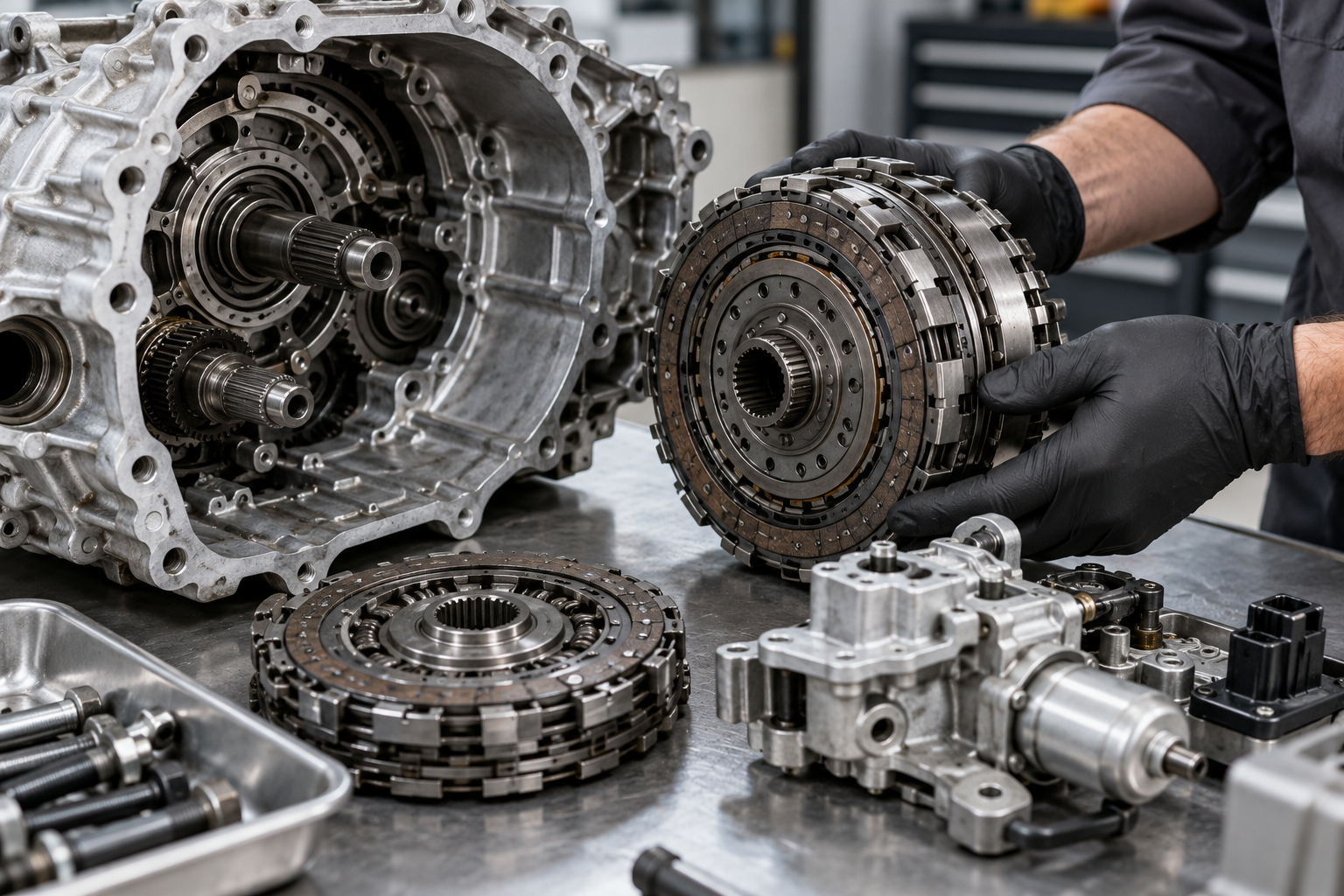
Recalls, TSBs & Manufacturer Response
The terminology matters. A recall is a safety campaign tied to specific vehicles and VINs. A technical service bulletin is repair or diagnostic guidance for dealers; it does not automatically mean that every vehicle qualifies for a free repair. A service campaign may provide a targeted update without being a safety recall.
NHTSA recall records document a DCT-related safety recall for certain 2016 Tucson vehicles, not a blanket recall for every 2017 Tucson. That 2016 action involved a situation in which specific driving conditions could leave a vehicle unable to move after repeated accelerator use. It should not be cited as proof that a particular 2017 Tucson is recalled. Check the exact VIN through Hyundai and NHTSA before assuming any campaign is open.
For 2017 DCT-equipped Tucson models, manufacturer technical-service information documents control-logic updates intended to address slight hesitation at low speeds. Additional Hyundai technical guidance covers abnormal low-speed clutch vibration on applicable DCT vehicles and provides a repair path that can involve updated control logic and clutch replacement. Whether a specific Tucson qualifies, received the update previously, or needs clutch work is VIN- and symptom-dependent with a Hyundai dealer using the vehicle’s VIN and service history.
NHTSA complaint data and consumer reviews show that acceleration and transmission behavior have been recurring owner concerns for this vehicle generation. Complaint records are reports, not confirmed defect rates, and they cannot prove that a single repair will fit every Tucson. Use them as a reason to inspect carefully, not as a diagnosis.
How It’s Diagnosed
A good diagnosis begins with a clear reproduction of the complaint. The service writer should document whether the symptom occurs when cold or warm, in Drive or Reverse, on a hill, after a long stop, during light throttle, or only while creeping. Video taken safely from inside a parked vehicle can sometimes help show a warning message, but a road test should be performed only by someone who can do it safely.
The technician should scan the engine, transmission, anti-lock-brake, and body-control systems for stored, pending, and history codes. Low battery voltage or communication faults can create confusing behavior across multiple systems. The shop should also check for open Hyundai campaigns and verify the current software calibration before condemning hardware.
Next comes a controlled road test and transmission evaluation. The technician may look for clutch judder, abnormal engagement, shifts that do not match the requested gear, or an engine problem that mimics transmission delay. If the concern is present, manufacturer procedures may call for software updates, clutch inspection, or further measurement. The owner should receive the diagnostic result in plain language: what symptom was reproduced, what code or test supported the conclusion, and why a particular repair is recommended.
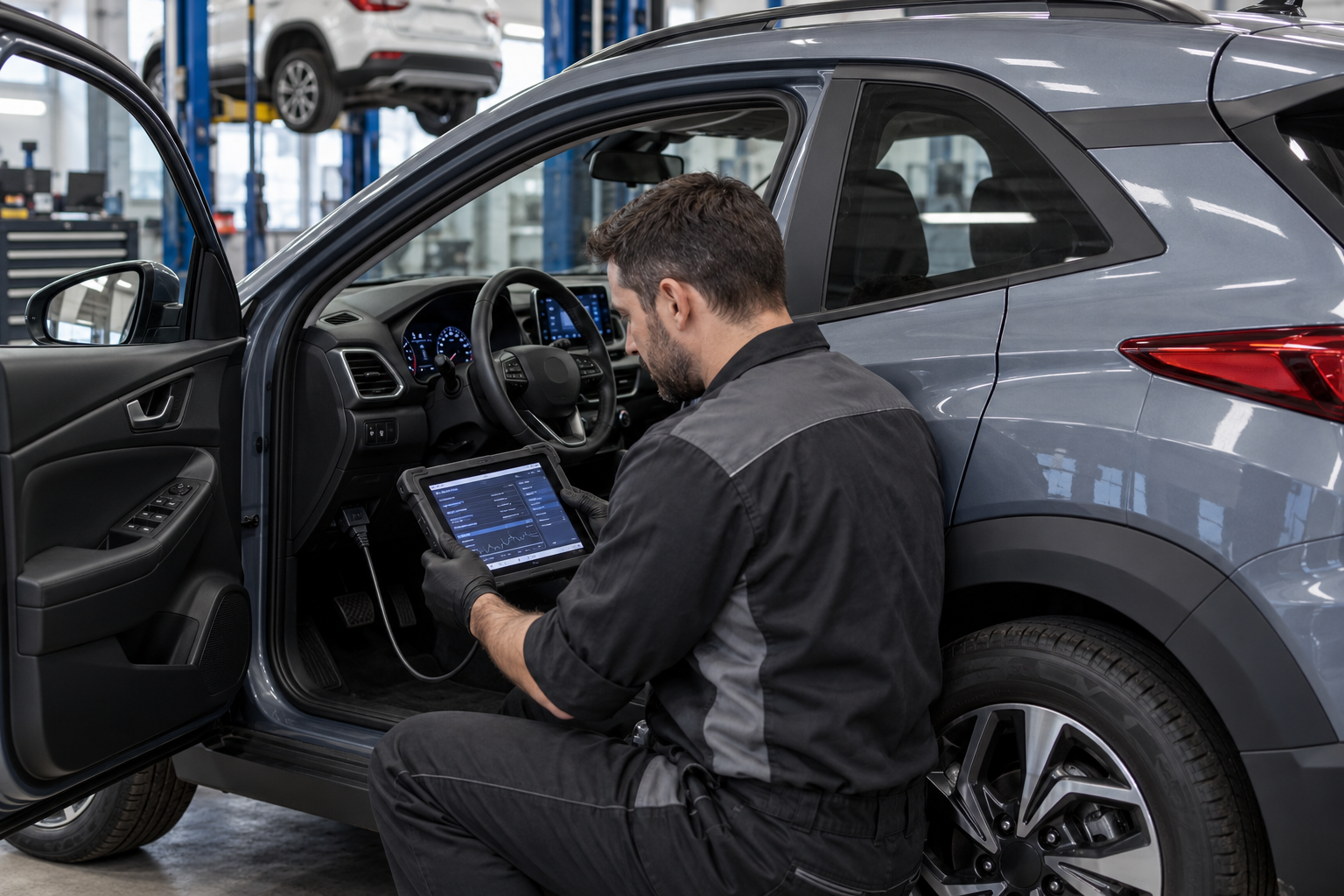
Repair & Software Update Options
The first practical step is often a VIN check for open recalls, campaigns, or applicable service updates. If a current Hyundai campaign applies, the dealer can explain the remedy and coverage. If no campaign is open, a dealer or qualified independent Hyundai specialist can still verify whether the transmission and engine controllers have the latest applicable calibration.
A software update may improve low-speed response when the issue matches the relevant manufacturer guidance. It cannot reverse worn or damaged clutch material. If diagnosis confirms abnormal clutch judder and the vehicle falls outside any applicable coverage, the repair may involve clutch-related parts and the necessary programming or adaptation procedures afterward.
Costs are estimates only. A diagnostic evaluation and software update may range from roughly $150 to $500 when paid out of pocket, depending on local labor rates and whether additional testing is needed. A battery, sensor, or minor wiring repair can range from a few hundred dollars upward. A confirmed clutch-related DCT repair can commonly reach several thousand dollars, while a major transmission replacement can cost more. These are planning ranges, not guarantees, and the exact repair should follow documented testing.
Ask whether the estimate includes diagnosis, programming, updated parts, clutch adaptation or relearn procedures, and taxes. If the recommendation is expensive, a second opinion is reasonable. Do not choose a repair based solely on the phrase “DCT problem”; ask whether software history, codes, battery condition, engine performance, and clutch behavior were all checked.
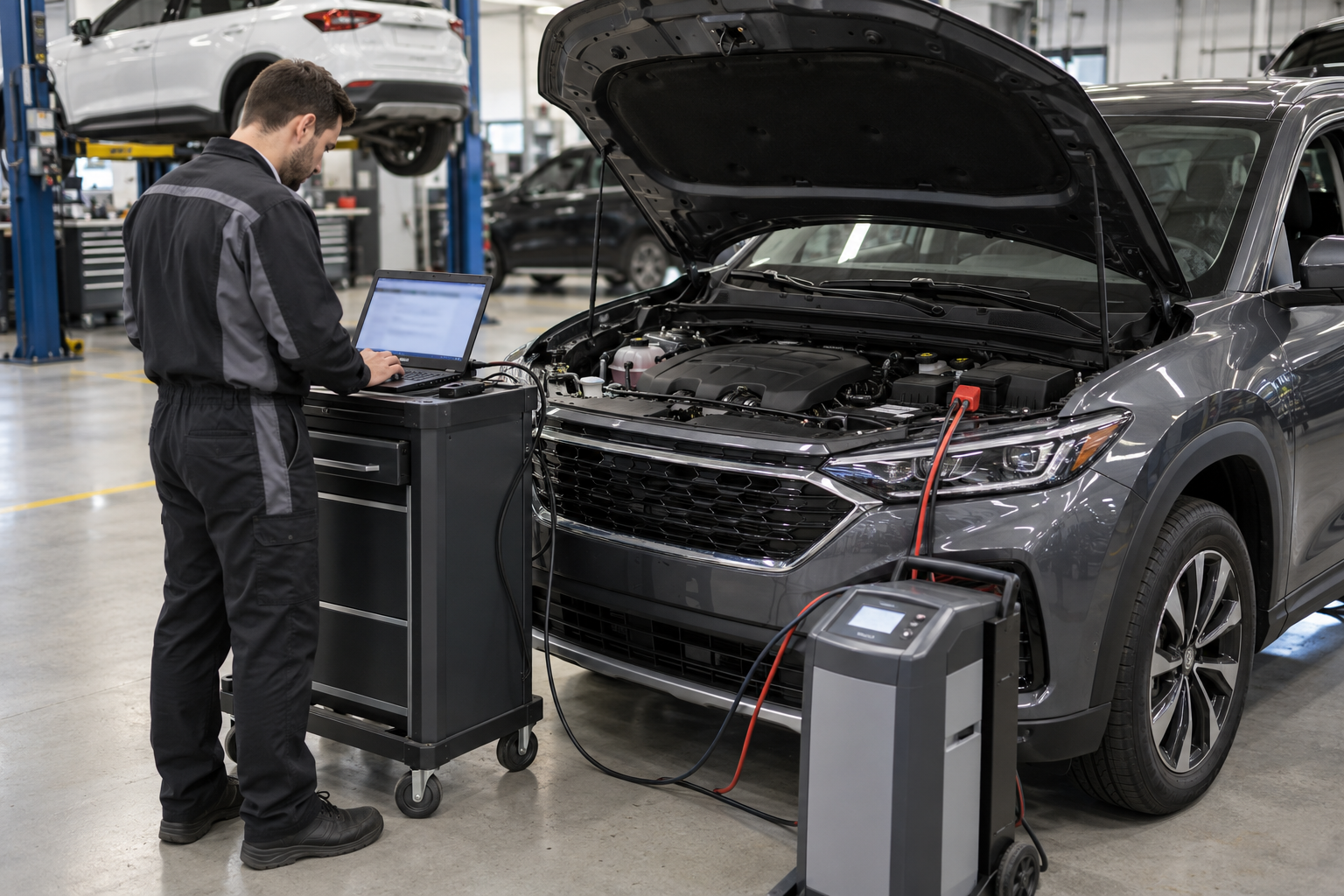
Preventive Maintenance: What Owners Can Do
Maintenance cannot guarantee that a DCT will never develop a problem, but it can reduce avoidable stress and make early changes easier to document. Follow the maintenance schedule in the owner’s manual, use the specified fluids and parts, and address engine or battery warning lights promptly. A weak battery can affect electronic controls long before it prevents the engine from cranking.
At low speed, use the brake to hold the Tucson still rather than balancing it on the accelerator. Avoid prolonged creeping when traffic allows a full stop, and pause rather than repeatedly cycling the accelerator during a hesitation. These habits are consistent with minimizing unnecessary clutch slip, but they are not a substitute for repair when the vehicle is shuddering or delaying engagement.
Keep records of software updates, inspection findings, and repair invoices. When the symptom is intermittent, write down outside temperature, vehicle temperature, road grade, whether the transmission was in Drive or Reverse, and the exact warning message. That record can help a technician reproduce the condition and can show whether the complaint changed after an update.
FAQ
Is a little hesitation normal in a 2017 Tucson DCT?
A mild difference from a conventional automatic can be normal at low speed. Hyundai manufacturer information also recognized slight hesitation in certain conditions. Repeated delays, strong shudder, warning lights, or inability to accelerate normally are not symptoms to ignore.
Does every 2017 Tucson have the seven-speed DCT?
No. The DCT is associated with certain turbocharged 1.6-liter models. The 2.0-liter Tucson uses a different automatic transmission. Confirm the actual powertrain before seeking DCT-specific service.
Will a software update fix shuddering?
It may improve a calibration-related low-speed response concern. If testing confirms abnormal clutch judder, software alone may not be enough; manufacturer guidance can call for clutch-related repair. The correct answer depends on the vehicle’s VIN, history, and diagnosis.
Is there a recall for the 2017 Tucson DCT?
NHTSA records show a DCT safety recall for certain 2016 Tucson vehicles. Do not assume that action covers a 2017. Check the specific VIN with Hyundai and NHTSA for unrepaired recalls and campaigns. [VERIFY]
Conclusion
The 2017 Hyundai Tucson DCT can feel different from a conventional automatic, but a strong shudder, repeated hesitation, or delayed acceleration deserves more than a vague explanation. Hyundai’s own technical materials document low-speed response updates and a diagnostic path for abnormal clutch vibration on applicable vehicles. Start with the VIN, code scan, current software status, and a reproducible road-test result. That approach gives owners the best chance of separating normal DCT behavior from a repairable calibration issue or a genuine mechanical fault.
Sources & Further Reading
This article uses NHTSA recall and complaint records, Hyundai manufacturer technical-service materials, consumer automotive reviews, and engineering explanations of DCT operation.
