
The 2017 Ford Escape remains appealing because it is compact, easy to drive, and available with several engines and all-wheel drive. But it also has a reputation that deserves a careful used-car or ownership review, especially around EcoBoost engine concerns, unexplained coolant loss, and automatic-transmission behavior. The 2017 Ford Escape problems most often discussed in complaint databases and repair conversations are not all the same issue, and they do not affect every Escape.
Contents
Engine Problems
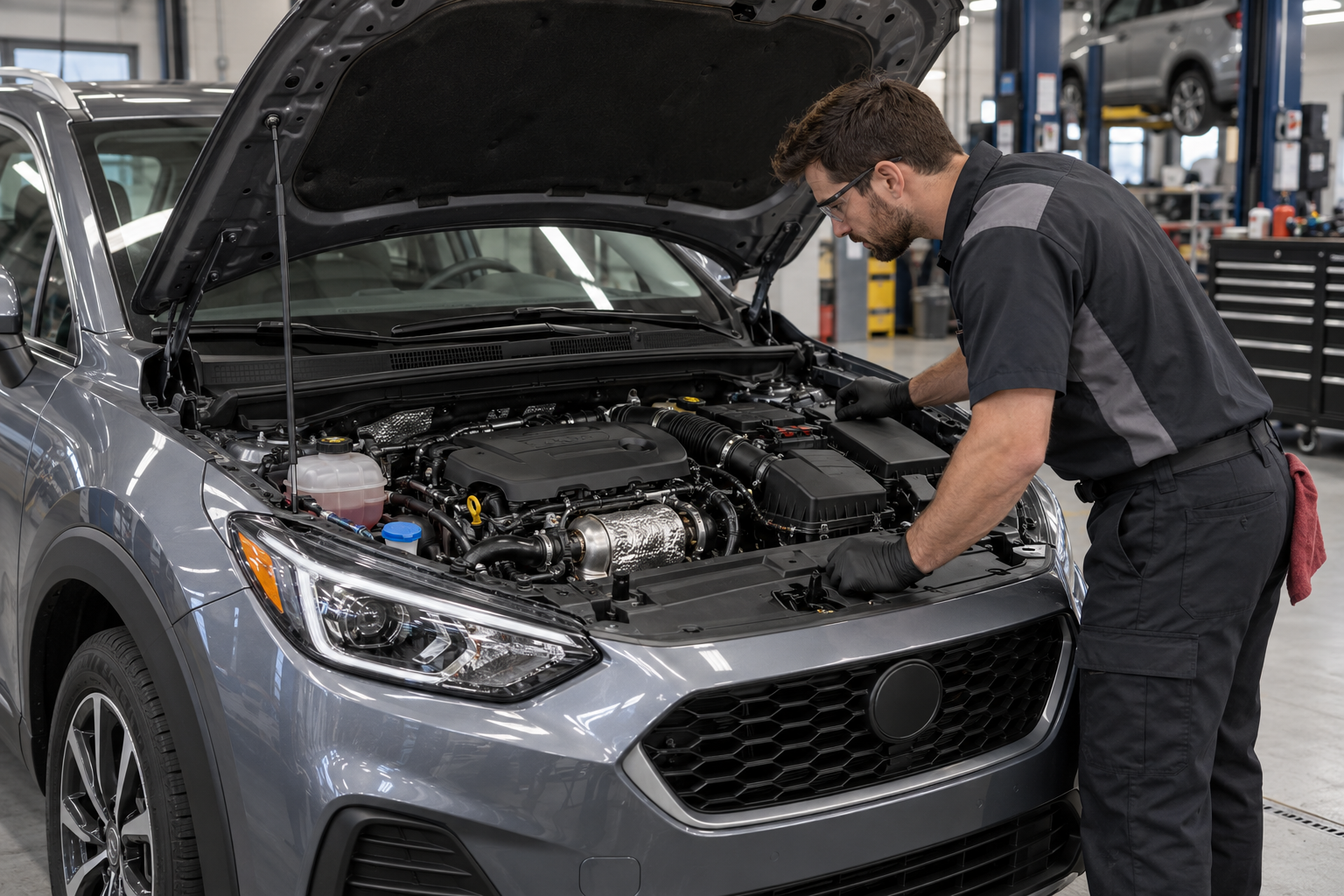
The 2017 Escape was sold with a naturally aspirated 2.5-liter four-cylinder in some trims and turbocharged EcoBoost engines in others. The turbo models deliver stronger low-speed acceleration, but they are the versions most often associated with significant engine and cooling-system discussion. That distinction matters when shopping: “2017 Escape” alone is not enough to identify the mechanical risk.
A notable number of owner complaints involve rough running, loss of power, misfires, check-engine lights, or an engine that runs poorly after sitting overnight. These symptoms have ordinary causes too—spark plugs, ignition coils, fuel delivery, sensors, vacuum leaks, or wiring—but they should not be dismissed on an EcoBoost Escape when coolant is also disappearing. Ford service communications for certain Escape engines describe conditions involving low coolant, white exhaust smoke, misfire codes, and internal coolant loss. Those communications are not proof that every engine has the same defect, but they establish that the pattern is real enough to require engine-specific diagnosis.
A misfire means one or more cylinders are not burning the air-fuel mixture correctly. The driver may feel a shake at idle, hesitation during acceleration, or a sudden drop in smoothness. If the check-engine light flashes, treat it as urgent. A flashing light commonly signals an active misfire, and continued driving can damage the catalytic converter. Pull over when safe, avoid hard acceleration, and arrange an inspection rather than repeatedly clearing the light.
The key question is whether the engine problem is external and repairable—such as an ignition part or a hose—or whether coolant is entering a cylinder. A shop should retrieve every stored and pending code, look at freeze-frame data, inspect the oil and coolant condition, and perform tests that fit the engine. Replacing plugs or coils may be appropriate if testing supports it. Replacing them repeatedly without asking why the vehicle is misfiring is not a durable diagnostic plan.
The 2017 Ford Escape problems that need context
Online discussions often group all engine faults together. In reality, the 2.5-liter non-turbo engine, the 1.5-liter EcoBoost, and the 2.0-liter EcoBoost should be evaluated separately. A careful inspection should confirm the engine by VIN or under-hood label, then review coolant history, prior engine work, oil-change records, and previous misfire repairs. A seller’s statement that “it only needed a tune-up” is less useful than an invoice showing the codes, test results, and completed repair.
Coolant Loss Issues
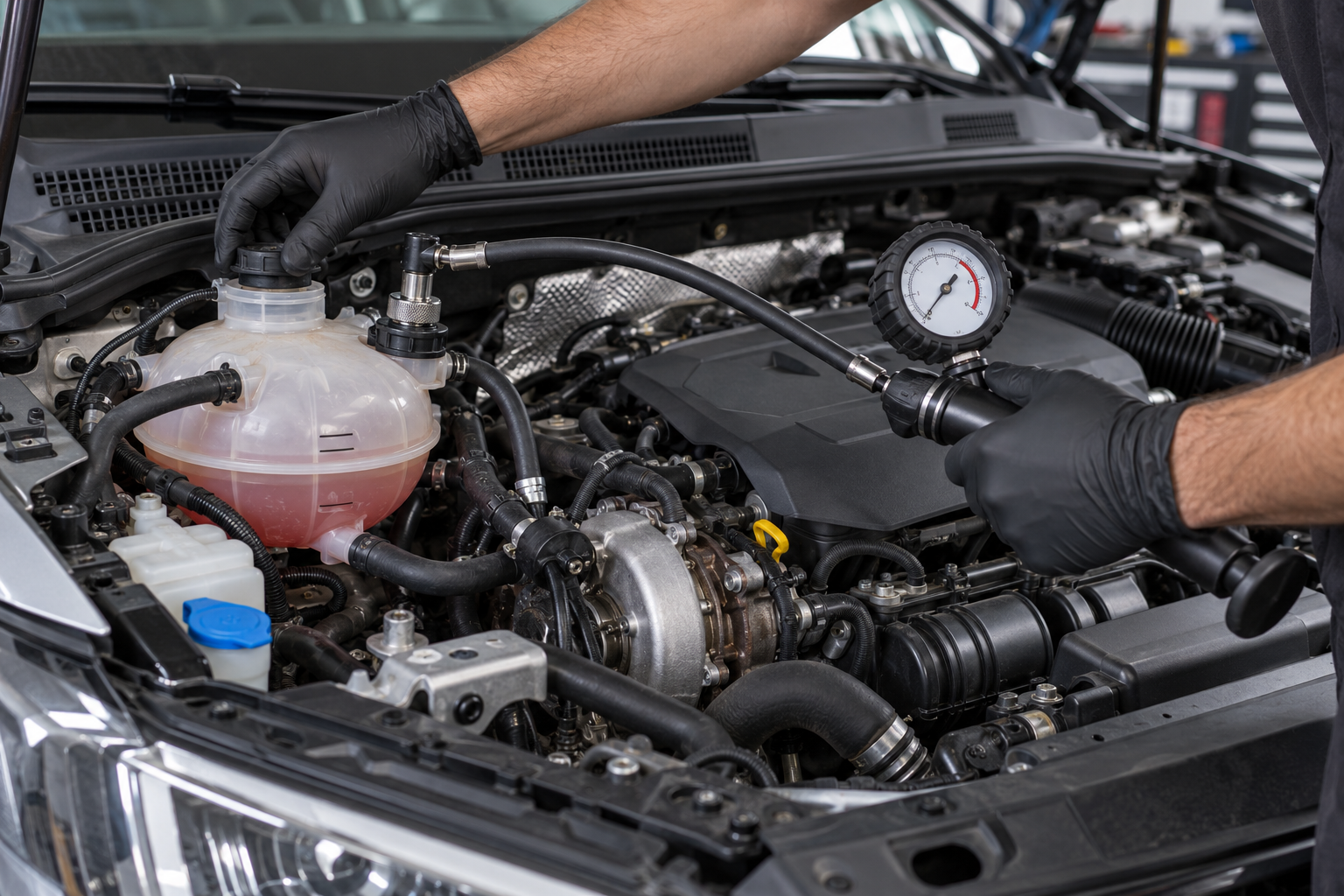
Coolant loss is the most serious topic in this article because an engine can lose coolant without leaving an obvious puddle. External leaks from a hose, reservoir, water pump, radiator, or connection can be visible and may be comparatively straightforward to repair. Internal loss is more concerning: coolant can enter a combustion chamber and be burned during engine operation.
For certain 2017 Escape EcoBoost applications, Ford documentation describes low coolant, white exhaust smoke, rough running, and illuminated malfunction-indicator lights in connection with internal coolant-loss diagnosis. Repair sources and owner reports commonly call this “coolant intrusion.” The phrase means coolant has reached a place it does not belong, often a cylinder. It is not a diagnosis an owner can confirm by looking at the reservoir alone.
Symptoms owners report include a coolant level that repeatedly drops, a cold-start misfire, rough idle that improves after warming up, sweet-smelling white exhaust, overheating messages, and a check-engine light. None of these symptoms is exclusive to internal coolant loss. White exhaust can be normal condensation on a cold day, and low coolant can come from an external leak. The important pattern is a recurring loss of coolant with no clear external explanation, especially when it occurs with misfires or rough starts.
Ignoring that pattern can be costly. An engine that repeatedly misfires can damage its exhaust system, while ongoing coolant loss can lead to overheating and mechanical damage. In an extreme case, enough liquid in a cylinder can prevent normal engine movement. That is why a driver should not keep topping off the reservoir and hoping the level stabilizes. If the level falls again, the cause needs to be found.
A thorough diagnosis may include an external leak inspection, cooling-system pressure test, inspection of spark plugs, testing for combustion gases in the coolant, and a borescope inspection through a spark-plug opening. These tests help separate an external cooling-system repair from a more serious internal-engine concern. The results should be documented before approving expensive work.
Transmission Problems
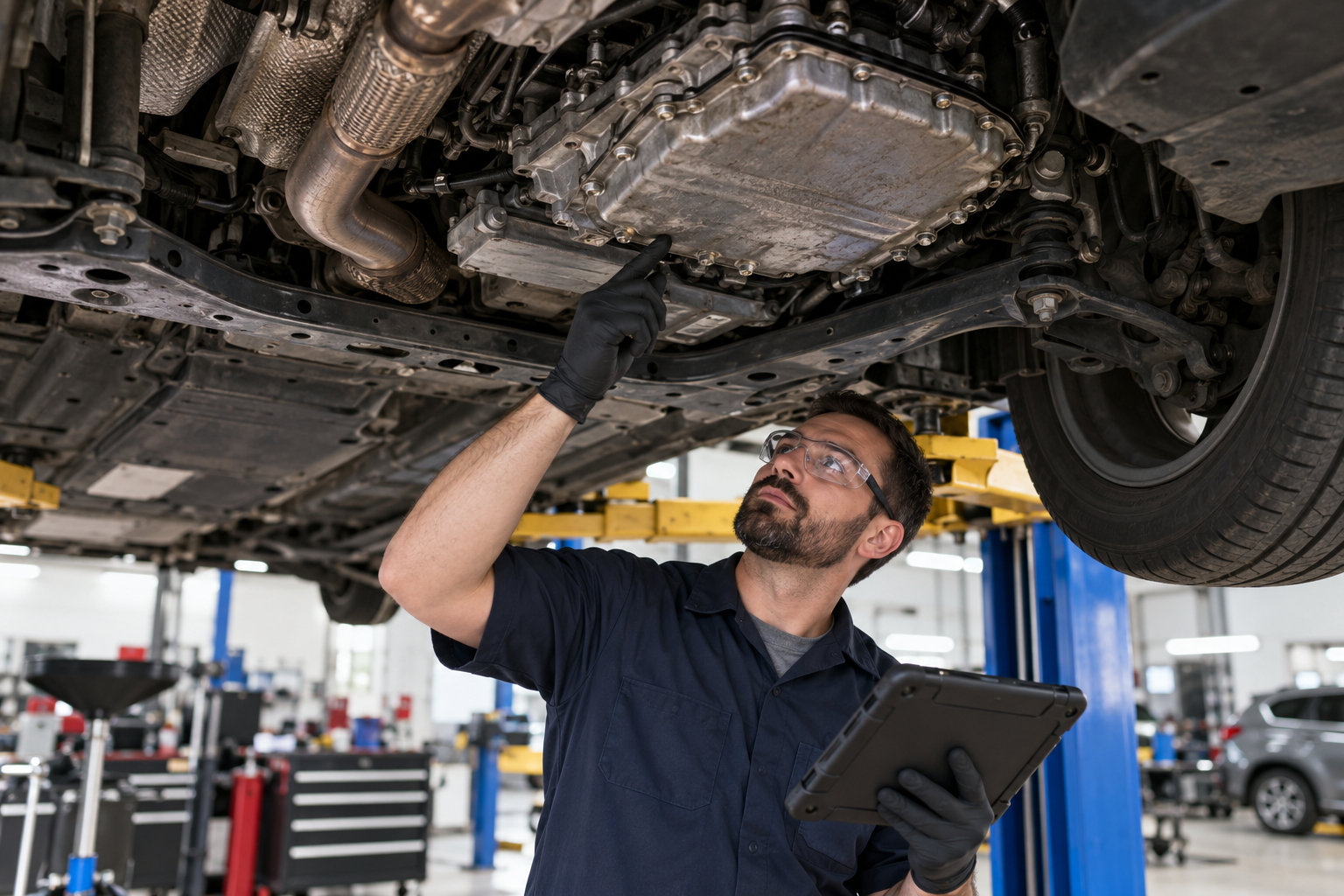
The 2017 Escape uses a conventional six-speed automatic transmission, not the dry dual-clutch design found in some other Ford passenger cars. That difference is important: a transmission concern on this Escape should be diagnosed on its own merits rather than assumed to be the same issue reported on another Ford model.
Still, owner complaints and repair references describe patterns worth watching. These include delayed engagement when shifting from Park into Drive or Reverse, firm or jerky shifts, hesitation before acceleration, slipping, flare-like engine revs during a shift, shudder at steady speed, and transmission warning messages. Some vehicles may have a single rough shift during warm-up or after a battery disconnect; repeated symptoms are more meaningful than an isolated event.
A transmission shudder often feels like driving over a lightly ridged road even when the pavement is smooth. A delay into gear can feel like a pause after the driver selects Drive, followed by a harder-than-normal engagement. Slipping can feel like the engine revs rise without the Escape accelerating as expected. These signs can be caused by fluid condition, valve-body or solenoid behavior, torque-converter concerns, internal wear, software calibration, or problems outside the transmission.
Engine trouble can mimic a transmission problem. A misfire, boost issue, weak battery, worn engine mount, wheel vibration, or all-wheel-drive driveline fault can all make acceleration feel abnormal. That is why a shop should scan both powertrain and transmission modules, road-test the vehicle, inspect for leaks, and verify fluid level through the correct procedure. The Escape does not invite casual transmission-fluid topping-off by guesswork.
A separate manufacturer safety action has covered shift-cable hardware on certain Escapes of this generation. It is VIN-specific and distinct from internal transmission failure. Run the VIN through Ford and NHTSA recall lookup tools before paying for any shift-linkage diagnosis. A completed recall does not guarantee that the transmission itself is healthy, but it can rule out an important safety-related cause of gear-selection trouble.
Warning Signs Owners Should Watch For
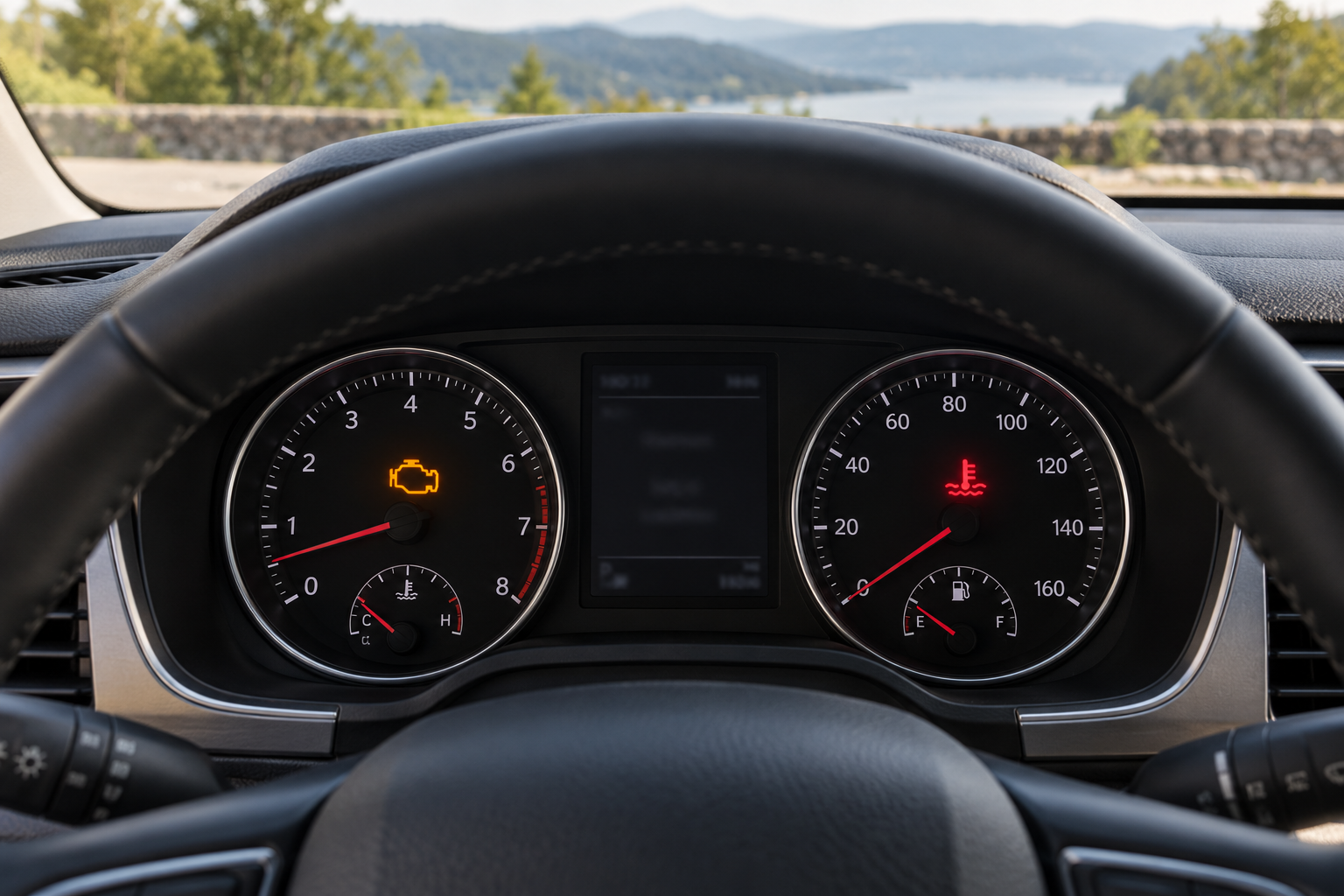
Some Escape symptoms should change how quickly you seek help. Watch the coolant level only when the engine is cold and follow the owner’s-manual guidance; never open a pressurized cooling system when hot. If the reservoir repeatedly needs fluid, document the level and date rather than relying on memory.
Call for a diagnosis promptly if you notice:
- A flashing check-engine light, persistent misfire, or strong vibration at idle.
- Coolant loss that returns after topping up, especially with no visible leak.
- White exhaust that is heavy, persistent after warm-up, or accompanied by a sweet odor and rough running.
- An overheating or high-temperature warning.
- A transmission warning, repeated harsh shifts, slipping, shuddering, or a delay into Drive or Reverse.
- A sudden reduction in power, smoke, burning smell, or fluid leaking under the vehicle.
Save a photograph of warning messages when it is safe, and ask for a copy of the diagnostic codes before they are cleared. That record is useful if the symptom is intermittent or if the vehicle later needs warranty, goodwill, or resale documentation. Avoid resetting a warning simply to see if it returns; doing so can erase the data a technician needs.
Typical Repair Costs & When to See a Mechanic

The figures below are general estimates, not quotes. Labor rates, engine choice, parts availability, the extent of damage, and local market conditions can change the total substantially.
- Diagnostic inspection: roughly $150 to $350 is a common starting range for code scanning and focused testing. Complex intermittent coolant or transmission concerns may require additional time.
- External cooling-system repair: hoses, a reservoir, cap, thermostat, or a simple leak can range from a few hundred dollars to well over $1,000, depending on the failed part and access.
- Misfire repair: spark plugs, coils, or related minor repairs may be a few hundred dollars when no internal engine problem is found.
- Internal coolant-loss repair: if testing confirms coolant entering the engine, the work can rise into several thousand dollars. An engine short-block, long-block, or replacement-engine job is often quoted in the approximate $4,000 to $9,000 range, sometimes more.
- Transmission service or repair: a fluid-related service may be a few hundred dollars, while valve-body, torque-converter, internal repair, or transmission replacement can range from roughly $1,500 to $6,000 or more.
See a qualified mechanic immediately for overheating, flashing check-engine lights, coolant loss with rough running, or loss of transmission movement. For a major recommendation, ask the shop to explain the failed test, whether external leaks were ruled out, what alternatives were considered, and whether the VIN has any open recalls, service programs, or coverage. A second opinion is reasonable when the recommendation is an engine or transmission replacement, but do not continue driving a vehicle that is overheating or actively misfiring while you compare estimates.
Conclusion / Should You Buy or Keep a 2017 Escape
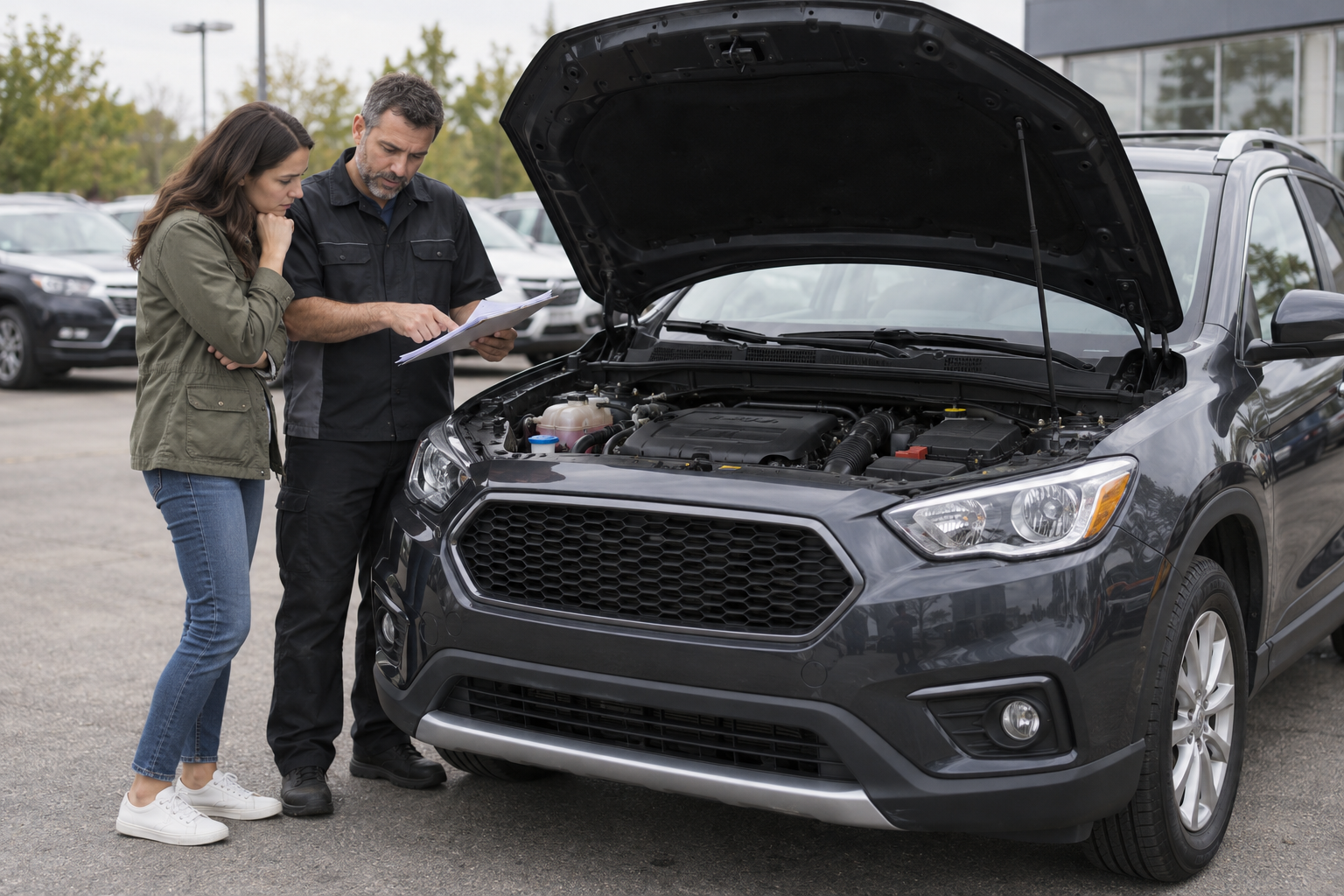
A 2017 Ford Escape can still make sense when the vehicle’s engine, cooling system, and transmission behavior match a well-documented maintenance history. The 2.5-liter non-turbo version may appeal to shoppers who want a simpler powertrain, while an EcoBoost model deserves extra attention to coolant level, cold-start behavior, and records of prior engine work. Neither choice eliminates the need for a real inspection.
For a used purchase, start the Escape cold, check for warning lights, drive it long enough to assess shifting, and look for rough running or unexplained smoke. Ask for invoices, not verbal assurances, if the vehicle has had engine, cooling-system, or transmission work. A pre-purchase inspection should include a code scan and cooling-system review, particularly for turbocharged models.
For current owners, the practical message is early diagnosis. A small coolant loss, a repeated cold-start misfire, or a new transmission shudder is less expensive to investigate before it turns into a no-drive event. Keep records, check the VIN for open campaigns, and make repair decisions from documented test results rather than online guesses.
FAQ
Does every 2017 Ford Escape have a coolant-intrusion problem?
No. Ford technical information applies to certain engine applications and conditions, not every Escape. The vehicle’s engine, VIN, symptoms, and service history must be checked individually.
Can I keep driving if the coolant is only a little low?
A one-time low reading can have several explanations, but repeated loss needs diagnosis. Avoid driving if the Escape overheats, misfires, has a flashing check-engine light, or produces persistent white smoke.
Is a hard shift always a failing transmission?
No. A hard shift can come from fluid condition, calibration, mounts, engine performance, or low voltage. Repeated delays, slipping, shudder, warning messages, or loss of movement require a proper scan and road test.
Is the naturally aspirated 2.5-liter Escape safer to buy than an EcoBoost?
It is often viewed as the simpler option because it lacks turbocharging, but condition and maintenance still matter. A pre-purchase inspection is worthwhile for any 2017 Escape.
