
Contents
2017 Honda CR-V Problems: Warning Lights, Fuel Injectors & Starting Issues
The 2017 Honda CR-V is a practical compact SUV, but the turbocharged 1.5-liter models have a reliability topic that deserves a careful look: gasoline can accumulate in the engine oil under certain conditions. Symptoms can start small—a fuel smell, a rising oil level, a check-engine light, rough running, or a difficult start—and overlap with ordinary maintenance or battery problems.
For current owners, the goal is not to assume the worst. It is to recognize the signs, preserve diagnostic evidence, and make sure any applicable Honda updates have been checked by VIN. For used-car shoppers, the key questions are whether the vehicle has a documented service history, whether it runs cleanly from cold, and whether a pre-purchase inspection finds fuel-system, oil-level, or battery concerns.

The 2017 CR-V’s Known Weak Point
The issue most associated with the 2017 CR-V is engine-oil dilution in versions equipped with Honda’s 1.5-liter turbocharged Earth Dreams L15B7 engine. In plain English, a portion of unburned gasoline can pass into the crankcase and mix with the oil. Engine oil is supposed to lubricate and protect internal parts; gasoline in that oil can reduce its effectiveness and may make the oil level on the dipstick appear higher than expected.
Honda publicly acknowledged oil-dilution concerns for affected 2017–2018 CR-V vehicles and introduced product updates in cold-weather regions. Honda’s materials describe a pattern involving very short drive cycles in extreme cold. When an engine repeatedly runs for only a brief time, it may not stay warm long enough to evaporate fuel that has reached the oil. That does not mean every short-trip CR-V will develop a problem, nor does it mean every high oil reading proves fuel dilution. It does mean the symptom should be checked rather than ignored.
Some owners report a gasoline odor, oil above the full mark, rough idle, hesitation, or a malfunction indicator lamp. NHTSA’s public manufacturer-communication records show Honda associated certain driveability codes with this concern, including random and cylinder-specific misfire codes and a rich-running code. Those codes point a technician toward a system that needs diagnosis; they do not prove one failed part by themselves.
The issue remains debated in the sense that owners have reported different severity, driving conditions, and outcomes. A 2017 CR-V that has received the relevant updates, is maintained on schedule, and has no symptoms may provide normal service. Conversely, a vehicle with a rising oil level, pronounced fuel odor, repeated misfires, or stalling needs prompt professional attention.
Warning Lights You Might See
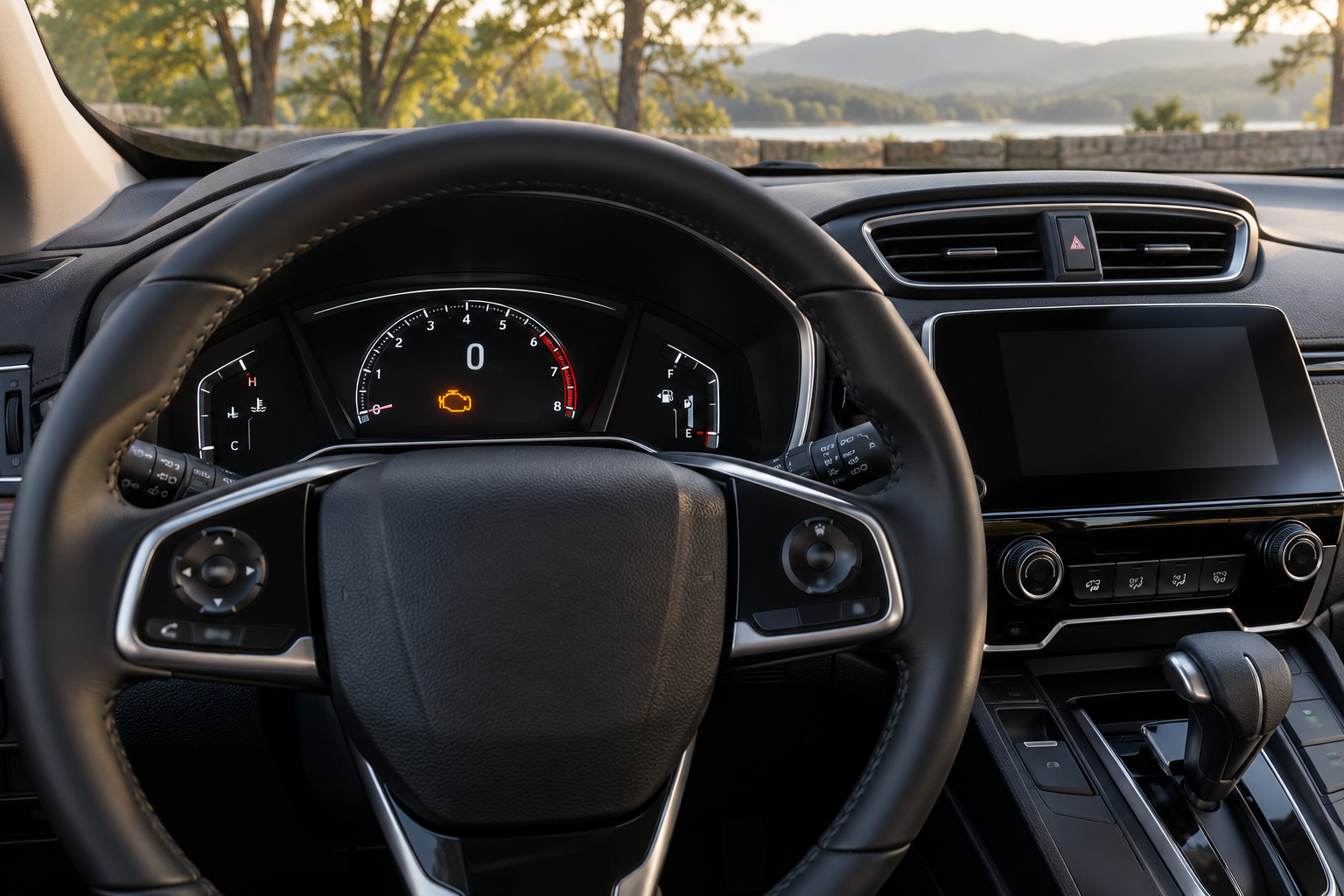
The most important warning in this discussion is the check-engine light, also called the malfunction indicator lamp. Honda’s published materials for the affected 1.5-liter turbo models identify misfire and rich-running diagnostic codes as possible results of the documented driveability concern. A steady check-engine light usually means the vehicle has stored a fault that should be scanned soon. A flashing check-engine light is more urgent because it can indicate an active misfire that may damage the catalytic converter if the vehicle continues to be driven.
P0303 is a cylinder-three misfire code. It is commonly discussed by owners and technicians investigating rough running on this engine, but it is not a fuel-injector verdict. Ignition components, injector operation, air-fuel mixture, mechanical condition, wiring, and other faults can create a cylinder-specific misfire. The correct next step is to retrieve all stored and pending codes, save freeze-frame data, and test rather than replace parts from a code description.
P0172 indicates the control system sees a rich mixture. In Honda’s published materials, it appears alongside the misfire codes relevant to this issue. It is a reason for a proper diagnosis, not proof that gasoline in the oil caused the light.
Owners also report warnings for emissions-system, stability-control, driver-assistance, or other systems. These may occur with an engine fault, but low system voltage can also trigger a cluster of unrelated-looking messages. When several warnings appear at once, have the 12-volt battery and charging system tested in addition to reading the engine and body-module codes.
Fuel Injector Problems
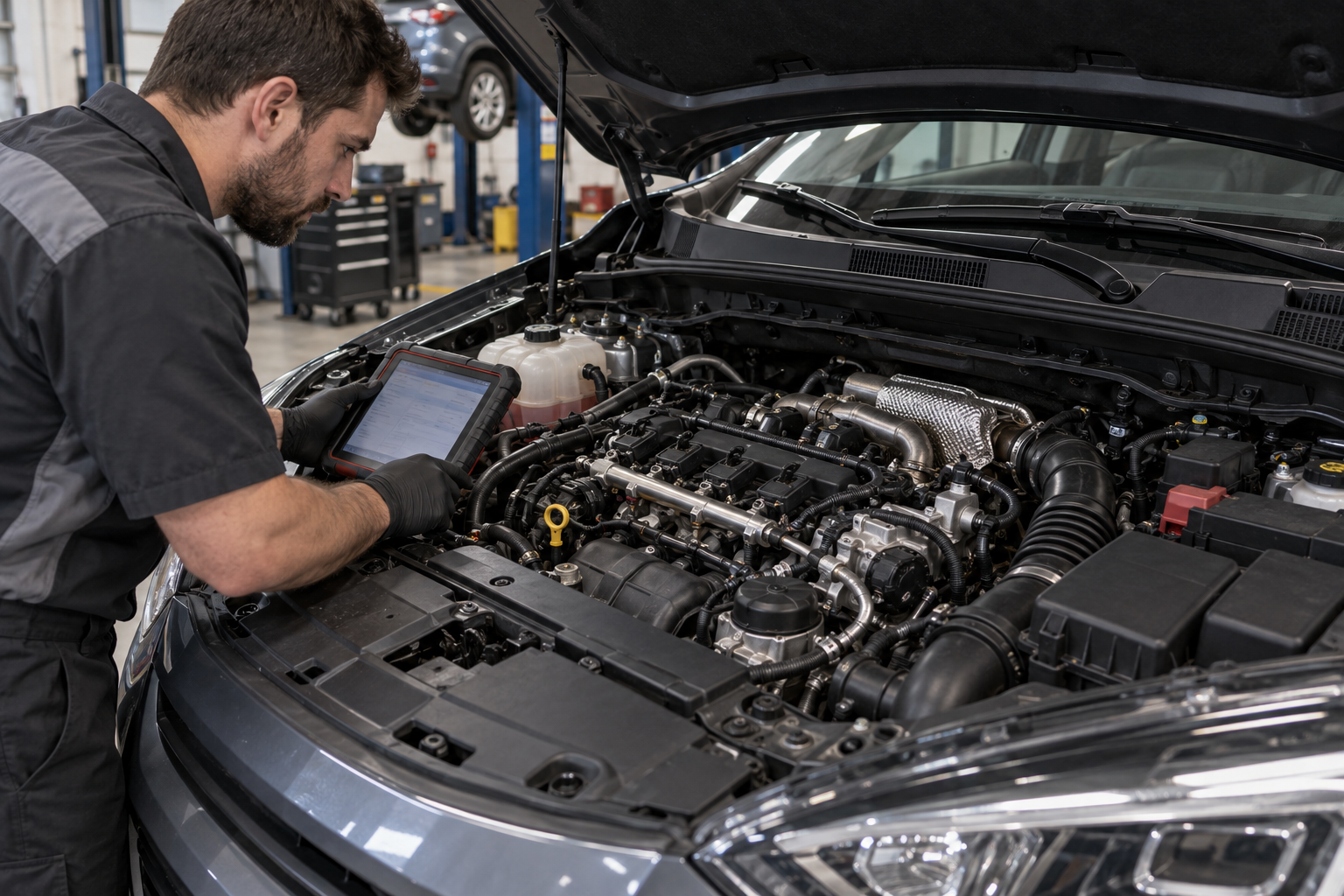
Fuel injectors are a recurring topic in 2017 CR-V owner discussions because a failing injector can produce rough idle, hesitation, reduced fuel economy, hard starting, a fuel smell, or a check-engine light. Some owners and technicians have linked early injector wear or failure with the engine’s oil-dilution and rich-running concerns. That connection should be described carefully: an injector problem and oil dilution can appear in the same vehicle, but no diagnosis should assume that one automatically caused the other.
A P0303 code may lead a technician to inspect the injector for cylinder three, but a competent diagnosis should begin more broadly. The shop may check code history, fuel-trim data, ignition performance, spark-plug condition, injector electrical operation, and whether the misfire moves when components are tested according to the service procedure. If the injector is confirmed as the cause, the repair approach can include replacing the affected injector or, depending on the repair guidance and parts availability, replacing an injector set and related high-pressure fuel hardware.
Direct-injection fuel systems operate at high pressure, so this is not a casual do-it-yourself job. Do not loosen a fuel connection, swap injectors in a driveway, or clear the codes before documenting them. A misfire that remains active can overheat the catalytic converter, while a fuel-system repair performed incorrectly can create a leak risk.
Typical repair bills vary by region and what the tests prove. A diagnostic charge may be a few hundred dollars, while a confirmed injector repair can commonly reach roughly $1,200 to $2,500 when parts, labor, and related components are included. Ask the shop to separate diagnostic work from the repair estimate and to state whether the quoted work is for one injector or a set. Before authorizing work, ask a Honda dealer to check the VIN for any remaining warranty, campaign, or goodwill eligibility; coverage cannot be assumed from model year alone.
Starting Issues
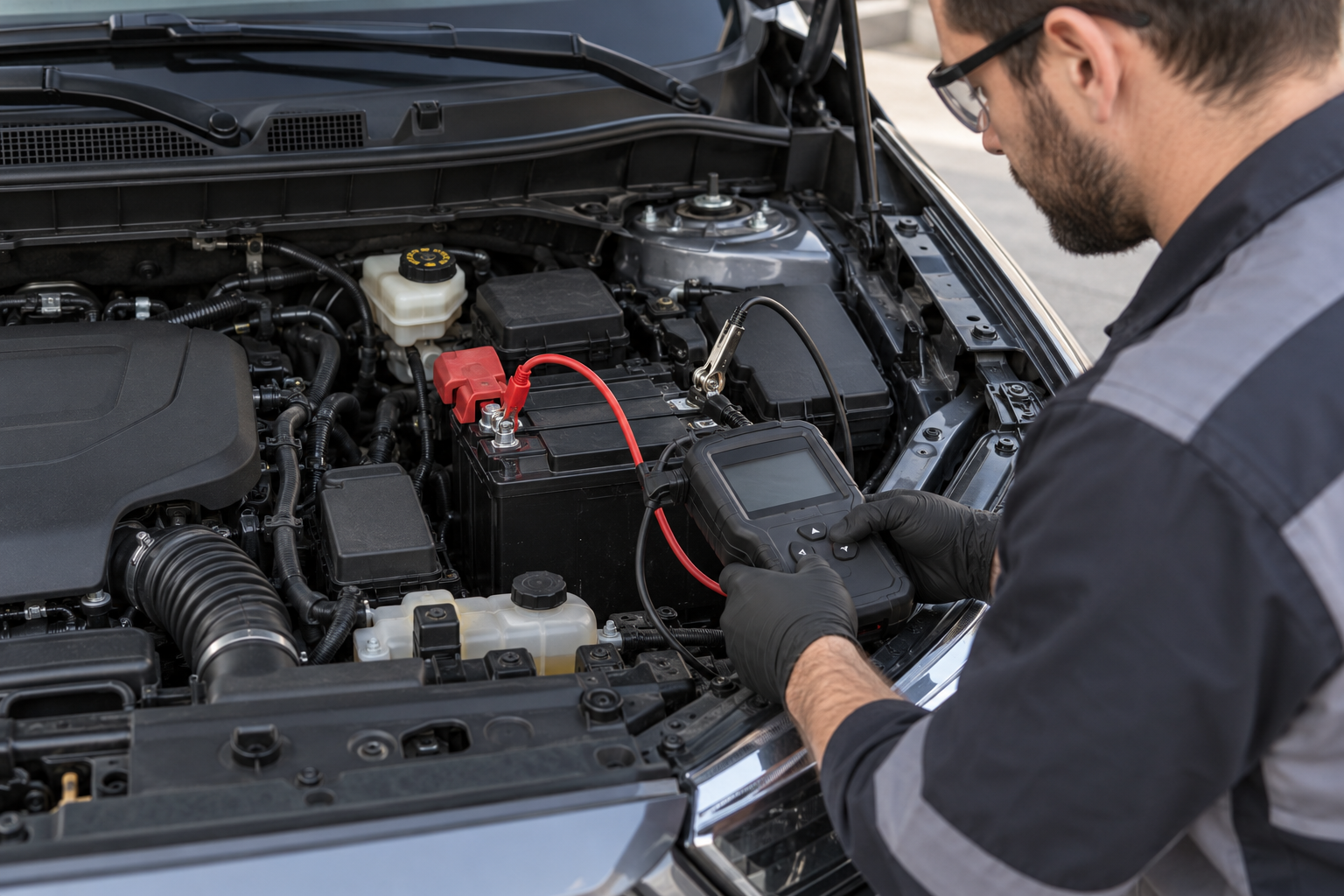
Starting complaints deserve two separate lines of thought. First, hard starting, rough idle immediately after startup, or stalling can accompany an engine problem such as a misfire or rich-running condition. Some owners report these symptoms in combination with high oil readings or fuel odor. If the engine cranks normally but starts roughly, the scan results, oil condition, and fuel-system checks matter more than simply installing a new battery.
Second, a weak battery, charging fault, poor terminal connection, or parasitic electrical draw can produce a slow crank, clicking, repeated jump-starts, or a no-start after the vehicle sits. Separate owner reports and manufacturer communications have addressed battery-draw concerns on some CR-Vs. The precise cause can vary by vehicle, so avoid accepting “battery drain” as a diagnosis without a battery load test, charging-system test, and—if the battery repeatedly goes flat—a measured parasitic-draw test.
A good shop will distinguish among no-crank, slow-crank, crank-no-start, and starts-then-stalls. Those descriptions guide the test plan. A no-crank complaint often starts with battery condition, connections, and starter-circuit checks. A crank-no-start complaint may involve fuel, spark, air, compression, immobilizer, or sensor inputs. A stall after starting may bring the misfire and fuel-mixture discussion back into focus.
If the vehicle stalls in traffic, smells strongly of fuel, has a flashing check-engine light, or repeatedly needs jump-starting, do not treat it as a nuisance. Arrange diagnosis before relying on it for commuting or a long trip.
What Honda Has Done About It
Honda has publicly acknowledged the oil-dilution issue affecting certain 2017–2018 CR-Vs with the 1.5-liter turbo engine. In the United States, Honda issued product updates for affected vehicles in cold-weather areas. The repair approach included engine-control and transmission-control software updates, an oil service, and changes to the air-conditioning-control procedure as the campaign guidance evolved.
Honda also extended powertrain coverage for certain affected vehicles and components connected with the documented driveability concerns. Eligibility depended on vehicle configuration, VIN, prior repairs, title history, and other program conditions. Because these vehicles are now older, do not assume the original time-based coverage remains open. A Honda dealer can check the VIN and confirm both completed work and any available coverage.
A related oil-fuel mixing concern also led to a recall campaign for Honda 1.5-liter turbo vehicles in China. It does not establish that a U.S.-market 2017 CR-V is subject to the same recall or remedy. Use the U.S. VIN record and Honda’s own service history for an individual vehicle.
Repair Costs & What to Ask a Mechanic
The least expensive answer is not always the right one. Replacing spark plugs, a battery, or a single injector without evidence may mask the symptom and leave the root cause unresolved. Ask for the exact stored and pending codes, the conditions under which they set, and the test result that supports the proposed repair.
For a possible oil-dilution complaint, ask whether the oil level and odor were documented, whether the VIN was checked for Honda updates, and whether the latest applicable software was confirmed. For a suspected injector problem, ask whether ignition and wiring checks were completed, whether fuel-trim or injector testing supports the conclusion, and whether related fuel hardware must be replaced with the injector repair. For a starting complaint, ask whether the test identified a weak battery, charging issue, cable connection, starter problem, or measured draw while the vehicle was off.
Planning costs can range from a basic diagnostic fee to a four-figure fuel-system repair. Software or campaign work may cost nothing if an applicable program remains open; out-of-pocket injector repair can be substantially more. Request a written estimate that separates diagnosis, labor, parts, programming, and taxes. If the estimate is large, a second opinion from a Honda-capable independent shop can be sensible—as long as the shop has the equipment and experience to diagnose direct-injection and electronic-control faults.
Should You Buy or Keep a 2017 CR-V?
A 2017 CR-V is not automatically a vehicle to avoid. It can still be a useful choice for an owner or buyer who evaluates the turbo engine thoughtfully. A well-kept example with complete records, normal oil level, no fuel smell, no active warning lights, and documented Honda update history is a different proposition from one with recurring misfires, an unexplained high oil level, or a seller who will not allow a pre-purchase inspection.
For a used purchase, start it cold and drive it long enough to check for hesitation, warning lights, and abnormal smoke. Inspect the dipstick only after following the owner’s-manual procedure. Ask the seller for maintenance records and have a Honda dealer or qualified shop check the VIN for open recalls, completed updates, and service history where available.
For current owners, do not panic over every fuel odor or check-engine light, but do not normalize repeated symptoms. Keep oil changes documented, avoid delaying a flashing warning light or stalling complaint, and retain repair orders that show codes and findings. Evidence matters if the same concern returns.
FAQ
Does every 2017 Honda CR-V have oil dilution?
No. The documented concern applies to the 1.5-liter turbocharged engine under certain driving and environmental conditions. A VIN, engine configuration, maintenance history, and actual symptoms matter more than the model year alone.
Does a gasoline smell on the dipstick prove engine damage?
No. It is a reason to have the oil level, condition, and vehicle operation assessed. Do not dismiss it, but do not assume major engine damage without diagnostic evidence.
Is P0303 always a bad fuel injector?
No. P0303 identifies a cylinder-three misfire. Injector issues are one possibility, but ignition, wiring, air-fuel mixture, and mechanical faults must be considered.
Can a weak battery cause several dashboard warnings?
Yes. Low voltage can cause multiple modules to report faults. The vehicle still needs a full code scan and electrical-system test so a battery problem is not used to hide an engine problem.
Should I buy a 2017 CR-V with the 1.5-liter turbo engine?
It can be a reasonable purchase if it passes a pre-purchase inspection, has no active drivability symptoms, and has a documented service history. Price the vehicle with the possibility of future turbo-engine and fuel-system diagnosis in mind.
Conclusion
The 2017 Honda CR-V’s 1.5-liter turbo engine deserves informed attention, not blanket condemnation. Oil dilution, warning lights, injector concerns, and starting complaints can overlap, so the useful response is a documented diagnosis rather than parts guessing. Check the VIN, preserve fault codes, inspect the oil correctly, and use a shop that understands direct-injection turbo engines. For buyers, a cold-start test and independent inspection are worth the time.
