
You start your 2018 Honda CR-V and the dashboard suddenly looks like a Christmas tree: check engine, ABS, VSA, brake, power steering, TPMS, and perhaps several Honda Sensing warnings all appear together. It is an unsettling sight. The important point is that a screen full of warnings does not automatically mean every one of those systems failed at the same moment.
On a modern CR-V, several control modules share power, sensor information, and network communication. A low-voltage event, lost communication, or a genuine fault in one system can make other systems shut down as a precaution. Start with the basics, save the diagnostic codes, and avoid clearing anything until you know what the vehicle recorded.
Contents
Why Do All the Warning Lights Come On at Once?
The 2018 CR-V has more electronics than older vehicles. The engine computer, anti-lock braking/VSA system, electric power steering, gauge cluster, and Honda Sensing-related systems exchange information over the vehicle network. If one module cannot see the information it expects, it may turn on its own warning and tell other systems it is unavailable.
Voltage is a common trigger. A weak 12-volt battery can have enough power to crank the engine but still dip too low while starting. Loose or corroded connections can do something similar. When voltage falls or fluctuates, modules can reboot, lose communication for a moment, or store low-voltage and communication codes. The cluster then displays a cascade of alerts.
That does not prove the battery is the cause. A charging-system fault, poor ground, damaged wiring, a sensor or engine problem, a fuse issue, or a failed module can create a similar result. Honda’s 2018 CR-V owner information also treats many of these indicators as separate system warnings. The pattern tells you to diagnose the vehicle, not to assume that every component named by a light is bad.
There is another wrinkle after a dead or disconnected battery. Some amber driver-assist and stability-related indicators may stay on until the vehicle completes its checks after being driven. If a light does not clear after a short drive, or if the engine, brake, red charging, or red oil-pressure warning is on, treat that as a fault rather than a normal reset.
Most Common Causes
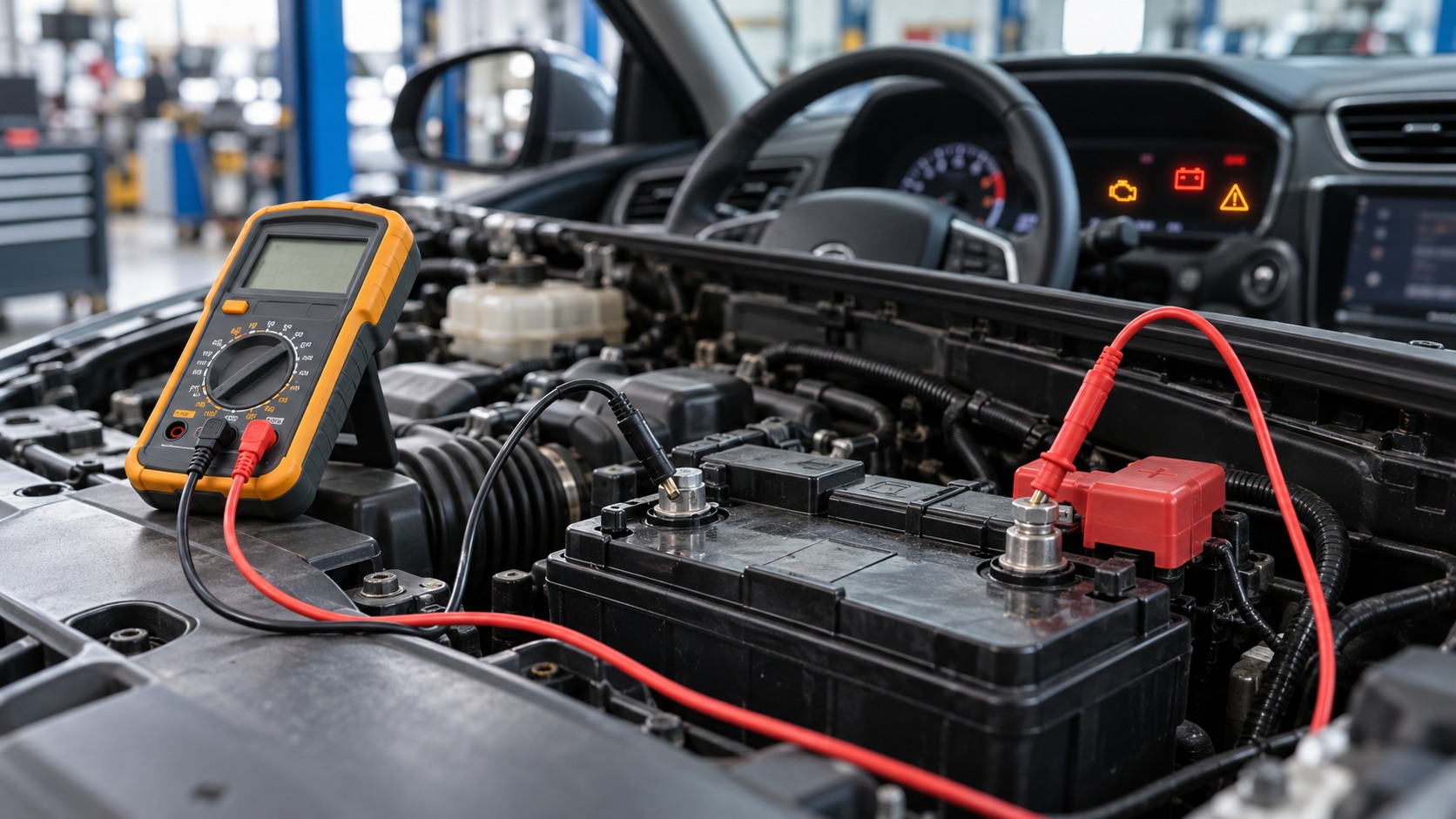
Weak, old, or dying 12V battery. This is the first item worth checking because the battery supplies stable power during startup and supports the electrical system before the alternator takes over. A battery can be weak even if the vehicle starts. Battery age, repeated short trips, heat, cold, and a prior deep discharge all matter. A proper load or conductance test is more useful than judging the battery by its appearance.
Corroded or loose battery terminals or cables. White, blue-green, or crusty buildup at a terminal adds resistance. A clamp that can rotate by hand is not tight enough. Check the positive and negative connections, the battery sensor area at the negative terminal, and the main ground connection that is visible and safely accessible. Do not pry on the battery sensor or disconnect cables with the engine running.
Failing alternator or a worn serpentine belt. Once the engine is running, the charging system must keep the battery and electronics supplied. An alternator that undercharges, overcharges, or cuts in and out can trigger multiple warnings. A slipping, damaged, or missing drive belt can prevent normal alternator operation. The red charging-system indicator deserves prompt attention; Honda advises turning off electrical accessories and having the vehicle repaired without delay.
A blown fuse or power-feed problem affecting the gauge cluster or a control module. A fuse is not usually the root cause by itself. It blows because of a short, overload, or component problem. Still, a blown fuse, poor fuse-box connection, or damaged power/ground feed can take a module or display circuit offline and create several alerts. Check only the fuse locations and ratings identified on the vehicle’s fuse-box cover or in the owner’s manual. Never install a higher-rated fuse.
Faulty gauge cluster or body control module (BCM), which is less common. The cluster displays messages; it does not necessarily create them. A module fault, water intrusion, damaged connector, or communication-network problem can create erratic warnings, blank displays, flickering gauges, or no-start symptoms. This category needs a real scan tool and circuit testing. Replacing a module based only on a code or a dashboard symptom can be an expensive mistake.
A broader engine or emissions fault can also set off a cluster of safety-system messages. For example, driver-assist features may disable themselves when the engine computer reports a fault or when a required sensor signal is missing. That is why the exact stored codes matter more than the number of lights you can see.

How to Diagnose It Yourself
Use a basic multimeter, a flashlight, and an OBD-II scanner that can read more than generic engine codes if possible. Work with the vehicle parked on level ground, in Park, with the parking brake set. Keep loose clothing and tools away from the drive belt and cooling fan.
Record the symptoms before changing anything. Take a clear photo of the dash and note whether the warnings appeared at startup, while driving, after a jump-start, after heavy rain, or following battery work. Note any hard starting, dim lights, stalling, rough running, steering changes, brake feel, or loss of power. Those details save diagnostic time.
Measure battery voltage with the engine off. Let the vehicle sit with accessories off for a while, then place the meter leads on the battery posts, not the cable clamps. Around 12.6 volts is commonly considered fully charged for a rested conventional 12-volt battery; roughly 12.2 volts suggests a partially discharged battery. Voltage alone cannot confirm battery health, so arrange a load or conductance test if the reading is low or the battery is several years old.
Inspect the terminals and cables. Look for corrosion, cracked insulation, loose clamps, or a cable that moves at the battery post. With the engine off, clean corrosion using a battery-safe method and tighten the connections correctly. Wear eye protection and avoid creating a spark near the battery. If you are not comfortable servicing a battery, have a shop do it.
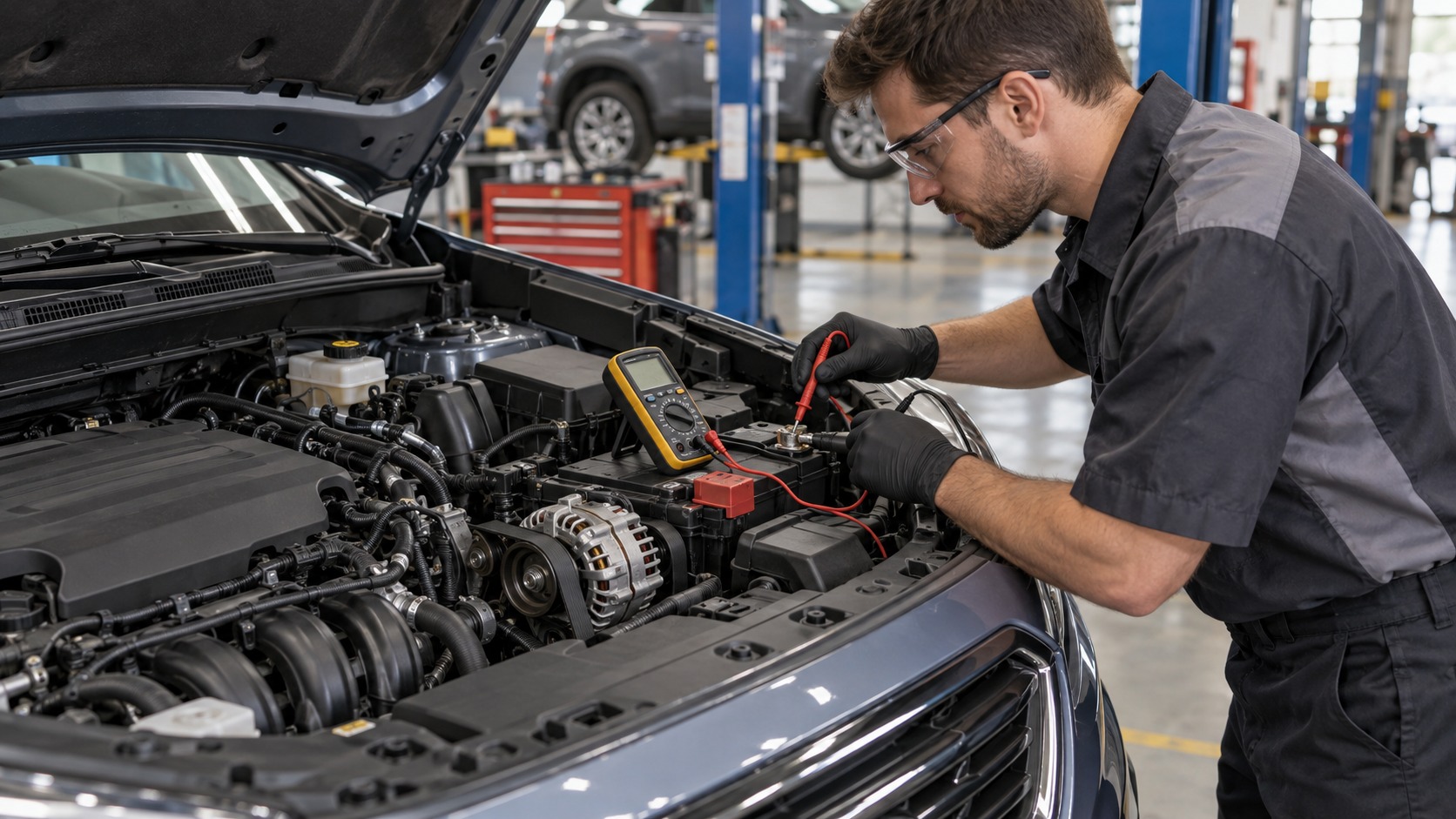
Check charging voltage with the engine running. Start the CR-V and measure across the battery posts again. Many charging systems will show a reading above resting battery voltage, often somewhere in the roughly 13.5-to-14.8-volt range, but smart charging can vary output with operating conditions. [uncertain] A single voltage reading is a screening test, not a full alternator diagnosis. A reading that stays near resting voltage, climbs abnormally high, or jumps around calls for professional charging-system testing.
Inspect the serpentine belt visually. With the engine off, look for obvious cracking, fraying, glazing, missing ribs, or oil contamination. If the belt is loose, damaged, or noisy with the engine running, do not try to adjust it yourself unless you have the correct procedure. A belt or tensioner problem can mimic an alternator problem.
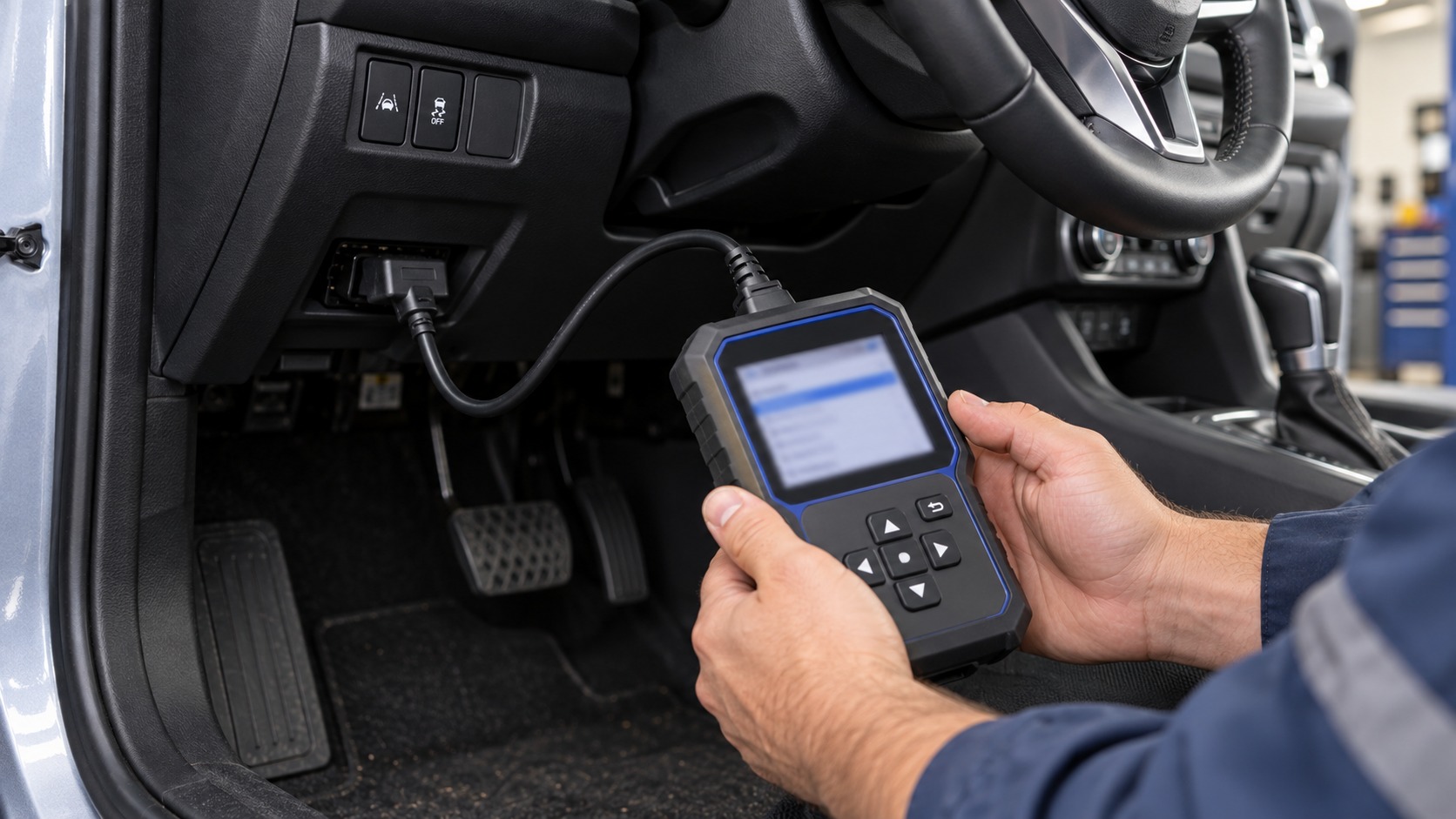
Scan for codes before clearing them. Plug the scanner into the OBD-II port and save every stored, pending, and history code, plus freeze-frame data if your scanner provides it. Generic scanners may read powertrain codes but miss ABS, electric-power-steering, body, and Honda Sensing codes. A scan tool that reaches those modules gives a much clearer picture.
Interpret patterns, not isolated code names. Multiple low-voltage, lost-communication, or module-reset codes may support a battery, connection, ground, or charging diagnosis. One engine fault code plus a group of disabled driver-assist warnings may point in a different direction. Do not erase codes simply to see whether the lights return. Clearing them can erase the evidence a technician needs.
If the battery tests good and charging voltage looks normal, that is not the end of the process. A professional may need to test voltage drop under load, inspect grounds and connectors, check network communication, and use Honda-capable scan data. Intermittent electrical faults are often found by testing while the problem is present.
When to See a Mechanic or Dealer
Stop driving and seek immediate help if a red oil-pressure light stays on, the red brake warning is accompanied by poor brake feel or low brake fluid, the engine is overheating, the vehicle stalls, steering becomes unusually heavy, or you smell burning insulation. Do not continue driving just because several lights arrived at once.
A shop or Honda dealer should also diagnose the CR-V if the battery and terminals appear sound but the warnings keep returning; the vehicle has a check-engine light with rough running, flashing malfunction indicator, reduced power, or poor fuel economy; or a scan tool finds ABS, steering, airbag, network, or driver-assist codes you cannot interpret. Some systems require bidirectional tests, calibration, or factory-level scan access.
Ask the shop to test the battery and charging system under load, scan all available modules, and provide the actual diagnostic trouble codes. That keeps the discussion focused on evidence. Be wary of a repair recommendation that jumps straight to a gauge cluster, BCM, alternator, or multiple sensors without confirming power, grounds, and charging performance first.
If the problem appeared after battery work, a windshield replacement, collision repair, water exposure, or aftermarket electrical installation, mention it to the technician. Those details can guide an electrical diagnosis.
Typical Repair Costs
The figures below are broad, non-Honda-official estimates. Labor rates, parts quality, trim level, the actual failed part, and regional pricing can move the final bill substantially. A diagnosis fee may apply before a shop can quote a repair.
A conventional 12-volt battery replacement commonly lands in the neighborhood of about $150 to $350 installed, depending on battery type and local labor. Terminal cleaning or a cable-end repair may cost little if it is simple, but replacement of a damaged cable or ground connection can range from a modest repair to several hundred dollars when access is difficult.
Alternator replacement often falls roughly in the $800 to $1,500 range at an independent shop or dealer, according to general repair-industry pricing patterns, with belt or tensioner work adding more if needed. A fuse diagnosis may be inexpensive when the cause is obvious, but costs rise quickly if the fuse blew because of a wiring short or a failed component.
Gauge-cluster, BCM, wiring-network, or water-intrusion repairs have the widest range. Repair data suggests they can run from a few hundred dollars for diagnosis and a connector repair to well over $1,000 when programming, module replacement, extensive wiring work, or calibration is required. Do not approve a module replacement until the shop has ruled out battery voltage, charging, grounds, fuses, and connector damage.
FAQ
Is it safe to drive with all warning lights on?
Sometimes the vehicle will still drive, but you should not assume it is safe. Pull over as soon as practical, check for red warnings or drivability changes, and arrange diagnosis. If the charging, oil-pressure, brake, overheating, or flashing check-engine warning is active, do not treat it as a routine dashboard glitch.
Can a bad battery really turn on ABS, VSA, and Honda Sensing warnings?
Yes, low or unstable system voltage can cause modules to report communication or initialization faults, which can turn on several unrelated-looking warnings. It is a plausible and common starting point, not a guaranteed diagnosis. A battery test and code scan are still necessary.
Will disconnecting the battery reset the lights?
It may clear some messages temporarily, but it can also erase useful diagnostic information. The warnings may return as soon as the system detects the underlying fault. Scan and record codes first whenever possible.
Conclusion
A 2018 Honda CR-V with every warning light on needs diagnosis, but the display does not prove that every system failed. Start with battery condition, connections, charging output, and stored codes; then let the evidence determine whether the fix is simple maintenance or a deeper electrical or engine repair.
